
Reviewed · WALKING TOURS
Paris Latin Quarter Walking Tour: History & Culture – Small Group
Paris turns into a history lesson fast.
This Latin Quarter walk strings together several “you’d miss this on your own” stops in about two hours, with a small crowd and an easy pace. I really like the intimate group size (up to 8)—it means the guide can slow down, answer follow-ups, and help you connect the dots between places like the Roman Arenes de Lutece and the Pantheon.
My other big plus is the tone: short, focused visits with time to talk rather than a nonstop march. Guides such as Benoit and Waled are highlighted for being engaging and adaptable, including making sure you start your day well with a coffee stop when the tour is early. The one drawback to plan for is that each stop is brief, so if you want lots of inside time at major sights, this is more of a guided walk-and-story format than a long museum session.
In This Review
- Key highlights you’ll feel during the walk
- Why This Latin Quarter Walk Fits Real Travel Days
- Getting Oriented at Sorbonne and Letting the Walk Set the Tempo
- Arenes de Lutece: Roman Paris Without the Big-Day Pressure
- Marche Monge and Rue Mouffetard: Squares and Streets That Tell You How People Lived
- Place de la Contrescarpe: A Quiet Pause in the Middle of the Action
- St. Etienne du Mont and the Pantheon: Faith, Ideas, and Big Architecture
- Luxembourg Gardens: A Natural Ending You Can Actually Use
- Guide Quality: Why Small Groups Matter Here
- Price and Value: What $66.16 Buys You in the Real World
- Who This Tour Suits Best (and Who Should Rethink It)
- Should You Book This Paris Latin Quarter History & Culture Walk?
- FAQ
- How long is the Paris Latin Quarter walking tour?
- Where does the tour start and end?
- What group size can I expect?
- Is the tour offered in English?
- Are admission tickets included for the stops?
- What’s included in the price?
- Does the tour run rain or shine?
- What is the cancellation policy?
Key highlights you’ll feel during the walk

- Arenes de Lutece in the middle of Paris: Roman-era remains you can actually picture and understand
- All stops are listed as ticket-free: less hassle, more time listening and walking
- Short segments, relaxed Q&A: good for first-timers who want structure without fatigue
- Latin Quarter streets plus monumental stops: you get both everyday Paris and big landmarks
- Finish at Jardin du Luxembourg: an easy “end point” that also lets you linger
Why This Latin Quarter Walk Fits Real Travel Days
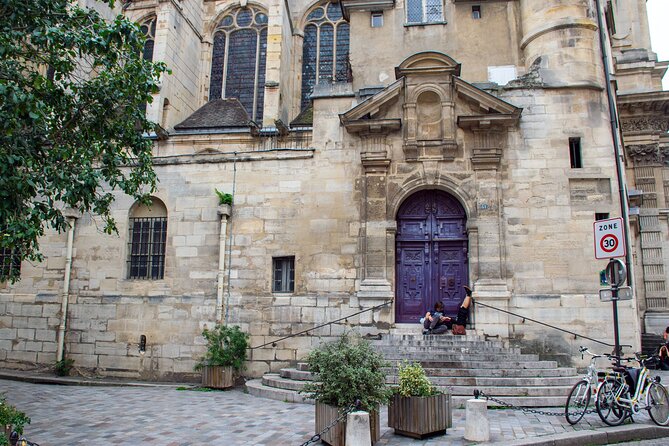
If you only have limited energy on your first day—or you’ve been touring all morning—this type of route makes sense. It’s designed around quick introductions to several power points in the Left Bank, then it moves you on before you get bored or lost in crowds.
The route also avoids the classic problem with big sightseeing plans: you end up seeing a lot of things, but you don’t understand what you’re looking at. Here, the guide’s job is to give you the stories behind the scenes, so your photos later feel smarter. Even the “smaller” stops—like squares and street corners—are treated as clues to how this neighborhood got its identity.
And because it’s an intimate group (maximum 8), you’re not fighting for attention at every turn. That matters when you’re trying to learn the difference between eras: Roman Paris, medieval-street life, and the architecture that shaped modern ideas about faith and citizenship.
Worth weighing up next to this Paris pick
- Paris Top Sights Half Day Walking Tour with a Fun Guide
★ 5.0 · 2,893 reviews - Montmartre Hidden Gems and Scenic Highlights Walking Tour
★ 5.0 · 2,684 reviews - Montmartre Hill French Gourmet Food and Wine Tasting Walking Tour
★ 5.0 · 2,588 reviews - Paris: Montmartre Highlights Walking Tour with a Local Guide
★ 4.9 · 2,318 reviews
Getting Oriented at Sorbonne and Letting the Walk Set the Tempo
The tour starts at the Sorbonne area: Pierre and Marie Curie Campus, 4 Pl. Jussieu (75005). Starting here is smart for two reasons. First, you’re right in the Latin Quarter zone, so the walk feels “in place” rather than like you’re commuting across town. Second, you’ll be near major transit links, which makes it easier to adjust if your morning starts late or you’re juggling museum tickets.
The meeting point is also a gentle way to ease into the day. You’re not dropped at the most chaotic intersection in Paris. Instead, you begin in an academic, historic area and move outward from there.
The pacing is another win. The total time is about 2 hours, but the stop lengths are short—often 10 to 20 minutes. That keeps the tour from dragging, and it gives you the option to ask a question without the guide rushing you into the next location.
Arenes de Lutece: Roman Paris Without the Big-Day Pressure
The first major stop is Arenes de Lutece—a Roman arena and one of the best-preserved Roman ruins in Paris. This is where the tour earns its keep for history-minded travelers. You’re not just hearing that Paris has Roman roots; you’re standing in the physical leftovers that make that claim real.
The way to enjoy this stop is to listen for what the guide points out visually—how the space would have worked in Roman times, and what it means that you’re seeing it in the middle of a city that evolved layer by layer. Even if you’re not a Roman-empire superfan, this kind of stop gives you a mental framework. Once you can picture the neighborhood in a Roman context, later landmarks feel less random.
Duration is about 20 minutes, and that’s enough to get your bearings without turning it into a half-day detour. Also, the tour lists admission as ticket-free for this stop, which is a practical advantage: you arrive, you look, you learn, you move on.
Potential consideration: this is a first stop. If you’re jet-lagged or still waking up, you’ll want to be ready to pay attention right away—because Roman-era context can set up the whole tour.
Marche Monge and Rue Mouffetard: Squares and Streets That Tell You How People Lived
Next comes Marche Monge, a picturesque square with stories you’re unlikely to hear if you just walk through on your own. Squares in Paris often act like social engines—places where commerce, politics, and everyday life overlap. With a guide, you’re not just looking at buildings. You’re learning why this spot mattered and how it shaped the surrounding neighborhood.
The stop is shorter—around 10 minutes—so think of it as an orientation point. Your goal here isn’t to master every detail. It’s to learn how to read the space: where daily life likely gathered, what kind of energy the area has carried over time, and how that connects with the rest of the tour.
Then you move to Rue Mouffetard, one of the oldest and best-known streets in Paris. This is the turn where the walk becomes more “Paris-on-foot” and less “monument viewing.” The guide frames Rue Mouffetard as a street known for markets and local shops, so you can sense how commerce helped define the neighborhood.
The practical value of Rue Mouffetard on this tour is timing and pacing. The stop is about 20 minutes, which is long enough to take in the street atmosphere and ask one or two targeted questions, but not so long that you’re exhausted.
If you’re tempted to snack here, that can be a smart move—just keep an eye on your group’s pace. The tour is structured to keep moving, and you don’t want to miss the next “big story” stop.
Place de la Contrescarpe: A Quiet Pause in the Middle of the Action

After the busier street energy, you get a breather at Place de la Contrescarpe, a peaceful square with history and cultural meaning. I like this stop because it’s a change of rhythm. In a neighborhood like the Latin Quarter, it’s easy to feel like you’re always walking past something dramatic. This square gives you a chance to slow down, look around, and absorb the setting.
It’s about 20 minutes, which is plenty of time to notice how the square sits within the surrounding streets. The guide helps connect it to what came before and what it represents now. The payoff for you is mental clarity: after this stop, the neighborhood’s layout starts to make more sense.
A small consideration: because it’s a calmer spot, you might lose track of time if you sit down and get comfortable. That’s not a bad thing, but do it with one eye on the guide so you don’t drift too far behind the group.
St. Etienne du Mont and the Pantheon: Faith, Ideas, and Big Architecture
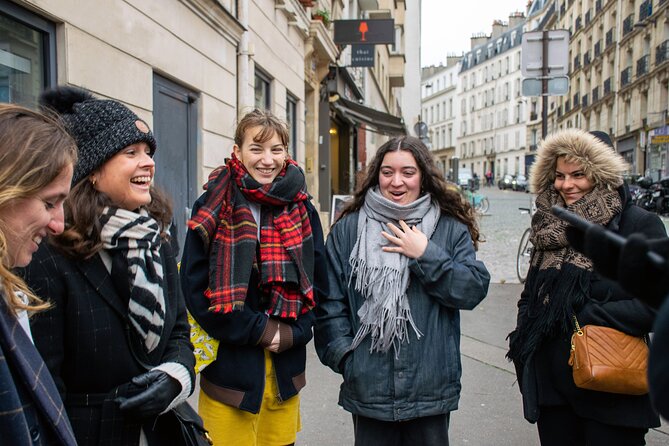
The tour then makes a short stop at St. Etienne du Mont (about 10 minutes). Even without a long stay, this works as a thematic bridge. The Latin Quarter isn’t only about streets and student life—it’s also about religious and cultural identity, expressed through architecture and place.
Then you hit the tour’s headline landmark: the Pantheon (about 20 minutes). This is one of Paris’s iconic sites, and the guide’s role is to explain its history and what it represents in Parisian culture.
What I like about how this tour handles the Pantheon is that it treats the building as more than a photo stop. Instead of just pointing out features, the guide connects the Pantheon to how people have used monumental architecture to shape public ideas over time. If you’ve ever walked past a big landmark and felt like you were missing the point, this is where you get the missing piece.
Ticketing here is also listed as ticket-free for the tour, so you’re not stuck planning around paid entry. The time is still limited, so go into this stop with the right expectations: you’ll get the essential context, but it won’t replace a longer, standalone visit if you want deeper detail.
If you’re sensitive to crowds, aim to stay flexible with your questions. This is a high-recognition site, and the group can feel more compressed. In exchange, the guide’s explanations help you get “value per minute.”
Worth weighing up next to this Paris pick




Luxembourg Gardens: A Natural Ending You Can Actually Use
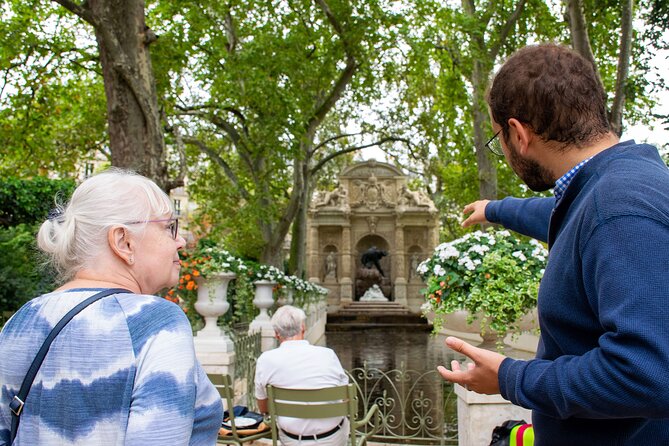
The final stop is Luxembourg Gardens (about 10 minutes), and it’s not just a nice place to stretch—it’s the designed finish. You end in the gardens at Jardin du Luxembourg (75006), so you can stay as long as you want after the walk ends.
This is practical travel thinking. Instead of ending in a random corner where you still have to figure out what to do next, you finish somewhere easy to decompress. Gardens are perfect when you want to cool down your feet, regroup with your phone maps, and decide if you want snacks, a museum detour, or a slow walk back toward dinner.
Also, the tour is described as rain or shine, which is important. Ending in a spot with plenty of outdoor space and walking paths is an advantage if weather changes your plans.
Guide Quality: Why Small Groups Matter Here
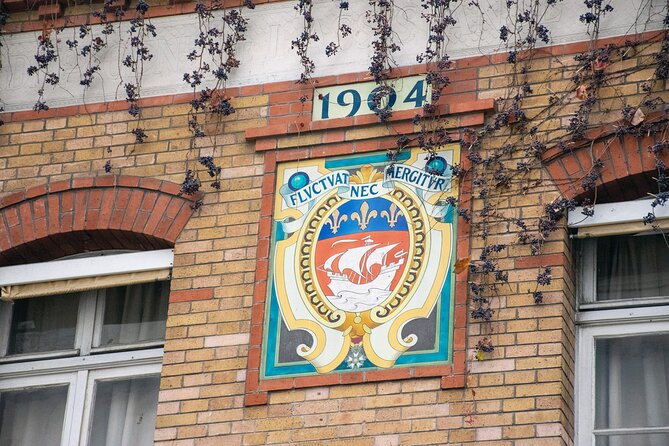
The guides mentioned—Benoit and Waled—are credited with being engaging, friendly, and able to tailor the tour. That tailoring is the real difference between a scripted walk and a useful one. When you’re in a group of up to 8, the guide can adjust in small ways: slowing down when something catches your interest, changing the order of emphasis, or answering the question you keep thinking about.
Another detail I appreciate: the tour highlights the idea of helping you navigate after. This isn’t just storytelling during the walk; it’s also about setting you up to keep exploring on your own with less guesswork.
If you’re traveling with kids, this kind of format can work because it’s short stops and frequent “what are we looking at?” moments. If you’re traveling solo, it can feel more social without being crowded.
And if you prefer a private experience, there’s an option to upgrade to a personal tour for full customization. That can be a good fit if you have specific interests like architecture, religious sites, or street life.
Price and Value: What $66.16 Buys You in the Real World
At $66.16 per person, this isn’t a budget “just get me through the area” tour. You’re paying for a local guide, a small group, and a route built around the stories behind major and lesser-known stops.
Here’s the value math that matters:
- Time efficiency: about two hours is enough to get oriented and educated without consuming your whole day.
- Small group format: up to 8 people means more interaction and less waiting.
- Ticket-free stops listed: the sights are marked with admission ticket free, so you’re less likely to hit surprise costs at each stop.
- You leave with next-step help: the included tips to navigate afterward can save you time and confusion later.
What’s not included is tips/gratuities, so I’d plan to budget for that if you feel the guide earns it. Also, hotel pickup/drop-off isn’t included, so you’ll need to get yourself to the start point near Sorbonne.
If you’re deciding between a cheaper big-group tour and this one, consider how much you’ll remember. A smaller group usually buys you clarity. Clarity is what turns Paris sightseeing into something you actually understand—and can retell later.
Who This Tour Suits Best (and Who Should Rethink It)
This tour is a good match if you want:
- A structured first visit to the Latin Quarter
- A mix of Roman context and classic Paris streets
- A route with limited time at each stop but strong guidance
- A calmer group vibe (max 8) where questions are welcome
It may not be ideal if you want:
- Lots of time inside major sites without time pressure
- A deep, long-form museum style experience
- A tour that feels like pure wandering with no route rhythm
If you like to read about places and then see them afterward, this walk sets you up nicely. If you prefer to learn by doing, it also works because you’re seeing the physical spots while the stories are fresh.
Should You Book This Paris Latin Quarter History & Culture Walk?
I’d book it if you want a smart, human-paced way to connect several key Latin Quarter locations—Roman ruins, a historic street, and the Pantheon—without spending your whole day in transit or in lines.
Choose it especially if you’re the type who likes asking questions and getting answers on the spot. With up to 8 people, that’s actually possible. And ending at Jardin du Luxembourg is a nice bonus that makes the whole plan feel complete, not abrupt.
If your travel style is more about long indoor visits and slow lingering at one monument, then you might pair this with a separate, longer Pantheon or church visit later. But as a guiding introduction to the neighborhood? This one fits well.
FAQ
How long is the Paris Latin Quarter walking tour?
It runs for about 2 hours.
Where does the tour start and end?
It starts at Pierre and Marie Curie Campus, 4 Pl. Jussieu, 75005 Paris, and ends at Jardin du Luxembourg, 75006 Paris.
What group size can I expect?
The tour has a maximum of 8 travelers. There’s also an intimate group and a private upgrade option.
Is the tour offered in English?
Yes, it’s offered in English.
Are admission tickets included for the stops?
For the listed stops, the tour info shows admission tickets as ticket-free.
What’s included in the price?
A local tour guide, an intimate small group, an off-the-beaten-path walking format, and tips to navigate the city after the tour.
Does the tour run rain or shine?
Yes, it takes place rain or shine.
What is the cancellation policy?
Free cancellation is available. You can cancel up to 24 hours in advance for a full refund.
More Walking Tours in Paris
- Paris Top Sights Half Day Walking Tour with a Fun Guide
★ 5.0 · 2,893 reviews - Montmartre Hidden Gems and Scenic Highlights Walking Tour
★ 5.0 · 2,684 reviews - Montmartre Hill French Gourmet Food and Wine Tasting Walking Tour
★ 5.0 · 2,588 reviews - Paris: Montmartre Highlights Walking Tour with a Local Guide
★ 4.9 · 2,318 reviews - Paris Île de la Cité and Notre-Dame Walking Tour With Crypt
★ 5.0 · 2,272 reviews
More Tours in Paris
- Paris: Louvre Guided Tour with Reserved Access & Boat Cruise
★ 4.3 · 16,353 reviews - Paris: Big Bus Hop-On Hop-Off Tour with Optional Cruise
★ 4.4 · 13,279 reviews - Louvre Museum Masterpieces Guided Tour with Access
★ 4.5 · 12,023 reviews - Versailles: Skip-the-Line Tour of Palace and Gardens Access
★ 4.7 · 10,429 reviews - Paris: Louvre Overview, Exploration tour and Reserved Entry
★ 4.1 · 10,145 reviews
More Tour Reviews in Paris
- Paris: 1-Hour Seine Cruise departing from the Eiffel Tower
★ 4.4 · 77,472 reviews - Paris: Louvre Museum Timed-Entrance Ticket
★ 4.6 · 71,977 reviews - Disneyland® Paris 1-Day Ticket
★ 4.6 · 49,412 reviews - Paris: Versailles Palace and Gardens Full Access Ticket
★ 4.6 · 41,579 reviews - Paris: Arc de Triomphe Rooftop Tickets
★ 4.6 · 34,264 reviews
Fresh off the review desk in Paris
- Secrets of Paris Bike Tour in English or Dutch★ 5.0 · 5 reviews
- Paris: Mont Saint-Michel Day Tour with Chinese Tour Guide★ 5.0 · 5 reviews
- Private Street Art 2-Hour Guided Tour in Paris★ 4.5 · 5 reviews
- Orsay Museum Tour: 2h Highlights (Private & Small Group)★ 5.0 · 5 reviews
- Discover Paris in electric golf carts★ 4.0 · 5 reviews
- Paris Private Boat Tour with your own Captain Guide★ 5.0 · 5 reviews
Walking Tours, compared.
 ★ 5.0Paris Top Sights Half Day Walking Tour with a Fun GuideFrom $762,893 reviews
 ★ 5.0Montmartre Hidden Gems and Scenic Highlights Walking TourFrom $382,684 reviews
 ★ 5.0Montmartre Hill French Gourmet Food and Wine Tasting Walking TourFrom $1452,588 reviews
 ★ 4.9Montmartre Highlights Walking Tour with a Local GuideFrom $232,318 reviews
 ★ 5.0Paris Île de la Cité and Notre-Dame Walking Tour With CryptFrom $482,272 reviews
 ★ 4.8Montmartre Cheese, Wine & Pastry Guided Walking TourFrom $1272,255 reviews
 ★ 5.0Paris in a Day: Louvre or Orsay, Eiffel Tower, City Walk & CruiseFrom $1571,956 reviews
 ★ 5.0Paris City Center Free Walking Tour (Tip-Based)From $31,340 reviews
Browse the lists this tour appears in