
Reviewed · WALKING TOURS
Paris: Le Marais Walking Tour
Le Marais changes the way you see Paris. This walking tour strings together iconic sights and local details in a hip neighborhood where Parisians really hang out. I love how it mixes architecture and street-level culture, and I especially like the way your guide connects the area’s past to the present—right through LGBTQ+ history and landmark streets.
One thing to plan for: the route is about 2 miles of walking and it runs rain or shine, so it’s best if you’re comfortable strolling for 90 minutes. Also, the Stravinsky Fountain has been noted as under renovation through 2023, so views may be limited depending on what’s happening during your dates.
In This Review
- Key highlights to look for
- Why Le Marais walks hit different with a guide
- Getting started: Stravinsky Fountain vs Centre Pompidou
- Stravinsky Fountain and Centre Pompidou: color, contradiction, and meaning
- Sainte-Croix-de-la-Bretonnerie and the Marais LGBTQ+ story
- Jewish Quarter streets: Rue des Rosiers and the Street of Rosebushes
- Cloister of Billettes and the church stops that make architecture click
- Hôtel Carnavalet and Place des Vosges: where the walk feels like a postcard
- Ending at Le Village Saint-Paul: shops, art, and a place to linger
- Optional upgrade: narrated Seine cruise when you want a slower pace
- Price and value: is $42 worth it?
- Who this tour suits best
- A quick note on guides (based on real feedback)
- Should you book the Paris Le Marais Walking Tour?
- FAQ
- FAQ
- How long is the Le Marais walking tour?
- What is the price per person?
- How much walking is involved?
- Where does the tour start?
- Does the tour include a Seine cruise?
- What’s included in the tour price?
- Is the tour suitable for wheelchair users?
- Does the tour run in bad weather?
- Is the Stravinsky Fountain always accessible?
Key highlights to look for
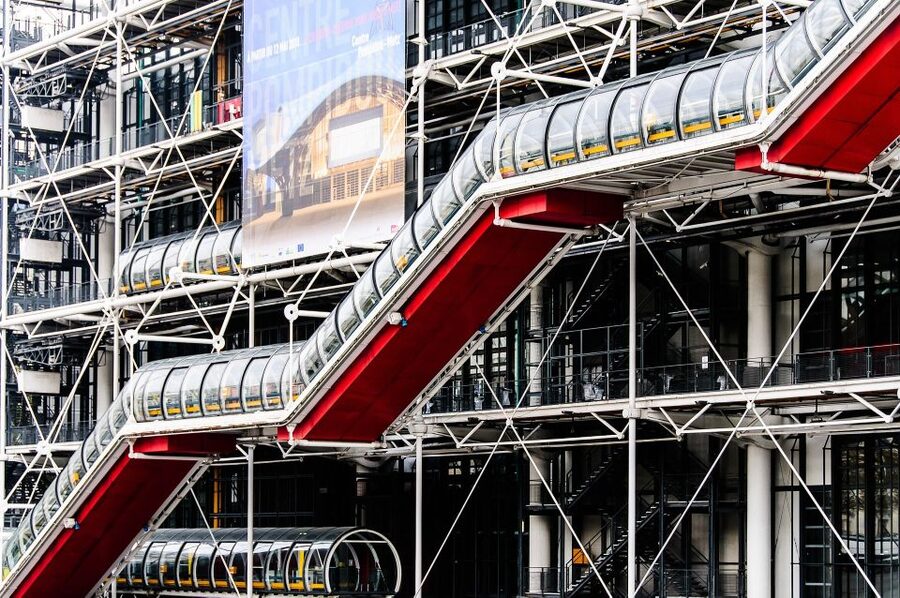
- Inside-out design at Centre Pompidou you’ll never forget once you see it up close
- Stravinsky Fountain with abstract sculptures that spray water (and may be affected by renovation)
- Rue des Rosiers and the Street of Rosebushes for that unmistakable Marais atmosphere
- Sainte-Croix-de-la-Bretonnerie and local LGBTQ+ stories told on the ground
- Place des Vosges and Le Village Saint-Paul to end your day with shops and gardens
- Optional narrated Seine cruise upgrade for an easy add-on later
Why Le Marais walks hit different with a guide

Le Marais is the kind of neighborhood where you can wander for hours and still feel like you’re missing the “why.” With this tour, you get the connective tissue: what the area was, what it became, and how the streets, churches, and squares reflect that shift.
I like tours that do two things well. First, they help you read what you see—so a church façade or a cloister isn’t just scenery. Second, they point you toward the places you’ll want to revisit on your own. This one does both, and it stays focused: 90 minutes, a leisurely pace, and a route that keeps pulling you forward.
Worth weighing up next to this Paris pick
- Paris Top Sights Half Day Walking Tour with a Fun Guide
★ 5.0 · 2,893 reviews - Montmartre Hidden Gems and Scenic Highlights Walking Tour
★ 5.0 · 2,684 reviews - Montmartre Hill French Gourmet Food and Wine Tasting Walking Tour
★ 5.0 · 2,588 reviews - Paris: Montmartre Highlights Walking Tour with a Local Guide
★ 4.9 · 2,318 reviews
Getting started: Stravinsky Fountain vs Centre Pompidou
Your start depends on the option you choose. One starting point is the Stravinsky Fountain area (2 Rue Brisemiche). Another option starts at Centre Pompidou, where your guide begins the “what you’re about to see and why it matters” part.
Either way, the early minutes are about orientation. You’ll get quick context for what you’re looking at—then the tour builds from there. If you’re arriving in the Marais area already, picking the start that’s closest to your hotel can save stress. If you want the day to feel like a movie right away, starting at Stravinsky makes a strong first impression.
Stravinsky Fountain and Centre Pompidou: color, contradiction, and meaning
The tour’s opening stop is the Stravinsky Fountain, known for its abstract sculptures and the way it sprays water as part of the design. Even if you’ve seen photos online, seeing it in motion changes how it lands. It’s playful, strange, and very “Paris without trying too hard.”
Important note: the fountain has been listed as under renovation until 2023, so on your travel dates you might see scaffolding or partial access. If it looks restricted, ask your guide what to expect and where you’ll still get the best views.
From there, you head toward Centre Pompidou, where the guide spotlights the famous inside-out concept—architecture where the structure and movement are exposed rather than hidden. This is a great stop for people who like to understand design, not just take a picture. After the fountain’s quirky whimsy, Pompidou’s industrial look gives you a contrast that makes the neighborhood feel layered.
Sainte-Croix-de-la-Bretonnerie and the Marais LGBTQ+ story
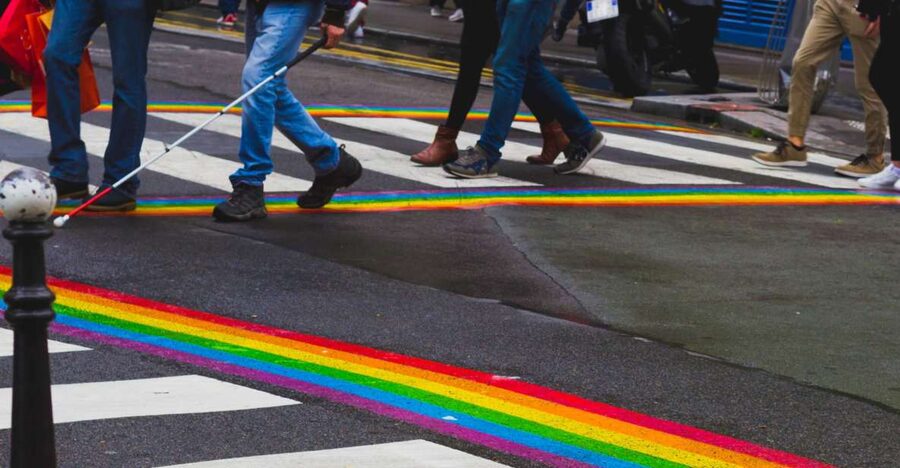
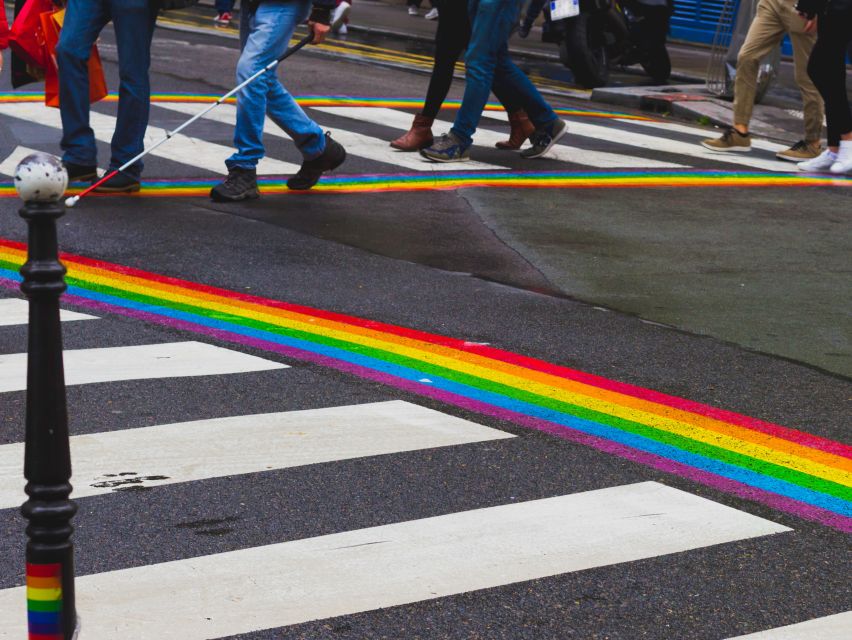
One of the most valuable parts of this tour is how it ties the neighborhood to real community history. At Rue Sainte-Croix de la Bretonnerie, your guide focuses on the area’s thriving LGBTQ+ community, and you’ll connect the stories to specific streets and religious landmarks you can actually see.
This is more than a history lesson. It helps you walk past places without treating them like empty backdrops. Instead, you start noticing things like who used the area, how social life shaped the streets, and why certain corners mattered.
If you like tours that give context you can carry around with you, this is the section to pay attention to—because it changes the tone of the entire Marais experience.
Jewish Quarter streets: Rue des Rosiers and the Street of Rosebushes
Le Marais has long chapters in its book, and the tour moves through the area tied to the former Jewish Quarter. Two stops are especially memorable here: Rue des Rosiers and the Impasse des Arbalétriers area, often described as the Street of Rosebushes.
The Street of Rosebushes is the kind of place that makes you slow down. It’s intimate, photogenic, and it feels different from the bigger, busier roads around it. Even when you’re not looking for shopping or food, these streets have a sensory pull: texture underfoot, narrow passages, and that distinct Marais vibe.
Your guide also helps connect these spaces to the neighborhood’s evolving identity. That matters, because without context, it’s easy to only notice what’s trendy right now. With it, you see why the street character exists at all.
Cloister of Billettes and the church stops that make architecture click
Midway through the walk, you’ll touch stops that reward your attention: Église des Billettes and the Cloister of Billettes, plus Notre-Dame-des-Blancs-Manteaux later on.
These aren’t just “look at a church” moments. Your guide explains what you’re seeing and why it’s part of the neighborhood story. You’ll hear about older Paris roots, including the Church of Our Lady of the White Friars, built in 1258 by Saint Louis (a key historical thread you’ll connect to the religious landscape around you).
If churches aren’t usually your thing, I still recommend leaning in. The guides here seem to focus on making architecture understandable—so you’re not stuck guessing what matters.




Hôtel Carnavalet and Place des Vosges: where the walk feels like a postcard
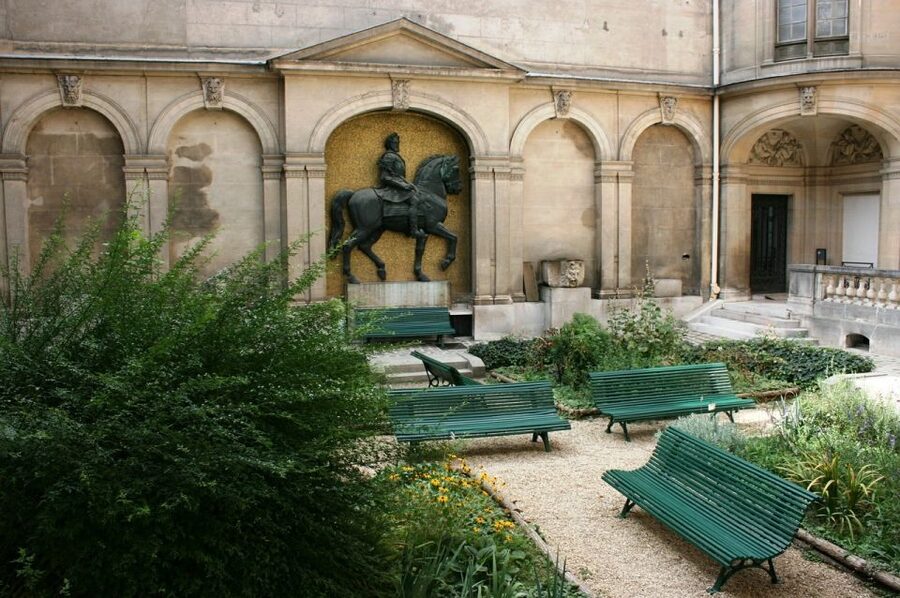
By the time you reach bibliothèque de l’hôtel de ville de Paris and then Hôtel Carnavalet, you’re shifting from neighborhood streets to landmarks that help you see the Marais as a place with a preserved identity.
Then comes Place des Vosges, one of the best endings for anyone who likes symmetry, gardens, and the classic Paris sense of “this is designed.” Even if you’ve visited before, this stop lands better when you’ve just walked through a slice of the neighborhood’s social history.
The overall effect is nice: you start in playful modern art energy, then move through community stories, medieval corners, and end in a square that feels like calm after a good day of walking.
Ending at Le Village Saint-Paul: shops, art, and a place to linger
Your tour finishes in Le Village Saint-Paul, a pocket of antiques, art galleries, and artisan boutiques. This matters because it turns a guided experience into something you can extend on your own. Your guide drops you here, and you can decide how long you want to linger—browse a gallery, pop into a shop, or just enjoy the atmosphere.
If you enjoy ending tours with freedom rather than a hard stop back to the meeting point, this is a smart finish. It also makes it easier to build a full afternoon plan in the area afterward.
Optional upgrade: narrated Seine cruise when you want a slower pace
If you upgrade, you can add a narrated Seine river cruise. The big advantage here is flexibility: the upgrade is described as good for a year from your tour date, so you’re not forced to squeeze it into the same day.
A cruise is also a good pairing with this kind of walking tour. After 90 minutes of narrow streets and buildings close-up, the Seine gives you Paris in a new scale—bridges, monuments, and skyline views that don’t require constant decision-making on your feet.
Price and value: is $42 worth it?
At $42 per person for a 90-minute guided walk, the value depends on what you want from Paris.
If you’re the type who likes to wander but hates guessing the “why,” a guided format is a bargain. You get a local guide, a structured route, and explanation built around the stops you’d otherwise only skim. The walk includes several high-recognition landmarks (like Centre Pompidou) plus neighborhood-specific places that are easy to miss without context.
If you’d rather design your own itinerary and you already know the Marais story, you might feel the cost is unnecessary. But for most people, the mix of architecture, community history, and practical “what to look at” guidance is what makes the price feel fair.
Who this tour suits best
This tour is a strong fit if you:
- Want a quick, organized introduction to Le Marais
- Like architecture that’s explained in plain language
- Care about neighborhood history that connects to real communities
- Prefer a guided walk that ends with shopping and wandering time
It’s less ideal if you hate walking, want a longer “sit-down” sightseeing experience, or are expecting museum time. This is a street-to-street experience, and the focus is on what you see while you move.
A quick note on guides (based on real feedback)
The tour experience seems highly tied to guide style. Past groups have praised guides such as Joanna for being very knowledgeable about the area, and Zack for history plus humor and keeping things engaging. Others have highlighted Maria for answering questions and even sending a follow-up email with recommendations. That’s a good sign: you’re not just buying a route; you’re buying interpretation.
Should you book the Paris Le Marais Walking Tour?
If you want a smart way to understand Le Marais in 90 minutes, I’d book it. It gives you the best kind of guide value: not just facts, but the context that makes streets and buildings start talking.
I’d especially consider it if you plan to explore the Marais afterward anyway. The finish at Le Village Saint-Paul makes it easy to turn the tour into a longer evening, and the option to add a narrated Seine cruise gives you a second way to see the city without extra planning.
FAQ
FAQ
How long is the Le Marais walking tour?
The tour duration is 90 minutes.
What is the price per person?
The price is $42 per person.
How much walking is involved?
The walk is about 2 miles at a leisurely pace.
Where does the tour start?
Start points can vary. Options include the Stravinsky Fountain area (2 Rue Brisemiche) or Centre Pompidou.
Does the tour include a Seine cruise?
An optional upgrade includes a narrated Seine river cruise, and it’s described as good for a year from the tour date.
What’s included in the tour price?
Included items are a local guide, the option for a private format if chosen, the optional narrated Seine cruise upgrade (if you add it), and a Paris shuttle for convenient transportation.
Is the tour suitable for wheelchair users?
Yes. The activity is listed as wheelchair accessible, and it’s also accessible for strollers.
Does the tour run in bad weather?
Yes. The tour takes place rain or shine.
Is the Stravinsky Fountain always accessible?
The Stravinsky Fountain is listed as under renovation until 2023, so you should be prepared for limited viewing depending on current conditions during your visit.
More Walking Tours in Paris
- Paris Top Sights Half Day Walking Tour with a Fun Guide
★ 5.0 · 2,893 reviews - Montmartre Hidden Gems and Scenic Highlights Walking Tour
★ 5.0 · 2,684 reviews - Montmartre Hill French Gourmet Food and Wine Tasting Walking Tour
★ 5.0 · 2,588 reviews - Paris: Montmartre Highlights Walking Tour with a Local Guide
★ 4.9 · 2,318 reviews - Paris Île de la Cité and Notre-Dame Walking Tour With Crypt
★ 5.0 · 2,272 reviews
More Tours in Paris
- Paris: Louvre Guided Tour with Reserved Access & Boat Cruise
★ 4.3 · 16,353 reviews - Paris: Big Bus Hop-On Hop-Off Tour with Optional Cruise
★ 4.4 · 13,279 reviews - Louvre Museum Masterpieces Guided Tour with Access
★ 4.5 · 12,023 reviews - Versailles: Skip-the-Line Tour of Palace and Gardens Access
★ 4.7 · 10,429 reviews - Paris: Louvre Overview, Exploration tour and Reserved Entry
★ 4.1 · 10,145 reviews
More Tour Reviews in Paris
- Paris: 1-Hour Seine Cruise departing from the Eiffel Tower
★ 4.4 · 77,472 reviews - Paris: Louvre Museum Timed-Entrance Ticket
★ 4.6 · 71,977 reviews - Disneyland® Paris 1-Day Ticket
★ 4.6 · 49,412 reviews - Paris: Versailles Palace and Gardens Full Access Ticket
★ 4.6 · 41,579 reviews - Paris: Arc de Triomphe Rooftop Tickets
★ 4.6 · 34,264 reviews
Fresh off the review desk in Paris
- Secrets of Paris Bike Tour in English or Dutch★ 5.0 · 5 reviews
- Paris: Mont Saint-Michel Day Tour with Chinese Tour Guide★ 5.0 · 5 reviews
- Private Street Art 2-Hour Guided Tour in Paris★ 4.5 · 5 reviews
- Orsay Museum Tour: 2h Highlights (Private & Small Group)★ 5.0 · 5 reviews
- Discover Paris in electric golf carts★ 4.0 · 5 reviews
- Paris Private Boat Tour with your own Captain Guide★ 5.0 · 5 reviews
Walking Tours, compared.
 ★ 5.0Paris Top Sights Half Day Walking Tour with a Fun GuideFrom $762,893 reviews
 ★ 5.0Montmartre Hidden Gems and Scenic Highlights Walking TourFrom $382,684 reviews
 ★ 5.0Montmartre Hill French Gourmet Food and Wine Tasting Walking TourFrom $1452,588 reviews
 ★ 4.9Montmartre Highlights Walking Tour with a Local GuideFrom $232,318 reviews
 ★ 5.0Paris Île de la Cité and Notre-Dame Walking Tour With CryptFrom $482,272 reviews
 ★ 4.8Montmartre Cheese, Wine & Pastry Guided Walking TourFrom $1272,255 reviews
 ★ 5.0Paris in a Day: Louvre or Orsay, Eiffel Tower, City Walk & CruiseFrom $1571,956 reviews
 ★ 5.0Paris City Center Free Walking Tour (Tip-Based)From $31,340 reviews