

Reviewed · WALKING TOURS
Paris Napoleon Walking Tour with an Historian Guide
Napoleon’s story lives in plain sight across Paris. This 3-hour walking tour uses a professional art historian guide to connect Napoleon’s life to real streets, palaces, and churches, with a route that lines up major sights in one focused morning or afternoon window.
What I like most is that you get expert storytelling (I’m drawn to how guides keep the political and cultural context clear), and you cover multiple landmark-quality stops without bouncing all over town. The only catch is you’ll be on your feet for much of the tour, so if your stamina is limited, plan for slower pacing and extra breaks.
In This Review
- Quick hits: what makes this Napoleon walk work
- Why Napoleon in Paris makes sense on foot
- Starting at Librairie Delamain on Rue Saint-Honoré
- Stop 1: Palais-Royal, where gossip and revolution share the same arcades
- Stop 2: Église Saint-Roch and the political edge of prayer
- Stop 3: Jardin des Tuileries along Paris’s big east–west axis
- Stop 4: Hôtel de Salm and the logic of honor (not just battle)
- Stop 5: Palais-Bourbon views, Parliament, and the endgame at Les Invalides
- What the historian guide adds (and why reviews keep pointing to it)
- Price and value: what $226.39 buys you in real terms
- How the walk should feel: timing, pace, and what to bring
- Should you book the Paris Napoleon Walking Tour?
- FAQ
- How long is the Paris Napoleon Walking Tour?
- What language is the tour offered in?
- Is this tour private or group-based?
- Where does the tour start?
- Where does the tour end?
- Are admission tickets included?
- Is food included in the price?
- Do I need hotel pickup?
- Can I cancel for a full refund?
Quick hits: what makes this Napoleon walk work
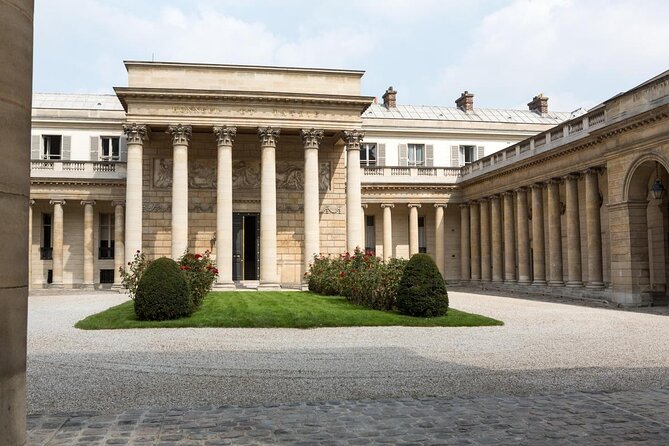
- Historian-led route with professional art historian guidance and clear explanations tied to specific locations
- Napoleon’s influence without museum overload, using streets and architecture to tell the story
- Strong stop selection across Left Bank and central Paris, from Palais-Royal to the National Assembly area
- Practical timing with morning and afternoon options so it fits real sightseeing days
- Private tour format so your group gets attention and room for questions
- End at Les Invalides, where Napoleon’s tomb anchors the trip’s final moment
Why Napoleon in Paris makes sense on foot
Napoleon isn’t just a name you read about. In Paris, he’s in the geometry of the city and in the way old power centers got reshaped. This tour is built around that idea: you walk between places that helped form the mood of his era, then you end where his legacy is physically set in stone at Les Invalides.
The route also helps you think in layers. You’ll move from spaces tied to court intrigue and revolution (Palais-Royal) to religious and civic power (Église Saint-Roch and the National Assembly area), then into the “imperial promenade” atmosphere of the Tuileries Gardens. Finally, you land on the honor-and-memory theme at Hôtel de Salm and finish at Napoleon’s tomb.
And because it’s a private experience, the pacing feels less like a checklist and more like a guided walk with a historian who can answer the questions that pop up when you’re standing in front of the building. That’s a big part of the value here.
Worth weighing up next to this Paris pick
- Paris Top Sights Half Day Walking Tour with a Fun Guide
★ 5.0 · 2,893 reviews - Montmartre Hidden Gems and Scenic Highlights Walking Tour
★ 5.0 · 2,684 reviews - Montmartre Hill French Gourmet Food and Wine Tasting Walking Tour
★ 5.0 · 2,588 reviews - Paris: Montmartre Highlights Walking Tour with a Local Guide
★ 4.9 · 2,318 reviews
Starting at Librairie Delamain on Rue Saint-Honoré
You start at Librairie Delamain, 155 Rue Saint-Honoré in the 1st arrondissement. It’s a good launch point because Rue Saint-Honoré sits at the crossroads of Paris glamour and political history. You’re not starting in a random corner; you’re starting in the thick of the action.
This is the kind of meeting spot that helps you “get bearings” fast. Even before the first stop, you’re already in the neighborhood where you’ll see the contrast between grand façades and street-level daily life: boutiques, classic Paris sidewalks, and the sense that power once traveled down this same corridor.
You’ll also want to think about logistics here. Since there’s no hotel pickup, you’ll be relying on public transit. The good news is the tour is described as near public transportation, so you’re not committing to a long pre-walk from a distant drop-off.
Stop 1: Palais-Royal, where gossip and revolution share the same arcades
The first stop is Palais-Royal, described as tucked behind elegant arcades with a past tied to scandal, duels, and revolutionary agitation. The key value of this stop is not just the architecture. It’s the vibe the guide can put into context: how Parisian politics and social life often ran on the same channels.
This matters for Napoleon because his rise wasn’t only military. It was also about power networks, public messaging, and the ability to read a city’s mood. Palais-Royal is the kind of place where you can understand why ideas spread quickly in Paris. Even today, the gardens feel calm, but the setting itself hints at what used to happen under those arcades.
Practical note: the tour lists admission as free, and time here is around 15 minutes. That’s enough to get the story and a quick look, without turning it into a slow museum-style visit.
Stop 2: Église Saint-Roch and the political edge of prayer
Next comes Église Saint-Roch, also about 15 minutes, with free admission. This church is Baroque, but what makes it worth your time is the overlap between sacred space and political change. The tour frames it as a place where Napoleon’s France intersected with revolutionary violence.
In other words, you’re not just looking at a pretty façade. You’re connecting religion to the real world of power. When a guide explains how these places were part of the same historical pressure cooker, the church stops feeling like a separate category and starts feeling like a stage.
This stop is also a good “reset” in the middle of the walk. After Palais-Royal’s more intrigue-heavy atmosphere, Saint-Roch gives you a different lens on how empire and revolution could coexist in the same city map.
Stop 3: Jardin des Tuileries along Paris’s big east–west axis
At Jardin des Tuileries, you get about 30 minutes and free entry. This is a longer pause, and it’s the sort of break that makes a walking tour feel fair. You’re not rushing through; you’re standing where you can actually absorb the city’s scale.
The tour highlights a major visual story: Paris’s east–west axis, stretching toward major landmarks in both directions. You’ll hear how the gardens relate to Napoleon’s royal promenade idea, and you’ll get a sense of why rulers cared so much about urban views. A promenade is never only for leisure. It’s for spectacle, presence, and control of how people move and look.
If you like “how cities are designed to influence people,” this is your stop. It also helps you understand why Napoleon’s legacy feels physical, not just historical.
Practical tip: bring water if it’s warm. The Tuileries can feel open and exposed, and while you get time to linger, you’re still outdoors for a chunk of the tour.
Stop 4: Hôtel de Salm and the logic of honor (not just battle)
Then you reach Hôtel de Salm, now the Musée de la Légion d’Honneur, for about 15 minutes. The tour notes that admission is not included here. That’s an important consideration because it signals the stop is more about exterior orientation and context from your guide, not a guaranteed full museum visit.
Still, this stop is a great payoff. It’s the “Napoleon as system-builder” angle. The tour explains how Napoleon created France’s highest order of merit here, using honor as a tool to reward loyalty and valor. That’s a different way to think about empire: not only conquest and laws, but also institutions that shape who gets recognized and why.
If you’re the type who likes connecting the dots between ideology and real buildings, this is where things click. You can also decide on the spot whether you want to pay to go inside on your own time after the tour.
Worth weighing up next to this Paris pick




Stop 5: Palais-Bourbon views, Parliament, and the endgame at Les Invalides
The last stretch includes the 7th arrondissement near Palais-Bourbon, home to France’s National Assembly, for around 10 minutes. The tour frames the location with sweeping views toward Place de la Concorde and the Madeleine Church, and ties it back to Napoleon-era power and politics.
Even in a short time, a vantage point like this matters because it makes you think about government as a long-running Paris theme. Napoleon’s legacy didn’t end with the empire. It continued to echo through institutions, even when the regime changed.
From there, the tour concludes at Les Invalides, where you step inside the church that guards Napoleon’s tomb. This end point is more than dramatic. It’s practical and meaningful: after walking through the city’s clues, you get the final anchor where his memory is centralized. It’s the kind of closing moment that makes the earlier stops feel like they were pointing somewhere.
What the historian guide adds (and why reviews keep pointing to it)
This tour is guided by a professional art historian, and the reviews strongly reflect the impact of the storytelling and Q&A. You’ll see repeat praise for guides such as Anja and Olivier, including how they explain Napoleon and French history from different angles and answer lots of questions patiently.
That matters because Napoleon can be the kind of subject where people either oversimplify him or get lost in dates. A good historian guide helps you hold complexity in your head without turning the walk into a lecture. I like that the experience is framed as personal, with attention on a private tour format, which makes it easier to ask follow-ups when something sparks your curiosity.
If you’re the kind of traveler who reads about Napoleon and then wonders what that means in a real city, this guide style fits well.
Price and value: what $226.39 buys you in real terms
The listed price is $226.39 per person for about 3 hours, with a mobile ticket and English service. At that rate, you’re paying for three things: a trained professional guide, a structured route that hits multiple high-impact locations, and a private-tour experience.
Here’s why it can still feel like value:
- Many Napoleon-focused experiences end up being either too museum-heavy or too broad. This one uses the city itself as the “text,” with short time blocks that keep things moving.
- Most of the key stops are free admission on the itinerary (except Hôtel de Salm, where admission is not included). That helps you avoid surprise costs mid-walk.
- The ending at Les Invalides is a high value capstone. You’re not just hearing about legacy; you’re finishing at the site.
Is it pricey? Yes, compared with generic city walks. But if your goal is interpretation, not just photos, the pricing starts to make sense.
How the walk should feel: timing, pace, and what to bring
The tour runs for about 3 hours and is offered in English, with both morning and afternoon options. The itinerary is built from quick stops and one longer garden segment, which usually means you get variety without spending all day in crowds.
You’ll need moderate physical fitness, because it’s a walking tour through central Paris. That doesn’t mean it’s a marathon, but it does mean you should wear shoes you trust. Paris sidewalks can be uneven, and the tour covers enough distance that comfortable footwear matters more than you expect.
What to bring:
- Comfortable walking shoes
- Water (especially around the Tuileries stretch)
- A phone with data or offline maps for finding the meeting point at Rue Saint-Honoré
Also, keep your expectations on point. This isn’t listed as a food tour, so plan to eat before or after. The focus is history and landmarks, not lunch stops.
Should you book the Paris Napoleon Walking Tour?
I’d book this if you want Napoleon in context, tied directly to the places where you can actually stand and look around. It’s especially good for you if:
- You like architecture + storytelling
- You want a tight route that still covers meaningful stops
- You prefer a historian who can handle questions and explain complexity clearly
- You plan to visit Les Invalides anyway and want a guided way to understand what you’re seeing
I’d think twice if you dislike extended walking, or if you want a schedule packed with museum time rather than street-level interpretation. Also note that Hôtel de Salm admission isn’t included, so if you strongly want to go inside, you’ll need to plan that separately.
If you fit the first group, this tour is a strong use of a half-day in Paris. You’ll leave with Napoleon’s influence mapped onto the city in a way that’s hard to get from a guidebook alone.
FAQ
How long is the Paris Napoleon Walking Tour?
It lasts about 3 hours.
What language is the tour offered in?
The tour is offered in English.
Is this tour private or group-based?
This is a private tour/activity, so only your group participates.
Where does the tour start?
It starts at Librairie Delamain, 155 Rue Saint-Honoré, 75001 Paris, France.
Where does the tour end?
It ends at Les Invalides, at the church that guards Napoleon’s tomb (Napoleon’s Tomb, 129 Rue de Grenelle, 75007 Paris).
Are admission tickets included?
Most stops listed are free admission, but Hôtel de Salm (Musée de la Légion d’Honneur) is noted as admission not included.
Is food included in the price?
No. Food and drinks are not included.
Do I need hotel pickup?
No. Hotel pickup and drop-off are not included.
Can I cancel for a full refund?
Yes, you can cancel up to 24 hours in advance for a full refund.
More Walking Tours in Paris
- Paris Top Sights Half Day Walking Tour with a Fun Guide
★ 5.0 · 2,893 reviews - Montmartre Hidden Gems and Scenic Highlights Walking Tour
★ 5.0 · 2,684 reviews - Montmartre Hill French Gourmet Food and Wine Tasting Walking Tour
★ 5.0 · 2,588 reviews - Paris: Montmartre Highlights Walking Tour with a Local Guide
★ 4.9 · 2,318 reviews - Paris Île de la Cité and Notre-Dame Walking Tour With Crypt
★ 5.0 · 2,272 reviews
More Tours in Paris
- Paris: Louvre Guided Tour with Reserved Access & Boat Cruise
★ 4.3 · 16,353 reviews - Paris: Big Bus Hop-On Hop-Off Tour with Optional Cruise
★ 4.4 · 13,279 reviews - Louvre Museum Masterpieces Guided Tour with Access
★ 4.5 · 12,023 reviews - Versailles: Skip-the-Line Tour of Palace and Gardens Access
★ 4.7 · 10,429 reviews - Paris: Louvre Overview, Exploration tour and Reserved Entry
★ 4.1 · 10,145 reviews
More Tour Reviews in Paris
- Paris: 1-Hour Seine Cruise departing from the Eiffel Tower
★ 4.4 · 77,472 reviews - Paris: Louvre Museum Timed-Entrance Ticket
★ 4.6 · 71,977 reviews - Disneyland® Paris 1-Day Ticket
★ 4.6 · 49,412 reviews - Paris: Versailles Palace and Gardens Full Access Ticket
★ 4.6 · 41,579 reviews - Paris: Arc de Triomphe Rooftop Tickets
★ 4.6 · 34,264 reviews
Fresh off the review desk in Paris
- Secrets of Paris Bike Tour in English or Dutch★ 5.0 · 5 reviews
- Paris: Mont Saint-Michel Day Tour with Chinese Tour Guide★ 5.0 · 5 reviews
- Private Street Art 2-Hour Guided Tour in Paris★ 4.5 · 5 reviews
- Orsay Museum Tour: 2h Highlights (Private & Small Group)★ 5.0 · 5 reviews
- Discover Paris in electric golf carts★ 4.0 · 5 reviews
- Paris Private Boat Tour with your own Captain Guide★ 5.0 · 5 reviews
Walking Tours, compared.
 ★ 5.0Paris Top Sights Half Day Walking Tour with a Fun GuideFrom $762,893 reviews
 ★ 5.0Montmartre Hidden Gems and Scenic Highlights Walking TourFrom $382,684 reviews
 ★ 5.0Montmartre Hill French Gourmet Food and Wine Tasting Walking TourFrom $1452,588 reviews
 ★ 4.9Montmartre Highlights Walking Tour with a Local GuideFrom $232,318 reviews
 ★ 5.0Paris Île de la Cité and Notre-Dame Walking Tour With CryptFrom $482,272 reviews
 ★ 4.8Montmartre Cheese, Wine & Pastry Guided Walking TourFrom $1272,255 reviews
 ★ 5.0Paris in a Day: Louvre or Orsay, Eiffel Tower, City Walk & CruiseFrom $1571,956 reviews
 ★ 5.0Paris City Center Free Walking Tour (Tip-Based)From $31,340 reviews