
Reviewed · PARIS PASTRY & MACARON CLASSES
Paris Small-Group Macaron Making Class with a French Chef
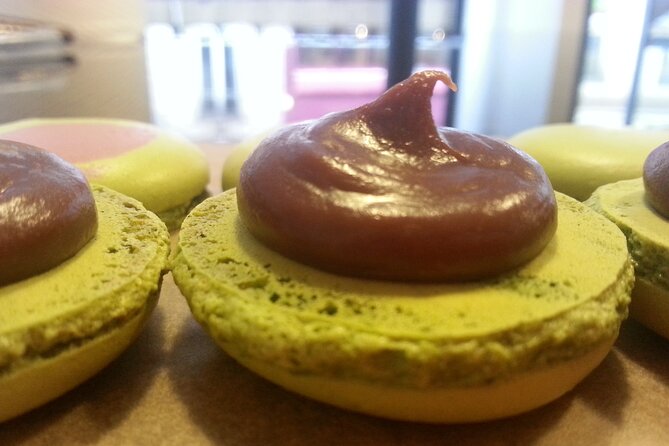
Macarons feel fancy. They are oddly teachable in Paris. This hands-on class has a small-group setup where you learn the technical basics that make macarons land right, from Italian meringue to filling and topping choices.
I especially like that you get clear, step-by-step direction to help you judge texture and timing, not just follow a worksheet. Another big win for me is that it’s gluten-free, so you can focus on the technique without worrying about flour.
One possible drawback: this is a focused, sometimes intense class. If you’re hoping for a high-energy showman vibe, you might find the teaching style more calm and precise than bubbly.
In This Review
- Key things that make this class worth your time
- Why this Paris macaron class is built for real results
- Where it happens: Patisserie a la Carte and what that means for you
- The main event: learning Italian meringue macarons step by step
- The touch test and the timing that usually trips people up
- Piping, precision, and why small coaching beats a big lecture
- Ganache secrets: how to get a smooth filling that sets properly
- Flavor and garnish options that help you customize without chaos
- Tea, coffee, aprons, recipes, and the stuff you actually need
- How long it takes, and why 2.5 hours is the right pace for macarons
- Price in context: what $114.65 buys you (and what it doesn’t)
- Who this macaron class suits best in Paris
- What to watch for before you go
- Should you book this macaron-making class?
- FAQ
- How much does the Paris macaron making class cost?
- How long is the class?
- Is the class in English?
- How big is the class?
- Is there an age limit?
- Is the class gluten-free?
- What’s included in the price?
- What is not included?
- Where is the meeting point?
- What’s the cancellation timing?
Key things that make this class worth your time
- Max 6 people means more hands-on coaching instead of watching from the sidelines
- Italian meringue method teaches the technical route to consistent macaron shells
- Touch-based doneness checks help you learn when the batter is right
- Whisk-and-ganache technique focuses on getting a silky filling, not just a sweet spread
- Lots of garnish options (pistachios, vanilla, raspberries, chocolate shavings, passionfruit)
Why this Paris macaron class is built for real results
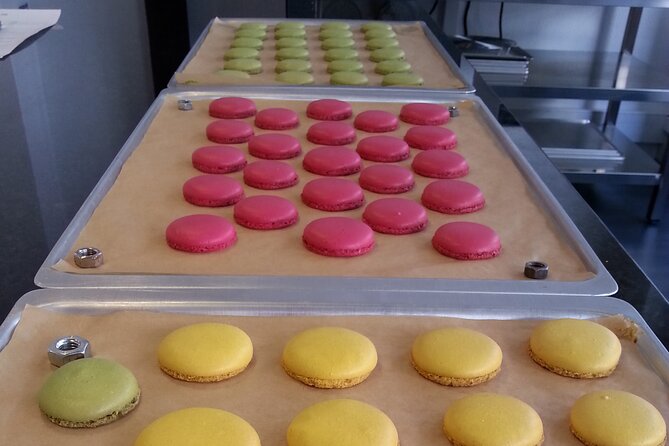
If you’ve ever tried to make macarons at home, you already know the truth: they’re not hard because they’re mysterious. They’re hard because tiny changes in texture and timing can ruin the outcome. This class attacks those pressure points directly.
You’ll work through the process in a way that’s practical. You learn what the mixture should look like, then how it should feel, and what to do if it’s not behaving. That makes it much easier to repeat the recipe back home, even if you’re not a professional.
Also, the setup matters. With a maximum of 6 in the class, you’re more likely to get real corrections while your batter is still on the table—not after you’ve already piped the whole tray.
More aprons-on macaron and pastry classes
- Paris: Macaron Class at Galeries Lafayette
★ 4.2 · 1,196 reviews - Paris Croissant Small-Group Baking Class with a Chef
★ 5.0 · 910 reviews - Paris: French Croissant Baking Class with a Chef
★ 4.9 · 712 reviews - Paris Cooking Class: Learn How to Make Macarons
★ 5.0 · 634 reviews
Where it happens: Patisserie a la Carte and what that means for you
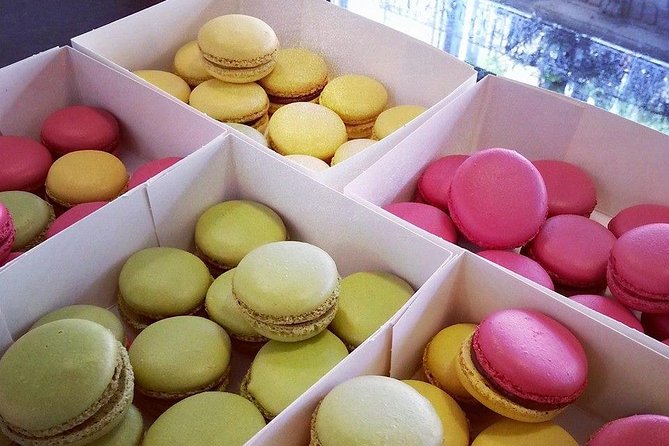
The class takes place at Patisserie a la Carte, starting at 9 Rue Thimonnier, 75009 Paris. There’s no hotel pickup or complicated back-and-forth transportation. You go, you bake, and you end right back where you started.
That’s a small detail, but it changes the whole experience. You’re not spending half the morning lost between stops. You can also time it around the rest of your day in Paris without stress.
The location is also described as near public transportation. That’s useful if you want to fit the class in between sightseeing blocks and you don’t want to rely on taxis.
The main event: learning Italian meringue macarons step by step
This class follows the Italian meringue method, which is more technical than some other approaches. The upside is reliability: when you understand the steps, you get macaroons with that classic light crunch.
You’ll be guided from the first prep through the finishing touches. The focus isn’t just on getting to a tray of cookies. It’s on learning the sequence and what each step is doing for the final texture.
One of the most valuable parts is learning how to macaron the paste so the cookies come out light and crisp. “Macaronage” is one of those terms that sounds fancy, but here it’s treated like technique you can actually do.
The touch test and the timing that usually trips people up
Macarons tend to fail in predictable ways: under-mixed batter, over-mixed batter, shells that don’t dry enough, or fillings that don’t set right. This class targets the middle ground—how to tell when ingredients are ready.
You’ll learn to judge how done things are by touch. That matters because even if you follow exact measurements, real kitchens have different temperatures and humidity. Touch cues help you adjust in the moment instead of blaming your oven.
You’ll also learn a correct way of holding the whisk for a silky result with the filling. That’s the kind of detail that seems minor until you see the difference in texture.
Piping, precision, and why small coaching beats a big lecture
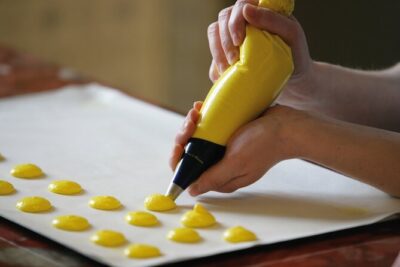
Piping is where a lot of beginners get stuck. It’s not only about squeezing the bag. It’s also about consistency—same size, smooth tops, and even spacing.
The class format helps here because you’re not just watching someone else do it. You’re actively doing the work. And because the class is limited to 6 participants, you’re more likely to get quick correction when your technique needs a tweak.
Some preparations may be done in pairs (group of 2), depending on what’s going on in the kitchen. That can be a nice balance: you still get hands-on practice, but you’re not always scrambling alone.
Ganache secrets: how to get a smooth filling that sets properly
Macarons without good ganache are basically just pretty cookies. This class treats ganache like a core skill, not a last-minute add-on.
You’ll learn the “only one good way” approach to whisking—so the ganache turns smooth instead of grainy or uneven. It’s a technique lesson disguised as dessert.
Then comes filling strategy. You’ll pick up little tricks for making the ganache filling work well with macarons, including how to keep the texture right for piping or assembly. That’s especially important if you’re taking them home and want them to taste good later, not just the moment they leave the oven.
Worth weighing up next to this Paris pick

Flavor and garnish options that help you customize without chaos
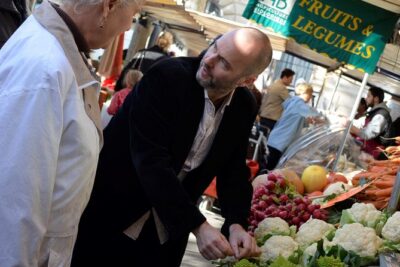
One of the fun parts of a Paris food class is making something classic and then adding your own flavor direction. Here, you’ll learn about different garnish styles, including choices like pistachios, vanilla, raspberries, chocolate shavings, and passionfruit.
You’ll also cover options for chocolate ganache versus fruit-forward flavors. The goal is to help you understand how fillings behave, not only how they taste. When you know that, it’s easier to swap flavors later at home without the whole batch going off track.
If you like variety, this is a good class because it doesn’t lock you into one boring combo. You leave with a menu of ideas you can recreate.
Tea, coffee, aprons, recipes, and the stuff you actually need
This class includes tea and coffee, plus aprons, and all cooking equipment. Ingredients are handled in a way that supports the learning process, so you’re not spending class time hunting down tools or figuring out quantities.
You’ll also receive an English language copy of the recipes. That matters more than it sounds. Macaron results improve when you can read your steps clearly afterward, while the technique is still fresh in your mind.
There’s also a take-home component: take home bags so you can bring your macarons with you. And yes, you’ll likely be tempted to eat them right there. This is the kind of class where the smell does some persuasion.
How long it takes, and why 2.5 hours is the right pace for macarons
The class runs about 2 hours 30 minutes. That’s long enough for real hands-on work and technique practice, but not so long that you lose focus.
Also, macarons have timing built into them. You need the dough to rest or dry appropriately, and fillings need the right texture. This class pace gives you room for those steps instead of rushing you through.
Some people note it can feel intense. I think that’s honest: macarons demand attention. But intensity here is mostly the good kind—focused instruction and time to do things correctly.
Price in context: what $114.65 buys you (and what it doesn’t)
At $114.65 per person, you’re paying for more than ingredients. You’re paying for a professional French pastry chef, a small group of up to 6, hands-on equipment support, and recipe documentation in English.
It’s also a class where the technique is the product. If macarons are your passion, this is one of the better ways to learn because you get immediate feedback while the mixture is still in front of you.
What’s not included is also clear: hotel pickup/drop-off and transportation to/from the attraction area. For most people, that’s fine because the meeting point is accessible via public transport, and you’re not locked into a long travel day.
If you’re deciding between a food tour and a baking class, think about what you want. If you want a seat at a table, you might prefer a tasting-focused tour. If you want a skill you can repeat, this class is the better value.
Who this macaron class suits best in Paris
This class is a great fit if you’re:
- a baker who wants technique feedback, not just a demonstration
- a first-timer who’s tired of failed attempts at home
- cooking-curious travelers who enjoy hands-on food experiences
- visiting with teens (minimum age is 12, and kids must attend with a registered adult)
It’s also ideal for people who like French precision without needing a full culinary degree. The instruction is built around steps you can replicate.
In the recent past, chefs such as Hiba and Gaëlle have been praised for patience and clear guidance. Marie and Julie also show up in instructor notes, with the same theme: teaching that helps you succeed instead of leaving you to figure things out solo.
What to watch for before you go
A few practical notes can make your session smoother.
First, arrive early. If you’re more than 5 minutes late, the class starts without you. At 15 minutes with no one showing up, the class can be canceled and your booking may be treated as a last-minute, non-refundable cancellation. That’s not meant to be harsh—it’s how a baking schedule works.
Second, tell the operator about allergies or special dietary requirements when you book. The class is described as gluten-free, but it’s still smart to flag anything else you need handled.
Third, bring your brain to the room. Macarons can’t be made well while you’re distracted. If you’re the type who wants to take 200 photos instead of learning the process, you might feel the class is too tight on focus time.
Should you book this macaron-making class?
Yes, if you want a hands-on Paris food experience that teaches technique you can use again. The combination of small-group attention, Italian meringue instruction, and ganache-focused guidance is a smart way to learn macarons instead of just collecting a souvenir.
I’d skip it only if your priority is pure sightseeing vibe or high-energy entertainment. This is a precision class. It’s more calm and structured than showy.
If you’re willing to pay attention and follow steps, you’ll likely leave with two things: macarons you can take home and a clearer mental model for why they work.
FAQ
How much does the Paris macaron making class cost?
It costs $114.65 per person.
How long is the class?
The class lasts about 2 hours 30 minutes.
Is the class in English?
Yes. The experience is offered in English, and you also get an English language copy of the recipes.
How big is the class?
The class is limited to a maximum of 6 participants.
Is there an age limit?
The minimum age is 12. Children must attend with a registered adult (1 adult per child).
Is the class gluten-free?
Yes, it is described as GLUTEN-FREE.
What’s included in the price?
Included are the professional French pastry chef, small-group size (up to 6), English recipe copies, aprons, all cooking equipment, take-home bags, tea and coffee, and an Everyday Gourmet French Tarts eBook for the operator’s 10th anniversary.
What is not included?
Hotel pickup and drop-off and transportation to or from attractions are not included.
Where is the meeting point?
You start at 9 Rue Thimonnier, 75009 Paris, France, and the activity ends back at the meeting point.
What’s the cancellation timing?
You can cancel up to 24 hours in advance for a full refund. If you cancel less than 24 hours before the start time, the amount paid is not refunded.
More Workshops in Paris
- Fragonard Paris: Mini Perfume Workshop
★ 4.5 · 1,924 reviews - Paris: Macaron Class at Galeries Lafayette
★ 4.2 · 1,196 reviews - Paris Cooking Class and Lunch with Wine plus Market Visit Option
★ 5.0 · 1,024 reviews - Paris Croissant Small-Group Baking Class with a Chef
★ 5.0 · 910 reviews - Paris: 2-Hour Perfume Creation Workshop
★ 4.8 · 731 reviews
More Tour Reviews in Paris
- Paris: 1-Hour Seine Cruise departing from the Eiffel Tower
★ 4.4 · 77,472 reviews - Paris: Louvre Museum Timed-Entrance Ticket
★ 4.6 · 71,977 reviews - Disneyland® Paris 1-Day Ticket
★ 4.6 · 49,412 reviews - Paris: Versailles Palace and Gardens Full Access Ticket
★ 4.6 · 41,579 reviews - Paris: Arc de Triomphe Rooftop Tickets
★ 4.6 · 34,264 reviews
More Macaron and Pastry Classes
- Paris: Macaron Class at Galeries Lafayette
★ 4.2 · 1,196 reviews - Paris Croissant Small-Group Baking Class with a Chef
★ 5.0 · 910 reviews - Paris: French Croissant Baking Class with a Chef
★ 4.9 · 712 reviews - Paris Cooking Class: Learn How to Make Macarons
★ 5.0 · 634 reviews - Paris: French Macaron Culinary Class with a Chef
★ 4.9 · 591 reviews
Fresh off the review desk in Paris
- Secrets of Paris Bike Tour in English or Dutch★ 5.0 · 5 reviews
- Paris: Mont Saint-Michel Day Tour with Chinese Tour Guide★ 5.0 · 5 reviews
- Private Street Art 2-Hour Guided Tour in Paris★ 4.5 · 5 reviews
- Orsay Museum Tour: 2h Highlights (Private & Small Group)★ 5.0 · 5 reviews
- Discover Paris in electric golf carts★ 4.0 · 5 reviews
- Paris Private Boat Tour with your own Captain Guide★ 5.0 · 5 reviews
Paris Pastry & Macaron Classes, compared.
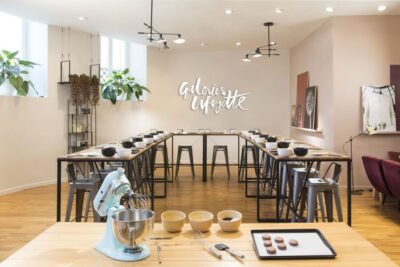 ★ 4.2Macaron Class at Galeries LafayetteFrom $691,196 reviews
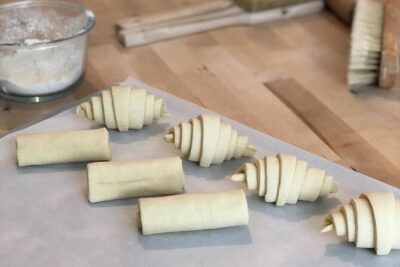 ★ 5.0Paris Croissant Small-Group Baking Class with a ChefFrom $157910 reviews
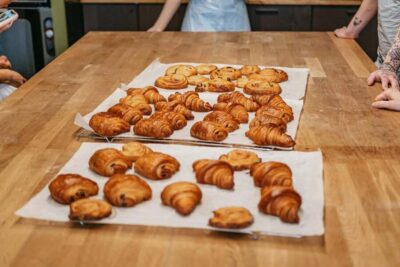 ★ 4.9French Croissant Baking Class with a ChefFrom $159712 reviews
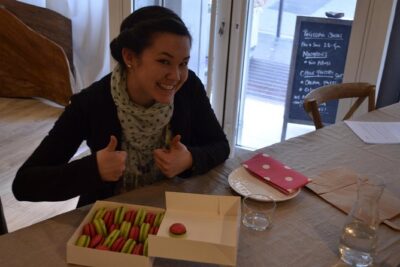 ★ 5.0Paris Cooking Class: Learn How to Make MacaronsFrom $156634 reviews
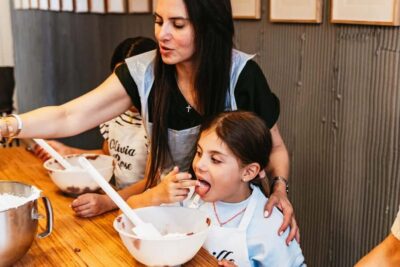 ★ 4.9French Macaron Culinary Class with a Chef591 reviews
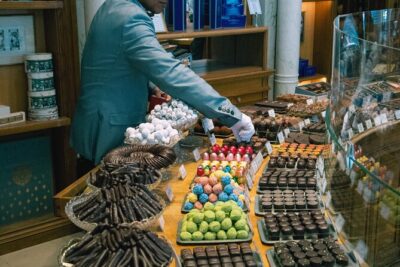 ★ 5.0A Morning in Paris Food Tour: Croissants, Baguettes & ChocolateFrom $125556 reviews
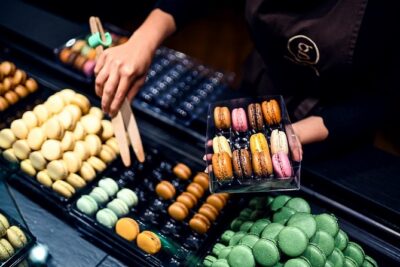 ★ 5.0Paris Chocolate, Macaron & Pastry Food Tour: 10 Gourmet TastingsFrom $118339 reviews
 ★ 5.0Paris Macarons Small-Group Baking Class with a ChefFrom $157316 reviews
Browse the lists this tour appears in