
Reviewed · WALKING TOURS
Paris Uncovered: Unique Guided Walking Tours with a Twist
Neighborhood Paris beats the postcard loop. This walking experience lets you pick a quarter—Montmartre, Le Marais, the Latin Quarter, and more—and follow a local guide through streets you’d likely skip with just a map. You’ll keep it small-group sized and focused, with a story-first route that’s built around culture, food, and street life.
I like the theme-driven way each option is set up. One path leans into artists and cabarets in Montmartre; another centers on the Marais’s courtyards and Jewish quarter flavors; another brings the Latin Quarter’s writers and scholars into focus.
One thing to watch: the meeting point changes depending on which neighborhood tour you book. Read it carefully before you go, because taxi timing and getting turned around in Paris can waste your whole start time.
Key points to know before you book
- Choose the neighborhood, not the generic highlights: the whole walk is geared to one area.
- Small group, max 15: you’ll get more back-and-forth with your guide.
- Twists are real, not marketing: street art with an artist guide, or cancan dance history in Montmartre.
- Short, efficient route: designed to cover a lot of ground in a few hours.
- Mobile ticket: no fuss with printing, and you’re near public transportation.
In This Review
- Picking a Paris Neighborhood Instead of Chasing Landmarks
- The Twists That Actually Change What You See
- Montmartre: Stairs, Studios, and the Cabaret Life
- How Guides Make or Break Montmartre (Names From Real Walks)
- Le Marais: Courtyards, Fashion Energy, and Falafel Stops
- Latin Quarter (Quartier Latin): Writers, Scholars, and Bookshop Corners
- Stops Beyond the Three Big Names: Palais-Royal and Street-Art Paris
- Palais-Royal
- Butte-aux-Cailles
- Place du Tertre (street art-focused)
- The Small-Group Pace: Why You Feel Included
- Price and Value: Is $46.33 Worth It?
- Practical Tips That Save You Time (And Stress)
- Should You Book Paris Uncovered?
- FAQ
- How long is the walking tour?
- What neighborhoods can I choose from?
- How big is the group?
- Do I get a mobile ticket?
- Are there admission fees for stops?
- Can I cancel and get a full refund?
Picking a Paris Neighborhood Instead of Chasing Landmarks

Paris has two speeds. One is the classic rush from one big sight to the next. The other is slower and better: learning how a neighborhood actually works—where people linger, shop, argue, flirt, and eat when no one’s watching.
That’s why I like this setup. You choose a neighborhood focus (Montmartre, Le Marais, Quartier Latin, and other areas in that same spirit), then you walk with a local guide and a small group. It’s not a “stand here and take a photo” loop. It’s a guided street experience where the guide’s job is to connect the buildings, the streets, and the everyday Paris details into a story you can remember.
The “tour with a twist” part matters too. Instead of generic history, you get special angles—street art, dance culture, or the artist community that turned certain streets into an open-air studio.
Possible drawback? If you’re expecting a half-day museum-style marathon, the core walking format is usually tight on time. The upside is you’ll get bearings fast.
The Twists That Actually Change What You See
Paris is full of neighborhoods, but they don’t all tell the same story. This tour company leans into that by letting you steer the theme.
Here are the main “twists” you might encounter depending on your chosen option:
- Street art routes with local artists. In areas like Butte-aux-Cailles or around Place du Tertre, you’re not just viewing murals. Your guide frames the artwork and the urban-art scene so it lands in context.
- Dance history in Montmartre. One option includes a cancan dancer element tied to how the dance became legendary in the neighborhood.
- Artist culture in Montmartre. Even when the twist is dance or street art, Montmartre’s deeper thread is creative life—painters, cafés, cabarets, and the kind of nights that made stories worth repeating.
The value for you is clarity. If you’re the kind of person who gets more interested when a guide points out “why this street matters,” the theme structure helps your brain stay engaged instead of switching off halfway through.
Worth weighing up next to this Paris pick
- Paris Top Sights Half Day Walking Tour with a Fun Guide
★ 5.0 · 2,893 reviews - Montmartre Hidden Gems and Scenic Highlights Walking Tour
★ 5.0 · 2,684 reviews - Montmartre Hill French Gourmet Food and Wine Tasting Walking Tour
★ 5.0 · 2,588 reviews - Paris: Montmartre Highlights Walking Tour with a Local Guide
★ 4.9 · 2,318 reviews
Montmartre: Stairs, Studios, and the Cabaret Life

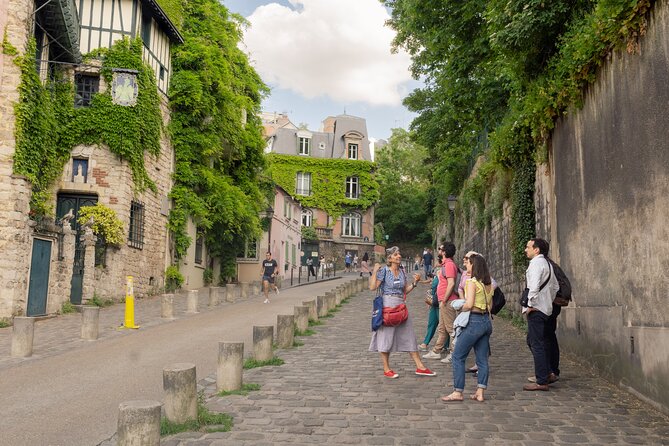
Montmartre is the one neighborhood people think they know. It’s famous for Sacré-Cœur and the view, sure—but most people miss the earlier layer: the Montmartre of artists, cabarets, and the messy creative energy that still shows up in the streets.
In the Montmartre-style walk, your guide focuses on the authentic side that hides just beyond the biggest crowds. You’ll hear how artists like Picasso, Toulouse-Lautrec, and Van Gogh (and the creative circles around them) lived and worked here, and how they traded their art and time for basics like food and supplies. That story does something important: it turns a walk through hills and alleyways into a timeline.
If your route includes the famous artist square area, you’ll also spend time around Place du Tertre, the Montmartre zone where art-by-street is part of the neighborhood’s everyday performance. And when the option brings in the cancan-dancer angle, the day feels less like a history lecture and more like walking through the “why” behind a cultural symbol—freedom, performance, and a certain playful defiance that Montmartre got known for.
What I love most here is how guides balance big landmarks with quiet details. You’ll move through tiny alleyways, cobbled streets, and calmer squares where it feels like the neighborhood still belongs to locals. Even the vineyard element (yes, a working vineyard shows up on this kind of Montmartre route) gives you a surprising change of pace.
Drawback to consider: Montmartre walks include slopes and stairs. So if you’re mobility-limited, plan for that. Also, because some options are themed around street art and/or dance, the pace can shift toward viewpoints and stops tied to the story—not just the fastest path to a landmark.
How Guides Make or Break Montmartre (Names From Real Walks)
This is one of those tours where guide quality shows up fast. In Montmartre options, I’ve seen guides praised for keeping information clear and pacing right—so you don’t feel dragged, and you don’t feel lost.
For example:
- Matt is described as friendly and knowledgeable, guiding people through Montmartre’s stairways toward Sacré-Cœur while making everyone feel included.
- Melanie earned high marks for easy-to-follow descriptions and a pace that kept the group engaged.
- Presley is credited with a great Montmartre walk even in rain, plus the kind of Paris detail people remember later—hot chocolate.
That mix—story + comfort + pace—is exactly what you want when you’re walking uphill with limited time.
Le Marais: Courtyards, Fashion Energy, and Falafel Stops
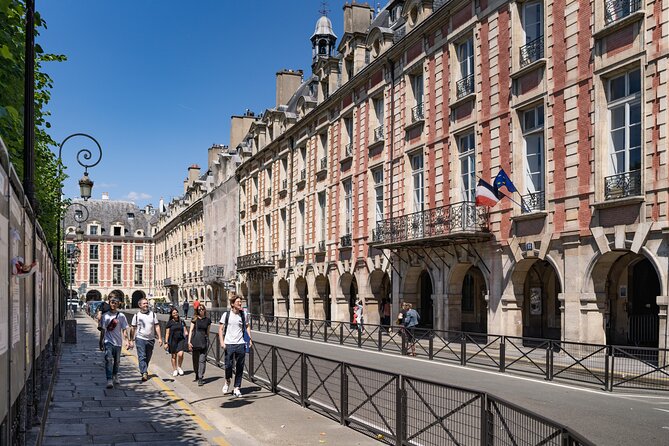
The Marais is one of those places that can look effortlessly “Parisian chic,” yet still has layered history if someone shows you where to look. This walk steers you away from the generic “top sights only” approach and into the older structure of the neighborhood—narrow streets, quiet courtyards, and medieval-to-Renaissance architecture that survived later changes.
One of the best practical parts of a Marais-focused walk: you get help sorting old and new. The area mixes centuries-old mansions and architecture with cutting-edge boutiques and cafés that feel current. Your guide also brings in cultural context, including time in the traditional Jewish quarter. That’s where the tour leans into food as part of history—not just as a snack stop. You’ll get cues about where to try falafel, and the route includes tips around pastry shops too.
The Marais story isn’t just “beautiful buildings.” It’s also the drama of old Paris—jousts, love affairs, treason, revolution. Those themes matter because they change how you read the streets. Instead of thinking “pretty corner,” you start thinking “why did people live and gather here, and what changed over time?”
Drawback to consider: the Marais can be busy in some pockets. Because the walk is designed around a theme and a manageable time frame, you still get a lot in without trying to see everything. If you’re hoping for a full museum day, you’ll likely want to use the walk as orientation, then return later on your own.
Latin Quarter (Quartier Latin): Writers, Scholars, and Bookshop Corners
If you want Paris with words in the air, the Latin Quarter is where the tour naturally fits. This neighborhood is tied to writers and scholars, and the walk brings that vibe into street-level reality.
You’ll hear about the Lost Generation of the 1920s—names like Hemingway, Scott Fitzgerald, Ezra Pound, and Gertrude Stein—and how their time here helped shape the cultural mythology of Paris. It’s not just name-dropping. Your guide uses those references to help you understand why this area became a magnet for creative minds.
From there, you’ll walk cobbled streets with bookshops and lively cafés. If the route includes key landmarks, you may pass by the Sorbonne, founded in 1237, and the Pantheon, which guards the remains of France’s venerable figures. Even when you don’t go inside anything, those visible anchors help you connect the medieval/early modern scholar story to the modern student energy you see on the street.
One thing I really value about Latin Quarter walks: the guide can make a “reading-walk” feel practical. Instead of treating it like a theme park of literature, you get pointers about markets (like a flower market stop) and places you can revisit later.
Drawback to consider: the Latin Quarter is also student-heavy and stop-and-go. That’s good for atmosphere, but it means the pace can feel more “human” than “orderly.” The upside is you’ll feel like you’re moving through the real neighborhood, not a curated corridor.
Stops Beyond the Three Big Names: Palais-Royal and Street-Art Paris
Your chosen itinerary can extend beyond the classic trio of Montmartre, Le Marais, and the Latin Quarter. In other options, you might spend time in:
Worth weighing up next to this Paris pick




Palais-Royal
This area is anchored by a former French royal palace located on Rue Saint-Honoré. Even if the walk stays primarily exterior, the point is to show you a quieter, historical layer of central Paris that many people skip because it’s not as “loud” as the headline sites.
Butte-aux-Cailles
This neighborhood is ideal if you want Paris street culture from the walls up. A street-artist-led version of this tour focuses on colorful walls and hidden graffiti, plus the stories behind the artwork and how it fits into the urban-art scene.
Place du Tertre (street art-focused)
Some routes combine Montmartre’s art square energy with a street-art lens guided by a local artist. You’ll learn the blend of history and urban creativity that makes this corner feel like part gallery, part stage.
In each of these variations, the key benefit for you is the same: you get context. Instead of “I saw some art,” you come away with a “here’s what it’s doing and why it exists here.”
The Small-Group Pace: Why You Feel Included
A walking tour sounds simple until you experience one that’s too large, too scripted, or too fast. Here, the limit matters: max 15 people. That size keeps the guide’s attention on the group instead of performing for the crowd.
In reviews, guides get praised for pacing and for adapting to people’s interests. Arthur in the Latin Quarter route, for instance, was noted for adjusting the tour based on participant interests and keeping the information at the right level—not too much, not too little. Sarah (for Marais) was praised for pointing out local spots outside the tour that you’d want to revisit later, which is exactly the kind of “useful after the walk” value you’re paying for.
Also pay attention to the “ask questions” style. One Montmartre walker noted that Arthur prompted people with questions to get them noticing details. That’s a subtle difference, but it changes how long a walk stays interesting.
Price and Value: Is $46.33 Worth It?
The price is $46.33 per person, and the walk is built around a local guide, a small group, and a neighborhood focus. If you compare it to private guiding, it’s a bargain. If you compare it to doing everything on your own, the price makes sense when you value time and context.
Here’s why it can be good value for you:
- You’re paying for someone else to do the sorting: what matters, what to ignore, and how to connect details into a story.
- The tour reduces decision fatigue. Instead of spending your precious afternoon figuring out routes, you get a plan that covers one neighborhood’s main themes in about 1.5 hours (with the overall listing showing a longer range depending on the option).
- You get practical tips—food, museums, and local spots—so your afternoon doesn’t end when the tour ends.
My honest take: this is worth it if you like guided walking and you want a sharper feel for Paris neighborhoods. If you hate walking or you’re the type who only wants the biggest landmarks, you might feel like you paid for content you could have Googled. But if you want a real sense of place, this price feels fair.
Practical Tips That Save You Time (And Stress)
Paris walking tours rise or fall on small logistics. Here are the practical things to sort before you head out:
- Check the meeting point carefully. Each neighborhood option has its own meeting location, and this is the number-one reason people miss starts.
- Give taxi time a cushion. The guidance is clear: taxis can be slow to find, and you don’t want to gamble with your start time.
- Wear solid walking shoes. Even in flatter neighborhoods, you’ll be on foot. In Montmartre, plan for stairs.
- Bring a rain plan. One Montmartre review specifically mentioned enjoying the walk despite rain, but that’s still better with a light layer and grip-friendly shoes.
And one more small thing: because it’s a small group, it helps to arrive early, stay flexible, and let your guide lead the pace.
Should You Book Paris Uncovered?
I’d book it if you want Paris with a stronger point of view. This isn’t about checking famous sites off a list. It’s about learning how neighborhoods behave: how Montmartre became an artist base and performance zone, how the Marais balances old courtyards with modern fashion life, and how the Latin Quarter kept attracting thinkers long after the ink dried.
You should skip or think twice if:
- You want a long, multi-sight day across the whole city.
- You struggle with slopes or stairs and pick a Montmartre-focused option.
- You’re the type who doesn’t read the meeting details (because the meeting point really does vary by neighborhood).
If you’re choosing a neighborhood anyway, this is a smart way to get your bearings, pick up local tips, and leave with stories that make the streets feel personal.
FAQ
How long is the walking tour?
The experience duration is listed as about 1 hour 30 minutes to about 12 hours, depending on the option you choose. Many neighborhood walks are designed around a shorter 1.5-hour format.
What neighborhoods can I choose from?
You can choose the neighborhood option you want in advance. The listed possibilities include Montmartre, Le Marais, and Quartier Latin, with additional options such as Palais-Royal, Butte-aux-Cailles, and Place du Tertre.
How big is the group?
The tour has a maximum group size of 15 travelers.
Do I get a mobile ticket?
Yes. The tour uses a mobile ticket.
Are there admission fees for stops?
The itinerary shows the stops as admission ticket free. The walk experience itself is not described as requiring paid admission tickets, and the tour does not include separate admissions.
Can I cancel and get a full refund?
Yes. You can cancel up to 24 hours prior to departure for a full refund. Refunds are not possible for missed tours, and the tour can be canceled if a minimum number of travelers is not met, with the option of a different date or a full refund.
More Walking Tours in Paris
- Paris Top Sights Half Day Walking Tour with a Fun Guide
★ 5.0 · 2,893 reviews - Montmartre Hidden Gems and Scenic Highlights Walking Tour
★ 5.0 · 2,684 reviews - Montmartre Hill French Gourmet Food and Wine Tasting Walking Tour
★ 5.0 · 2,588 reviews - Paris: Montmartre Highlights Walking Tour with a Local Guide
★ 4.9 · 2,318 reviews - Paris Île de la Cité and Notre-Dame Walking Tour With Crypt
★ 5.0 · 2,272 reviews
More Tours in Paris
- Paris: Louvre Guided Tour with Reserved Access & Boat Cruise
★ 4.3 · 16,353 reviews - Paris: Big Bus Hop-On Hop-Off Tour with Optional Cruise
★ 4.4 · 13,279 reviews - Louvre Museum Masterpieces Guided Tour with Access
★ 4.5 · 12,023 reviews - Versailles: Skip-the-Line Tour of Palace and Gardens Access
★ 4.7 · 10,429 reviews - Paris: Louvre Overview, Exploration tour and Reserved Entry
★ 4.1 · 10,145 reviews
More Tour Reviews in Paris
- Paris: 1-Hour Seine Cruise departing from the Eiffel Tower
★ 4.4 · 77,472 reviews - Paris: Louvre Museum Timed-Entrance Ticket
★ 4.6 · 71,977 reviews - Disneyland® Paris 1-Day Ticket
★ 4.6 · 49,412 reviews - Paris: Versailles Palace and Gardens Full Access Ticket
★ 4.6 · 41,579 reviews - Paris: Arc de Triomphe Rooftop Tickets
★ 4.6 · 34,264 reviews
Fresh off the review desk in Paris
- Secrets of Paris Bike Tour in English or Dutch★ 5.0 · 5 reviews
- Paris: Mont Saint-Michel Day Tour with Chinese Tour Guide★ 5.0 · 5 reviews
- Private Street Art 2-Hour Guided Tour in Paris★ 4.5 · 5 reviews
- Orsay Museum Tour: 2h Highlights (Private & Small Group)★ 5.0 · 5 reviews
- Discover Paris in electric golf carts★ 4.0 · 5 reviews
- Paris Private Boat Tour with your own Captain Guide★ 5.0 · 5 reviews
Walking Tours, compared.
 ★ 5.0Paris Top Sights Half Day Walking Tour with a Fun GuideFrom $762,893 reviews
 ★ 5.0Montmartre Hidden Gems and Scenic Highlights Walking TourFrom $382,684 reviews
 ★ 5.0Montmartre Hill French Gourmet Food and Wine Tasting Walking TourFrom $1452,588 reviews
 ★ 4.9Montmartre Highlights Walking Tour with a Local GuideFrom $232,318 reviews
 ★ 5.0Paris Île de la Cité and Notre-Dame Walking Tour With CryptFrom $482,272 reviews
 ★ 4.8Montmartre Cheese, Wine & Pastry Guided Walking TourFrom $1272,255 reviews
 ★ 5.0Paris in a Day: Louvre or Orsay, Eiffel Tower, City Walk & CruiseFrom $1571,956 reviews
 ★ 5.0Paris City Center Free Walking Tour (Tip-Based)From $31,340 reviews