
Reviewed · ORSAY MUSEUM TOURS
The History of Impressionism: Paris Musée d’Orsay Private Tour
Paris’s art sprint starts at the Orsay. This private Musée d’Orsay tour is built for people who want the big Impressionism ideas without losing the whole day. You get priority access plus a guide focused only on your group, with time to slow down where the paintings pull you in.
Two things I really like here: you cover major works and art movements in a tight time window, and you get a guide who can match your pace. In particular, guides such as Adam, Nazli, Vivianne, Giovanna, and Gio are described as thoughtful teachers who explain what you’re seeing and keep questions welcome. One possible drawback: two hours is short, so if you love museum wandering for hours, you may feel a bit rushed unless your guide makes strong choices for you.
In This Review
- Key highlights you’ll feel on the ground
- Why Musée d’Orsay is the perfect Impressionism stop (even with limited time)
- Priority access starts the day off right
- The 2-hour plan: how you get a lot out of one museum stop
- What you’ll actually see: landmarks from Manet to Monet, plus Van Gogh
- The Orsay building: from train station to art museum
- Views beyond the galleries: Sacré-Cœur and the Seine
- Why the guide makes or breaks the tour
- English speaking, plus a flexible time choice
- Price and value: what you’re really paying for
- Who this private Orsay tour suits best
- When you might skip the private tour
- Should you book a private Musée d’Orsay tour for Impressionism?
- FAQ
- How long is the Musée d’Orsay private tour?
- Is museum admission included?
- Do I get priority access into the museum?
- What language is the tour offered in?
- Can I choose a morning or afternoon time?
- Where do we meet for the tour?
- Is this tour really private?
- What’s the cancellation policy?
Key highlights you’ll feel on the ground
- Priority entrance into Musée d’Orsay helps you spend time looking, not waiting
- A true private format means your guide can answer your questions and adjust pacing
- A focused Impressionism through Post-Impressionism arc (1848 to 1914) in about two hours
- Star works included in the plan, including Van Gogh’s Starry Night
- English-speaking guide option so you’re not translating art history in your head
- Big Paris views tied into the museum experience, including Sacré-Cœur and the Seine
Why Musée d’Orsay is the perfect Impressionism stop (even with limited time)
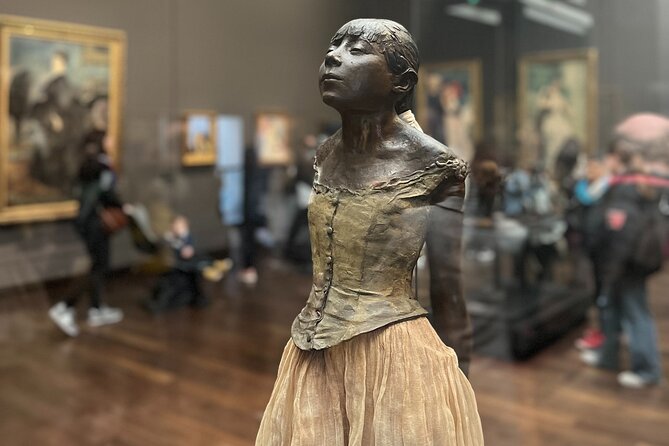
If your Paris plan has only a couple of hours for Impressionism, the Musée d’Orsay is one of the best places to go. It’s not just that the collection is famous. It’s the way the museum is set up to let you compare styles close together, so you can feel the shift from early modern painting into the break of the 20th century.
This tour lines up well with the museum’s strengths. You’re guided through art from the mid-19th century onward—right up to the brink of World War I. That timeframe matters because Impressionism didn’t appear in a vacuum. The “why” behind the paintings—new subjects, new color choices, changing ideas about modern life—is what turns famous canvases into something you actually understand.
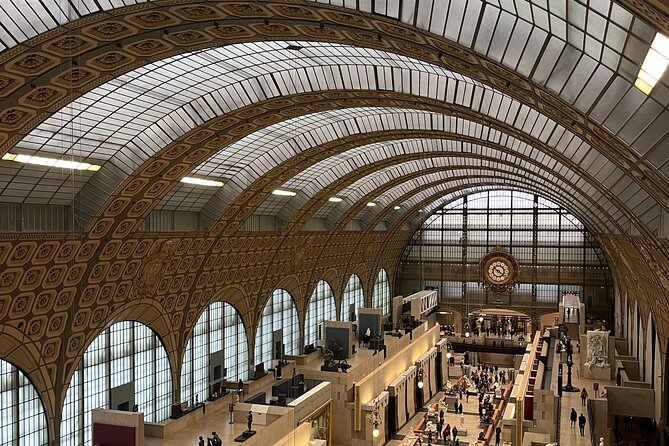
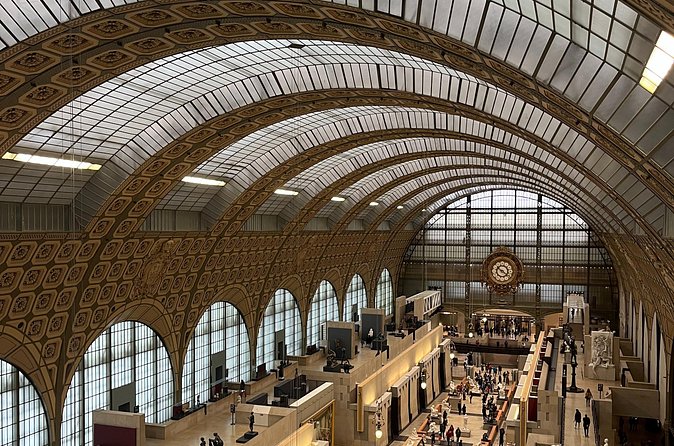
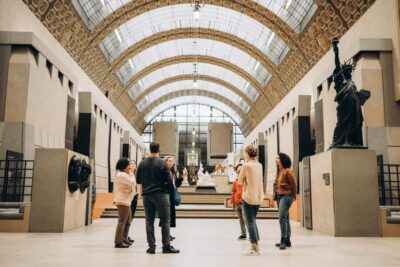
And the Orsay setting helps too. You’re not walking into a generic box. You’re in a former train station, with a sense of space that keeps the visit from feeling cramped even when it’s busy outside.
More hours with the Impressionists at the Orsay
- Paris: Orsay Museum Entry Ticket
★ 4.7 · 25,647 reviews - Paris: Orsay Museum Entry Ticket and Digital Audio Guide App
★ 4.4 · 3,170 reviews - Paris in a Day: Louvre or Orsay, Eiffel Tower, City Walk & Cruise
★ 5.0 · 1,956 reviews - Paris: Musée d’Orsay Skip-the-Line Tour with Expert Guide
★ 4.5 · 1,145 reviews
Priority access starts the day off right
You meet near 2 Rue de la Légion d’Honneur, 75007 Paris, and your tour ends at the Musée d’Orsay Esplanade Valéry Giscard d’Estaing. It’s a practical route: you get oriented early, then you’re inside the museum doing the main work—looking at art.
The big time-saver is the priority entrance. That sounds small until you’re standing in line while your energy drains. With priority access, your guide can get you moving quickly into the galleries where the Impressionist and post-Impressionist highlights live.
Also, this experience includes an admission ticket and uses a mobile ticket. That means less fuss with paper tickets and fewer delays at the start. You’ll still want to arrive with a bit of buffer, but the overall experience is designed to run smoothly.
The 2-hour plan: how you get a lot out of one museum stop
There’s just one main stop: Musée d’Orsay. But two hours inside this museum can be surprisingly productive if your guide is good at selection.
Here’s what your tour approach likely aims for:
- Focus on major artists and works that anchor each style
- Connect the paintings to the time period so details make sense
- Use context to help you “read” the brushwork and color choices you see up close
The museum’s collection spans many related movements beyond pure Impressionism. You can expect attention on Impressionist and post-Impressionist works, plus adjacent styles like Realism and Pointillism, and then the lead-in toward Cubism and other modern directions. For a first-time visit, that matters. Instead of treating Impressionism as a single look, you see it as a changing story.
Your included ticket and guided format also help because the Orsay can feel like information overload on your own. A good guide helps you pick the right questions in the right order. That’s where the tour’s biggest value shows up: you don’t just see famous paintings; you learn what to notice so you keep noticing long after the tour ends.
What you’ll actually see: landmarks from Manet to Monet, plus Van Gogh
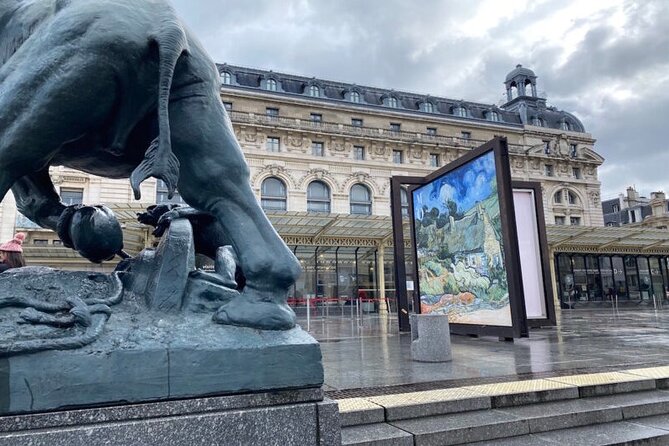
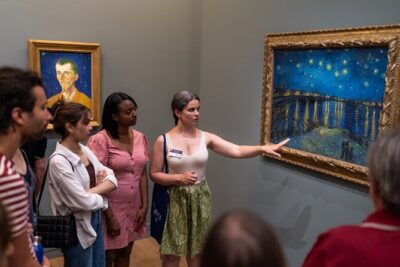
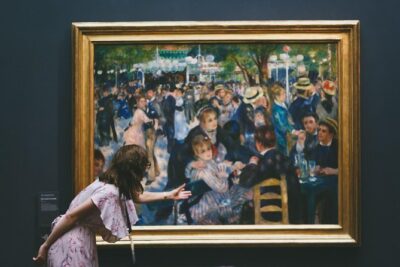
The tour includes a handful of “you can’t miss” artists and works that act like anchors across the collection. The plan specifically calls out Van Gogh’s Starry Night, along with artwork by Manet and Monet and works by Renoir, Cezanne, and the School of Barbizon.
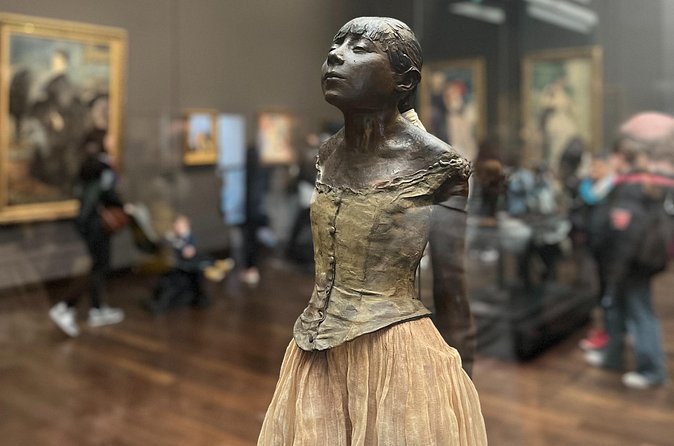
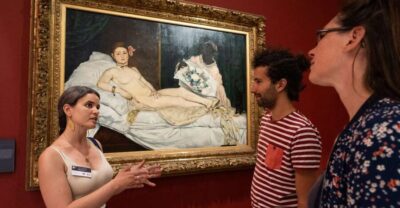
That’s a smart mix. If you only chase Impressionism, you can miss the bridge artists that explain how the look formed. Manet helps explain the push toward modern subjects and techniques. Monet becomes the color-and-light story people come for. Renoir adds warmth and human presence. Cézanne gives you the building blocks that point toward later modern art.
And Van Gogh is a different kind of experience. Starry Night isn’t just admired; it can feel personal. With a guide, you’ll likely spend more time on why the painting works—how the visual rhythm and emotional energy come together—rather than just checking it off your list.
The Orsay building: from train station to art museum
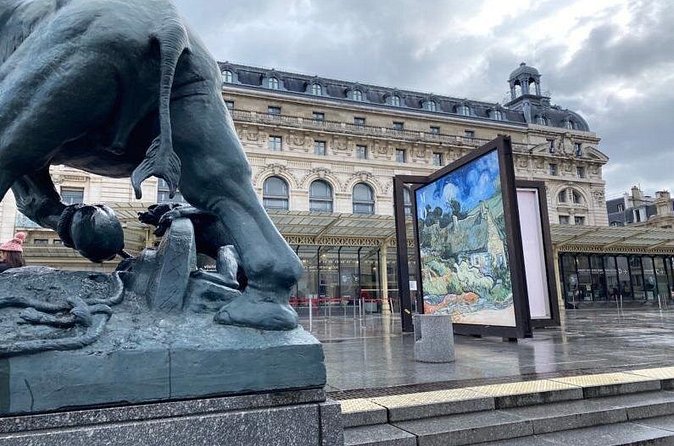
You’re not just touring art. You’re touring a transformation.
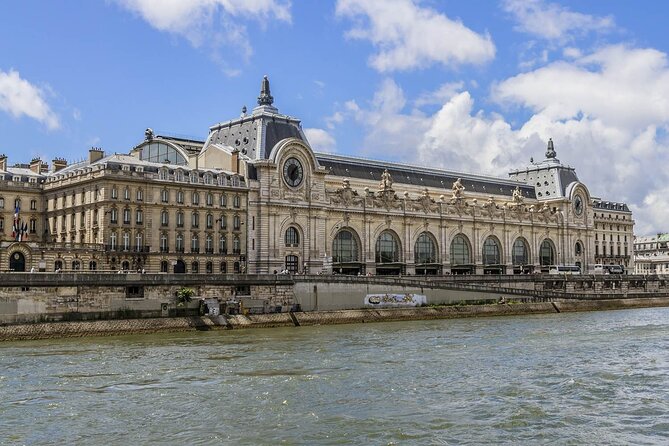
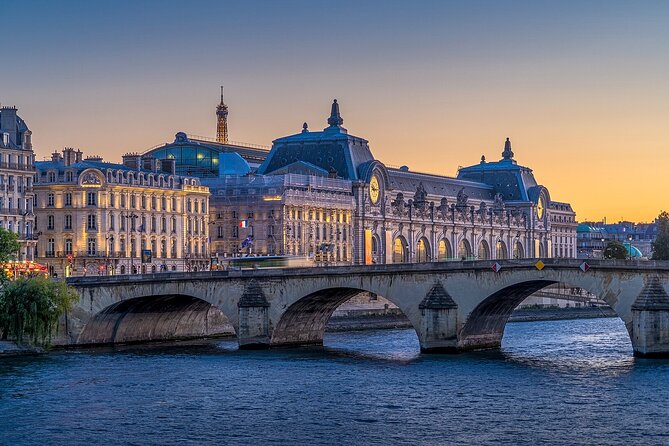
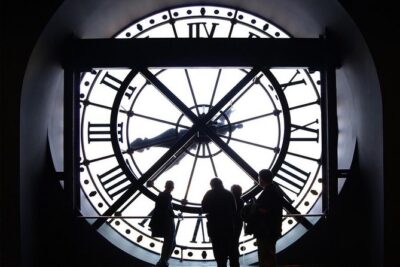
The Orsay began as an electric train station created for the 1899 Universal Exhibition in Paris. The station didn’t last long in its original role because trains changed fast, leaving the platforms outdated. The iron-and-limestone architecture became a sort of container for new uses over time, including wartime mail sorting and later uses as a film backdrop.
Then, in the early 1970s, Paris started converting the structure into the museum you know today. That shift matters because it explains why the Orsay feels different from many museum buildings. The volume, the light, and the long sightlines help you see the scale of the paintings and enjoy the collection without the museum feeling like a maze.
If you pay attention as you walk through, you’ll likely catch little moments where the building’s train-era identity shows through in how you move and where you look.
Views beyond the galleries: Sacré-Cœur and the Seine
One of the quietly useful inclusions is that you’ll enjoy views of Sacré-Cœur and the Seine River as part of the experience. Those moments do more than provide scenery. They reconnect you to the real Paris that shaped so many artists’ ideas about modern life—streets, light, crowds, and changing urban rhythms.
In practice, even if you spend your time inside the museum doing serious art focus, these views act like a reset. They help you come back to the galleries with fresh eyes instead of pure museum fatigue.
Worth weighing up next to this Paris pick




Why the guide makes or breaks the tour
This is a private tour, and that changes how the experience feels. You’re not stuck with a group pace. Your guide can react to what you’re drawn to: a particular painting, a question you didn’t know you had, or a detail you keep going back to.
The descriptions of guides in this setting share a few strong themes:
- They keep people engaged without turning it into a lecture
- They explain what you’re seeing in a way that fits your pace
- They encourage questions and remember names
Guides are also described as connecting art to everyday pressures and ideas of the time. Adam, for example, is noted for teaching Impressionists through angles like how money and lack of it shaped the art world, and how personal circumstances influenced artists’ work—down to physical and mental challenges. That kind of explanation doesn’t change the painting’s brushwork, but it changes how you interpret it.
Also worth noting: one guide style is described as never rushing and avoiding information overload. That’s ideal for families and for travelers who want clarity without a firehose of facts.
English speaking, plus a flexible time choice
This tour is offered in English. That’s a big deal at the Orsay because the difference between a “basic” guide and a great one is often how clearly they translate art-history ideas into plain language you can actually use while you’re standing in front of the canvas.
You can also choose a morning or afternoon tour. If you’re planning other Paris stops, this flexibility matters. Pick the time that keeps you fresh. Two hours is a tight window, and you’ll enjoy it more if you’re not arriving already tired from a long day.
Price and value: what you’re really paying for
At $258.34 per person for about two hours, this is not a budget play. You’re paying for a bundle of things that are hard to replicate on your own:
- A guided plan inside one of the most famous art museums in Paris
- Admission included, so you’re not juggling add-ons
- Priority access, which protects your time
- A private format, which makes pacing and questions possible
Is it worth it? It depends on your style.
If you love museums but hate deciding what to see, the cost can feel reasonable because the guide does the selection work and gives meaning to the highlights. If you’re the type who wants to read every label, compare everything, and wander for hours, a private tour may feel too structured. But if you want a high-impact Impressionism education in a short time window, paying for direction usually saves both time and mental energy.
Who this private Orsay tour suits best
This experience makes the most sense if you:
- Want a focused Impressionism and post-Impressionism overview in around two hours
- Prefer a guide who adapts to your pace
- Appreciate context, not just facts
- Are traveling with family or in a small group and don’t want a group shuffle
It can also suit first-time visitors to Paris art. The museum can be intimidating at the start, because so much is famous. A good guide helps you avoid wandering in circles.
When you might skip the private tour
You might skip this and do a self-guided visit if:
- You’re comfortable choosing highlights yourself
- You enjoy spending long hours in museums and don’t need a structured plan
- You want to go at an unhurried pace for longer than two hours
Still, even if you do a self-guided visit, the Orsay is one of those museums where priority entry can be a lifesaver on a busy day.
Should you book a private Musée d’Orsay tour for Impressionism?
If your goal is to understand Impressionism and related modern shifts without spending the whole day in museum logistics, I’d book it. The combination of priority entrance, a private guide, and an organized two-hour art arc is built for real schedules, not ideal ones.
Choose this tour especially if you want your time focused on real art understanding—why artists painted as they did, how styles connect, and what to notice when you stand in front of the big names like Van Gogh, Monet, Manet, Renoir, and Cézanne. If you’re the kind of visitor who loves getting your bearings fast and then looking with purpose, this is a strong fit.
FAQ
How long is the Musée d’Orsay private tour?
It’s approximately 2 hours.
Is museum admission included?
Yes. Admission Ticket is included.
Do I get priority access into the museum?
Yes. The tour includes priority access entrance into Musée d’Orsay.
What language is the tour offered in?
The tour is offered in English.
Can I choose a morning or afternoon time?
Yes. You have a choice of morning or afternoon tours.
Where do we meet for the tour?
Start location is 2 Rue de la Légion d’Honneur, 75007 Paris, France.
Is this tour really private?
Yes. It’s a private tour/activity, and only your group will participate.
What’s the cancellation policy?
You can cancel for a full refund if you cancel at least 24 hours before the experience’s start time. Free cancellation is available up to 24 hours in advance.
More Tours in Paris
- Paris: Louvre Guided Tour with Reserved Access & Boat Cruise
★ 4.3 · 16,353 reviews - Paris: Big Bus Hop-On Hop-Off Tour with Optional Cruise
★ 4.4 · 13,279 reviews - Louvre Museum Masterpieces Guided Tour with Access
★ 4.5 · 12,023 reviews - Versailles: Skip-the-Line Tour of Palace and Gardens Access
★ 4.7 · 10,429 reviews - Paris: Louvre Overview, Exploration tour and Reserved Entry
★ 4.1 · 10,145 reviews
More Tour Reviews in Paris
- Paris: 1-Hour Seine Cruise departing from the Eiffel Tower
★ 4.4 · 77,472 reviews - Paris: Louvre Museum Timed-Entrance Ticket
★ 4.6 · 71,977 reviews - Disneyland® Paris 1-Day Ticket
★ 4.6 · 49,412 reviews - Paris: Versailles Palace and Gardens Full Access Ticket
★ 4.6 · 41,579 reviews - Paris: Arc de Triomphe Rooftop Tickets
★ 4.6 · 34,264 reviews
More at the Musee d'Orsay
- Paris: Orsay Museum Entry Ticket
★ 4.7 · 25,647 reviews - Paris: Orsay Museum Entry Ticket and Digital Audio Guide App
★ 4.4 · 3,170 reviews - Paris in a Day: Louvre or Orsay, Eiffel Tower, City Walk & Cruise
★ 5.0 · 1,956 reviews - Paris: Musée d’Orsay Skip-the-Line Tour with Expert Guide
★ 4.5 · 1,145 reviews - Musée d’Orsay Skip-the-Line Tour with Expert Guide
★ 4.8 · 1,088 reviews
Fresh off the review desk in Paris
- Secrets of Paris Bike Tour in English or Dutch★ 5.0 · 5 reviews
- Paris: Mont Saint-Michel Day Tour with Chinese Tour Guide★ 5.0 · 5 reviews
- Private Street Art 2-Hour Guided Tour in Paris★ 4.5 · 5 reviews
- Orsay Museum Tour: 2h Highlights (Private & Small Group)★ 5.0 · 5 reviews
- Discover Paris in electric golf carts★ 4.0 · 5 reviews
- Paris Private Boat Tour with your own Captain Guide★ 5.0 · 5 reviews
Orsay Museum Tours, compared.
 ★ 4.7Orsay Museum Entry TicketFrom $1525,647 reviews
 ★ 4.4Orsay Museum Entry Ticket and Digital Audio Guide AppFrom $313,170 reviews
 ★ 5.0Paris in a Day: Louvre or Orsay, Eiffel Tower, City Walk & CruiseFrom $1571,956 reviews
 ★ 4.5Musée d’Orsay Skip-the-Line Tour with Expert GuideFrom $671,145 reviews
 ★ 4.8Musée d’Orsay Skip-the-Line Tour with Expert GuideFrom $821,088 reviews
 ★ 5.0The Musée d’Orsay Guided Tour Orsay Museum Semi-Private 6ppl MaxFrom $144904 reviews
 ★ 5.0Louvre & Musée d’Orsay Guided Museum Tour Semi-Private 6ppl MaxFrom $288619 reviews
 ★ 4.7Musée d’Orsay Ticket and Guided TourFrom $69569 reviews
Browse the lists this tour appears in