

Reviewed · WALKING TOURS
Worktown Games: Private Self-Guided Walking Tours in Paris
Paris turns into a scavenger hunt.
This self-guided, point-scoring walking game makes you slow down in the right places, answering trivia and spotting surprises as you go, with help from photo clues you can pull up on your phone. I like that it feels playful without turning into chaos.
My favorite part is the flexibility: you pick Latin Quarter or Right Bank, then follow a digital trail designed to be doable at your own pace for about 1 hour 20 minutes. One small consideration: there’s no live guide, so you’ll be using your device and reading the clues as you walk.
In This Review
- Quick highlights
- How the Worktown Games game keeps you moving
- Price and value: $10.84 per group can work for solo
- Choosing the Latin Quarter vs Right Bank route
- Start at Tuileries Garden: your first clue zone
- Louvre Museum and Palais-Royal: trivia with momentum
- Pantheon: where questions turn streets into context
- Luxembourg Gardens: bonus points and room to breathe
- Galerie Vivienne and Arenes de Lutece: surprises in plain sight
- Your pace: points make you stop at the right moments
- What’s included (and what you’ll need)
- Getting the digital file right: the email step matters
- Practical tips for a smooth 1 hour 20 walk in central Paris
- Who should book this walking game
- Should you book Worktown Games in Paris?
- FAQ
- How long is the walking tour?
- Is this a guided tour with a person?
- Where does the tour start and end?
- What routes can I choose?
- How do I get the map and the game file?
- What does the tour price include?
- What’s not included?
- What are the hours for the activity?
- Are service animals allowed?
- Can I cancel for a refund?
Quick highlights

- Two route choices: Latin Quarter or Right Bank, so you can match the walk to your plans.
- Digital maps + photo clues so you can navigate without memorizing the city.
- Trivia and surprise spotting that feeds a points game for you and your crew.
- Bonus hunting around Jardin de Tuileries, including remains tied to the demolished Tuileries Palace.
- Small-group pricing: up to 15 people share the group price, which can be great value.
- No guide, just your file, which works best when you enjoy self-directed discovery.
How the Worktown Games game keeps you moving
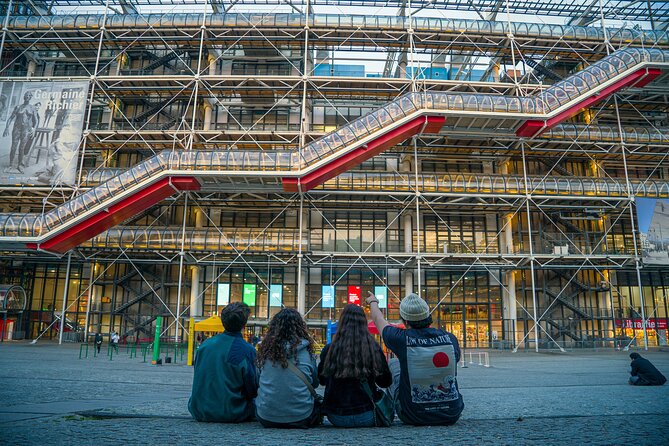
This isn’t a lecture walk. It’s built like a friendly contest: you follow a route, answer questions at stops, and look for visual or location-based “surprises” around you. The score isn’t just about getting things right—there are also bonus ways of earning points and ways of losing them depending on what you see during the tour.
What that means for you in real life: you’ll naturally check details you’d normally miss. Instead of rushing past a façade or a courtyard, you’ll pause to line up what the clue wants, then read the history that goes with it. That turns sightseeing into something closer to problem-solving.
It’s also a good way to stay engaged if your group has mixed interests. One person can be the clue spotter, another can take the trivia answers, and you all keep the energy up while still covering classic sights on foot.
Worth weighing up next to this Paris pick
- Paris Top Sights Half Day Walking Tour with a Fun Guide
★ 5.0 · 2,893 reviews - Montmartre Hidden Gems and Scenic Highlights Walking Tour
★ 5.0 · 2,684 reviews - Montmartre Hill French Gourmet Food and Wine Tasting Walking Tour
★ 5.0 · 2,588 reviews - Paris: Montmartre Highlights Walking Tour with a Local Guide
★ 4.9 · 2,318 reviews
Price and value: $10.84 per group can work for solo
The price is listed as $10.84 per group (up to 15 people). That pricing structure matters. If you’re traveling with even two or three people, the cost can be surprisingly light compared with per-person tours—especially in central Paris where timed guided tours can add up fast.
If you’re solo, it still can work because the value is in the format. You’re getting a ready-to-go digital game plus a structured route, so you’re not spending your day piecing together an itinerary from scratch. You’re basically buying a self-contained experience.
The tradeoff is the “self-led” style. If you want someone to answer questions on the spot or adjust the walk for weather or interests, this won’t feel the same as a live guide. Still, if you’re the type who likes wandering with direction, it’s a smart buy.
Choosing the Latin Quarter vs Right Bank route
You choose your route at booking: Latin Quarter or Right Bank. The key here is mindset. Each area has a different feel, and the game is set up so you’re not just walking from landmark to landmark. You’re looking for photo clues, working through tricky questions, and scanning nearby spots for bonus points.
Pick Latin Quarter if you want more of the “student Paris” vibe and big-name classics associated with the Left Bank. Pick Right Bank if you want to keep your walk closer to the more formal, museum-and-arcade style Paris many people plan for.
Either way, you’ll end where you start. That’s ideal when you’re fitting this into a day already packed with museums or a dinner plan. And since it’s designed as a 1 hour 20 minute trail, you don’t have to commit to a whole half-day window to make it worthwhile.
Start at Tuileries Garden: your first clue zone
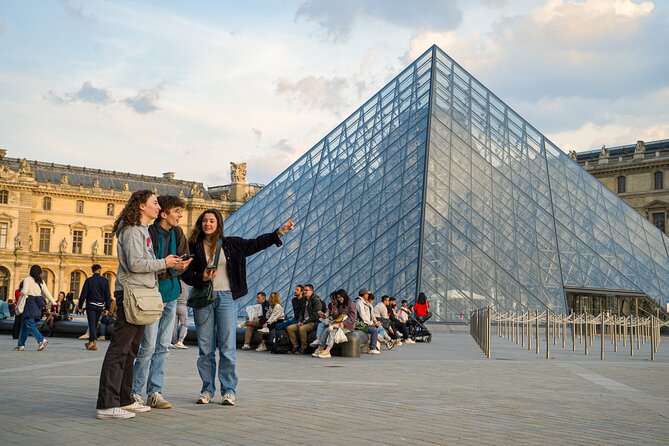
Your meeting point is Tuileries Garden (Jardin des Tuileries), 75001 Paris, and the activity ends back at the same place. That loop matters because it lets you start in a very central, scenic spot, then walk onward without worrying about ending somewhere inconvenient.
This is also where the game’s “look closer” theme really clicks. One of the bonus-style ideas you might encounter is connected to the remains of the demolished Tuileries Palace, tucked into the Jardin de Tuileries area. The hint about searching in the labyrinth gardens is exactly the kind of thing that makes a self-guided game fun: it nudges you to explore, not just pass through.
Practical note: the Jardin de Tuileries sits in a high-traffic area. If you want to keep your game momentum, give yourself a moment at the start to open your digital map/file and confirm you’re on the right clue track before you step into the busy paths.
Louvre Museum and Palais-Royal: trivia with momentum
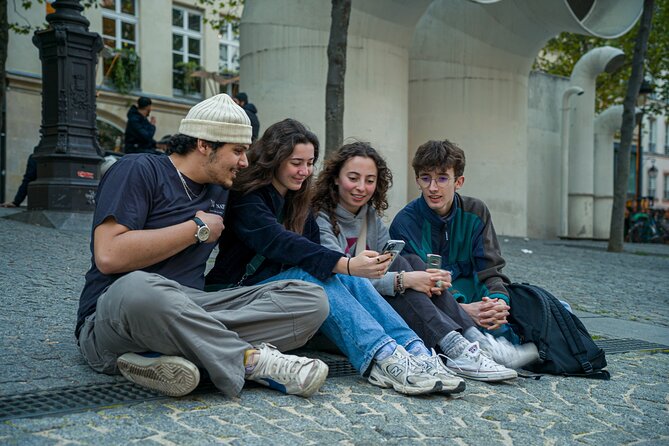
One part of your route leads through the Louvre Museum area, then onward to Palais-Royal. These are classic Paris anchors, but the game approach helps you see them in a different way. Instead of treating them as “just famous,” you’re prompted to answer questions tied to the stop and then look for nearby photo-based details.
At a place like the Louvre zone, crowds can make regular sightseeing feel like a shuffle. The benefit of the game is that it gives structure to those tight moments. You’re not wandering aimlessly; you’re moving toward the next task, then moving on.
Then comes Palais-Royal, which tends to be one of those places you only appreciate fully if you slow down. With this format, you’ll likely have a reason to notice architectural and spatial details rather than only enjoying the big-picture view.
If you’re on a tight schedule, this section is also useful because it keeps you busy and engaged in dense areas where you might otherwise feel like you’re just trying to find your next photo spot.
Pantheon: where questions turn streets into context
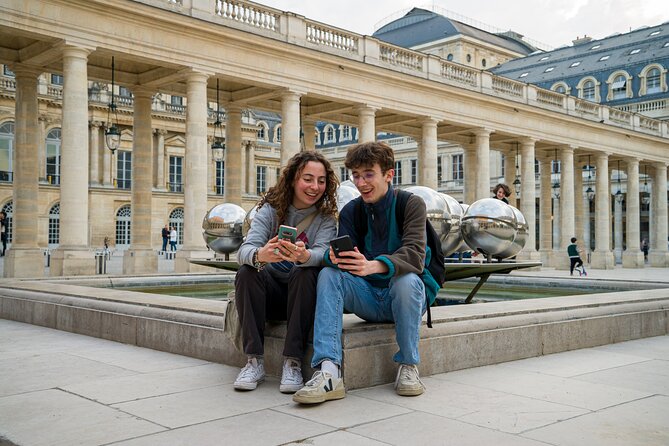
Your trail includes the Pantheon, a stop that instantly changes the mood of a walk. Even if you’ve seen it from afar before, this kind of game turns it into a checkpoint with purpose: you’ll answer trivia-style questions and connect the setting to what you’re seeing around you.
What’s valuable here is the way the digital file is set up. You don’t just get a landmark name and then walk away. You get photographs, history, and tricky prompts that make you pay attention to orientation, details, and context.
One thing to keep in mind: self-guided games work best when you’re willing to stop. If you treat each stop like a quick pass-through, you’ll miss some of the point system. If you want the most fun, plan to pause for a few minutes at Pantheon and let the clues steer you.
Worth weighing up next to this Paris pick




Luxembourg Gardens: bonus points and room to breathe
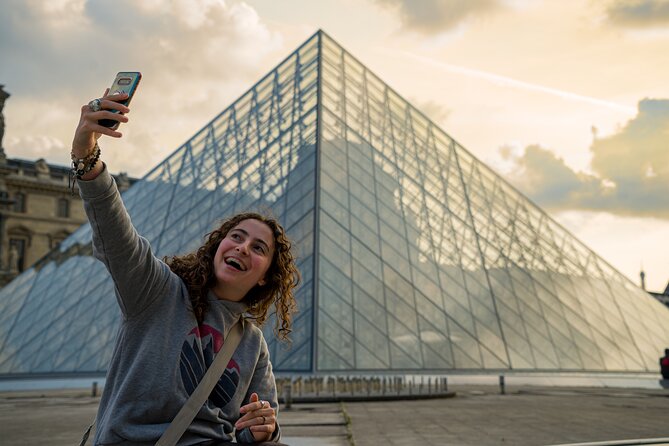
The route also takes you through Luxembourg Gardens. This is where you’re likely to enjoy the contrast: big landmarks give way to calmer paths. And for the game, that calm is a feature, not a bug—you’re hunting for bonus locations and reading clues that are easier to spot when the area isn’t packed wall-to-wall.
This is also where the “find something specific nearby” style of scoring can shine. The earlier Jardin de Tuileries bonus idea hints at that same approach: you’re not only answering trivia; you’re scanning the environment for the exact feature the clue is pointing to.
Gardens can tempt you into lingering, but the game keeps you on a defined timeline. With a route designed for about 1 hour 20 minutes, Luxembourg Gardens should feel like a rewarding pause rather than the thing that derails your whole afternoon.
If you’re traveling in warm months, this section is a good bet for comfortable walking. You can pace yourself, take a quick rest, then rejoin the game tasks without feeling like you have to “power walk” the whole time.
Galerie Vivienne and Arenes de Lutece: surprises in plain sight
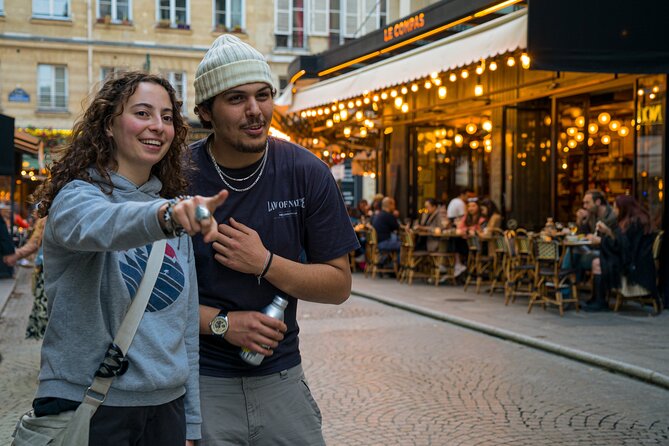
Later on, your route includes Galerie Vivienne and Arenes de Lutece. These are perfect game stops because they reward attention to details. Covered arcades and older stone spaces can be easy to glance past when you’re sightseeing normally. In a points-based trail, you’re encouraged to look for what the photo clue is pointing at—then confirm it with the question tied to the stop.
Galerie Vivienne gives you that “Paris has layers” feeling: you’re in the middle of the city, but you’re also moving through a more enclosed, historic-looking passage. That setting makes it fun to compare what you see with the clue imagery on your phone.
Then comes Arenes de Lutece, a reminder that Paris has older chapters than the postcard streets you might expect. A stop like this works especially well in a self-guided game because you’re not relying on a guide to explain every nuance. The digital file is doing that job through history notes and prompts, while the physical location anchors the learning.
If you enjoy “wait, what is that?” moments, you’ll likely have them here. And if you’re a detail person, you’ll probably do well in the bonus-scoring style of the tour—assuming you slow down enough to actually spot what you’re being asked to find.
Your pace: points make you stop at the right moments
The best self-guided experiences don’t just give you directions. They give you a reason to pause, and this one uses a game to do it. When trivia and spotting surprises affect your score, you’ll naturally adjust your pace to match the clue steps.
Expect a pattern like this: walk to a landmark area, stop to answer a question, look around for nearby bonus opportunities, then move to the next task. Because it’s designed as a short trail, the whole flow stays light. You’re not likely to feel exhausted—unless you spend extra time chasing bonuses without checking the time.
A small strategy that helps: pick roles within your group. One person can handle the photo clue alignment, another can read the question and answer, and someone else keeps an eye on time. That makes it easier to enjoy the walk instead of turning it into constant checking and re-reading.
What’s included (and what you’ll need)
Included in your tour is a digital map and the game/walking trail file. You’ll receive it via email after booking.
You should also plan on using your phone comfortably while walking. That means having access to your digital file, being able to read the clues while standing, and keeping your battery in mind. The tour is mobile ticket supported, but the actual “meat” of the experience is your on-screen trail and photographs.
Not included is everything else—your own transportation, your own meals, and any museum tickets you might want for stops beyond the walking game format. If you’re hoping to enter major sites, you may want to schedule that separately rather than assuming the game covers access.
Getting the digital file right: the email step matters
One practical detail to know: the provider doesn’t receive your email address from Viator, so you’ll need to confirm your email to get the digital file. If you need the hunt right away, they suggest using their Etsy account for immediate help.
This affects your day-of experience. If you don’t get the file in time, your walk becomes a lot more uncertain. The fix is simple: confirm your email soon after booking and double-check you have the right route selected so the map and clues match where you want to go.
Practical tips for a smooth 1 hour 20 walk in central Paris
You’ll be walking a defined route with multiple stops, so comfort matters. Wear shoes you can walk in for about an hour-plus, and bring a phone charger if you know your battery runs low.
Because the tour is near public transportation and you start in a busy central garden area, it’s smart to give yourself a buffer for getting lined up. When you’re playing a game, you don’t want to arrive already rushed.
Also, treat photo clues like “navigation aids,” not just entertainment. If you glance at the clue but keep moving, you might miss where the bonus points are tied to. Pausing for the clue is what turns a normal walk into the fun part.
And if you’re traveling with family, think of it as light competition. That’s exactly what it’s designed for: points, questions, and small rewards that make the walk feel like an activity rather than a chore.
Who should book this walking game
This is a great match if you want your Paris day to feel structured but not scripted. I think it’s especially good for:
- Solo travelers who want a fun plan that doesn’t depend on finding a group at the right time
- Friends or families who like friendly competition while sightseeing
- People who prefer self-guided exploration with digital support instead of joining a live guide
- Anyone who enjoys history in small chunks tied to what they’re actually seeing right now
If you hate phones while walking, or you need a live person to ask questions to, this may feel more stressful than fun. But if you’re happy reading clues and following a map, it’s a smart way to get more out of a short time window.
Should you book Worktown Games in Paris?
If you want a short, low-cost way to turn famous Paris landmarks into a game with real direction, I’d say yes. The biggest strength is that it’s built to make you notice details—through photo clues, trivia, and bonus spotting—without requiring you to join a guided group.
The “no guide” setup is the main tradeoff. If you’re the kind of traveler who likes to ask questions as you go, you’ll miss that human layer. But if you’re comfortable following a digital route and reading the prompts, the experience is exactly the kind of playful structure that makes Paris feel fresh.
FAQ
How long is the walking tour?
It’s listed as about 1 hour 20 minutes.
Is this a guided tour with a person?
No. It’s self-guided, and you are not met by a guide.
Where does the tour start and end?
It starts at Tuileries Garden (75001 Paris) and ends back at the same meeting point.
What routes can I choose?
You can choose between two routes: the Latin Quarter or the Right Bank.
How do I get the map and the game file?
After booking, you’ll receive a digital map and the game/walking trail as a digital copy by email.
What does the tour price include?
The included items are the digital map and the game/walking trail.
What’s not included?
The tour does not include anything beyond the digital map and game file, so you’ll cover your own meals, transportation, and any other costs.
What are the hours for the activity?
It’s listed as Monday through Sunday from 9:00 AM to 8:00 PM.
Are service animals allowed?
Yes, service animals are allowed.
Can I cancel for a refund?
Yes. Free cancellation is available up to 24 hours in advance for a full refund.
More Walking Tours in Paris
- Paris Top Sights Half Day Walking Tour with a Fun Guide
★ 5.0 · 2,893 reviews - Montmartre Hidden Gems and Scenic Highlights Walking Tour
★ 5.0 · 2,684 reviews - Montmartre Hill French Gourmet Food and Wine Tasting Walking Tour
★ 5.0 · 2,588 reviews - Paris: Montmartre Highlights Walking Tour with a Local Guide
★ 4.9 · 2,318 reviews - Paris Île de la Cité and Notre-Dame Walking Tour With Crypt
★ 5.0 · 2,272 reviews
More Tours in Paris
- Paris: Louvre Guided Tour with Reserved Access & Boat Cruise
★ 4.3 · 16,353 reviews - Paris: Big Bus Hop-On Hop-Off Tour with Optional Cruise
★ 4.4 · 13,279 reviews - Louvre Museum Masterpieces Guided Tour with Access
★ 4.5 · 12,023 reviews - Versailles: Skip-the-Line Tour of Palace and Gardens Access
★ 4.7 · 10,429 reviews - Paris: Louvre Overview, Exploration tour and Reserved Entry
★ 4.1 · 10,145 reviews
More Tour Reviews in Paris
- Paris: 1-Hour Seine Cruise departing from the Eiffel Tower
★ 4.4 · 77,472 reviews - Paris: Louvre Museum Timed-Entrance Ticket
★ 4.6 · 71,977 reviews - Disneyland® Paris 1-Day Ticket
★ 4.6 · 49,412 reviews - Paris: Versailles Palace and Gardens Full Access Ticket
★ 4.6 · 41,579 reviews - Paris: Arc de Triomphe Rooftop Tickets
★ 4.6 · 34,264 reviews
Fresh off the review desk in Paris
- Secrets of Paris Bike Tour in English or Dutch★ 5.0 · 5 reviews
- Paris: Mont Saint-Michel Day Tour with Chinese Tour Guide★ 5.0 · 5 reviews
- Private Street Art 2-Hour Guided Tour in Paris★ 4.5 · 5 reviews
- Orsay Museum Tour: 2h Highlights (Private & Small Group)★ 5.0 · 5 reviews
- Discover Paris in electric golf carts★ 4.0 · 5 reviews
- Paris Private Boat Tour with your own Captain Guide★ 5.0 · 5 reviews
Walking Tours, compared.
 ★ 5.0Paris Top Sights Half Day Walking Tour with a Fun GuideFrom $762,893 reviews
 ★ 5.0Montmartre Hidden Gems and Scenic Highlights Walking TourFrom $382,684 reviews
 ★ 5.0Montmartre Hill French Gourmet Food and Wine Tasting Walking TourFrom $1452,588 reviews
 ★ 4.9Montmartre Highlights Walking Tour with a Local GuideFrom $232,318 reviews
 ★ 5.0Paris Île de la Cité and Notre-Dame Walking Tour With CryptFrom $482,272 reviews
 ★ 4.8Montmartre Cheese, Wine & Pastry Guided Walking TourFrom $1272,255 reviews
 ★ 5.0Paris in a Day: Louvre or Orsay, Eiffel Tower, City Walk & CruiseFrom $1571,956 reviews
 ★ 5.0Paris City Center Free Walking Tour (Tip-Based)From $31,340 reviews
Browse the lists this tour appears in