
Reviewed · MONTMARTRE TOURS
ESSENTIAL MONTMARTRE Walking Tour: the essential highlights+MORE!
Montmartre is the kind of Paris you can feel under your feet. This 3-hour walking tour turns the steep hills and famous corners into a clear route, with stops that connect the neighborhood’s art, music, and everyday life. I especially like the small-group format (max 20) and the fact that many of the best stops are listed as free entry, so you’re paying for guiding and time—not ticket hassles.
The one thing you should plan for is physical reality. Montmartre is hilly, and the tour includes a funicular ride up to Sacré-Cœur, plus plenty of stairs and walking, so good shoes matter.
In This Review
- Key Highlights I’d Prioritize
- Why This Montmartre Walk Works in Just 3 Hours
- Starting at Anvers, Ending at Moulin Rouge
- Stop-by-Stop: What You’ll See and Why It Matters
- Rue de Steinkerque → Sacré-Cœur approach (Anvers to the Funiculaire)
- Basilique du Sacré-Cœur de Montmartre: the view and the calm
- Place du Tertre: artists at work, not just on postcards
- Vigne du Clos Montmartre: a real vineyard story in the city
- Le Moulin de la Galette (and its neighbor Moulin Blute-Fin)
- Le Bateau-Lavoir: modern art’s “workshop” aura
- Moulin Rouge (photo stop): the can-can landmark, briefly
- Le Passe-Muraille: the man who turns the wall into a story
- Le Lapin Agile: cabaret history you can almost hear
- Dalida Statue + La Maison de Dalida: pop stardom with real emotion
- Van Gogh’s House: the Theo connection matters
- Café des Deux Moulins: Amélie’s film magic, without needing the movie
- Rue des Abbesses: a pretty street you’ll remember later
- Price, Value, and What’s Actually Included
- Physical Reality Check: Hills, Stairs, and Footwear
- How the Guide Helps You See More Than Photos
- Ending Near Moulin Rouge: Turn the Finish into a Plan
- Should You Book This Montmartre Walking Tour?
- FAQ
- How long is the Montmartre walking tour?
- Where does the tour start and where does it end?
- What language is the tour offered in?
- What’s the price per person?
- Are tickets required for the main stops?
- Is the Moulin Rouge show included?
- Is coffee included in the tour?
- How many people are in a group?
- Is the walking route hilly?
- Is free cancellation available?
Key Highlights I’d Prioritize
- Three start times so you can match your day (morning, afternoon, or evening plans)
- A tight 3-hour loop that covers the classic Montmartre must-sees without feeling random
- Free admission listed for most major stops, keeping the cost reasonable
- Art-and-music storyline through places tied to Picasso, Dalida, Van Gogh, Amélie, and cabaret culture
- Ends at Moulin Rouge, which is great if you want an easy transition to dinner or photos
Why This Montmartre Walk Works in Just 3 Hours
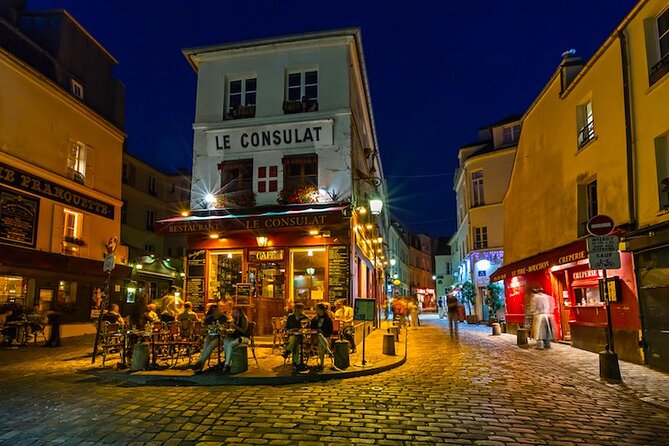
If you’re short on time, Montmartre can feel like you’re wandering uphill forever. This tour gives you a logical path and a narrative that connects landmarks that are often seen as separate postcards. The result is that you get your bearings fast, then you start noticing the details you’d normally miss.
At about 3 hours, the pacing is built for a “see the highlights” day. It’s also designed as a family-friendly Paris walk, which helps if you want something more human-scale than a museum circuit. And because the group max is 20, the guide can keep the attention up without letting the tour feel chaotic.
One practical bonus: you get a coffee stop included. You won’t have to hunt for a café while you’re trying to keep the group together.
Keep climbing: more of the Montmartre hill
- Montmartre Hidden Gems and Scenic Highlights Walking Tour
★ 5.0 · 2,684 reviews - Montmartre Hill French Gourmet Food and Wine Tasting Walking Tour
★ 5.0 · 2,588 reviews - Paris: Montmartre Highlights Walking Tour with a Local Guide
★ 4.9 · 2,318 reviews - Paris: Montmartre Cheese, Wine & Pastry Guided Walking Tour
★ 4.8 · 2,255 reviews
Starting at Anvers, Ending at Moulin Rouge
The walk begins at Anvers (75018 Paris) and finishes at Moulin Rouge (82 Bd de Clichy, 75018 Paris). That matters more than it sounds. Starting in the north helps you ease into Montmartre, while ending near Moulin Rouge is perfect for a late-afternoon photo stop or a dinner plan nearby.
You also get a choice of three convenient start times. If you’re traveling with kids or older relatives, earlier slots often feel less windy and tiring. If you’re chasing atmosphere, you might prefer a later start when the neighborhood buzz ramps up.
The tour is offered in English, and it uses a mobile ticket, which is handy when you’re bouncing between metro rides and walking.
Stop-by-Stop: What You’ll See and Why It Matters
Here’s the heart of what you’ll cover, with the “so what” behind each stop.
Rue de Steinkerque → Sacré-Cœur approach (Anvers to the Funiculaire)
You start with a walk toward the Gardens of Sacré-Cœur, then head up to the basilica by funicular. This is a smart move. It saves energy for the parts where you’ll want your focus and photos, not just heavy breathing.
Even if you’ve been to Paris before, this section is useful because it helps you understand Montmartre’s layout—slopes, sightlines, and how the neighborhood wraps around its top view.
What to watch for: the walk can include steps and uneven surfaces. If you’re balancing a stroller or dealing with knee issues, consider what you’ll feel after the climb.
Basilique du Sacré-Cœur de Montmartre: the view and the calm
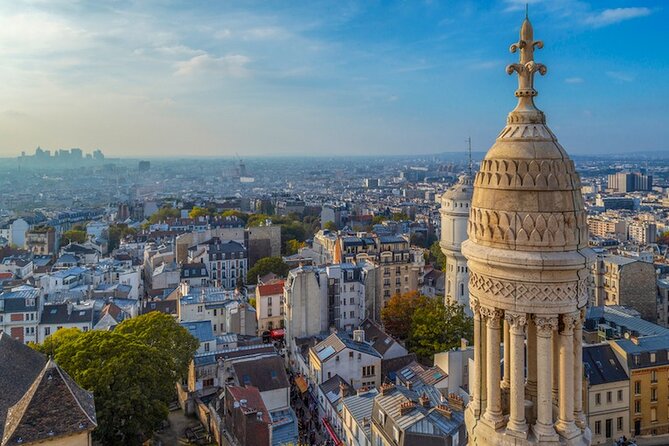
Inside Sacré-Cœur, you get a moment of serenity in one of the city’s most dominant viewpoints. It’s not only about the architecture. The real payoff is the way the basilica frames Paris below, making you understand why Montmartre became such a magnet for artists and daydreamers.
Why it’s worth it: you’ll stop long enough to reset after the climb and actually absorb the view instead of just snapping a quick photo.
Place du Tertre: artists at work, not just on postcards
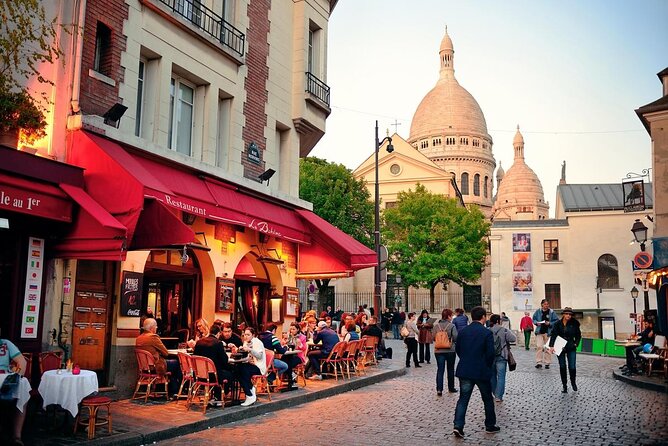
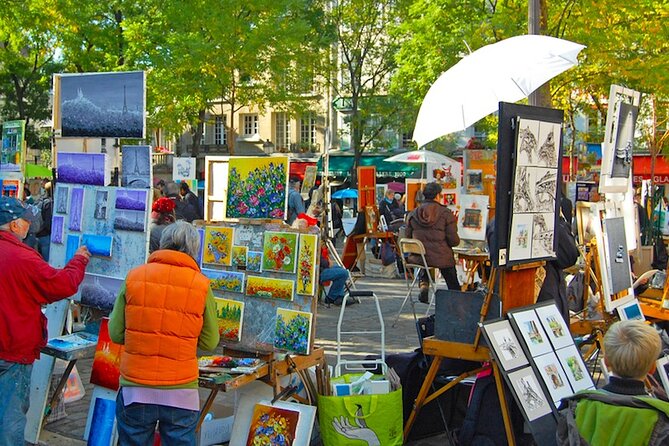
You’ll wander through Place du Tertre, where artists work in the open. It’s a classic Montmartre scene: caricatures, portraits, quick sketches, and all sorts of creative chaos.
This stop works well because it shifts you from “historic landmark mode” to “living neighborhood mode.” You’re seeing how art culture still plays out right here, in real time.
Small consideration: this area can be busy, and the noise level can change fast. If you’re easily overwhelmed, stick close to the guide and keep your pace steady.
Worth weighing up next to this Paris pick




Vigne du Clos Montmartre: a real vineyard story in the city
Next is Vigne du Clos Montmartre, a small historic vineyard. It’s a surprising contrast with the surrounding stone and tourist energy. This stop gives you a different angle on Montmartre: not just art studios and cabarets, but agriculture and local tradition.
Why I like it: it adds variety. Even if you’re an art fan, you’ll appreciate the “Montmartre wasn’t only museums” perspective.
Le Moulin de la Galette (and its neighbor Moulin Blute-Fin)
You’ll visit the area of the last remaining windmill(s) in Montmartre, including Moulin Blute-Fin next to it. The guide connects this place to the famous art-world references—especially the ball scene tied to Renoir and later artists’ interpretations.
What you’ll feel here: the neighborhood’s past becomes visible. Windmills aren’t just cute details; they explain why Montmartre looked the way it did before it became the Paris playground it is today.
Le Bateau-Lavoir: modern art’s “workshop” aura
Then it’s Le Bateau-Lavoir, closely associated with artists including Picasso, Modigliani, Matisse, Braque, and Apollinaire, among others. The building is tied to a time when Montmartre became a real epicenter for modern art.
Even if you don’t know every name, the stop is useful because it gives you a map of influence. You start seeing how the same streets that seem “curvy and romantic” also served as working spaces for serious creative breakthroughs.
Moulin Rouge (photo stop): the can-can landmark, briefly
You’ll reach Moulin Rouge and get the famous exterior moment. The Moulin Rouge show is not included, so this is mostly about seeing the icon and getting oriented.
How to handle the stop: use it for photos and for context, then decide if you want the full show later (separately).
Le Passe-Muraille: the man who turns the wall into a story
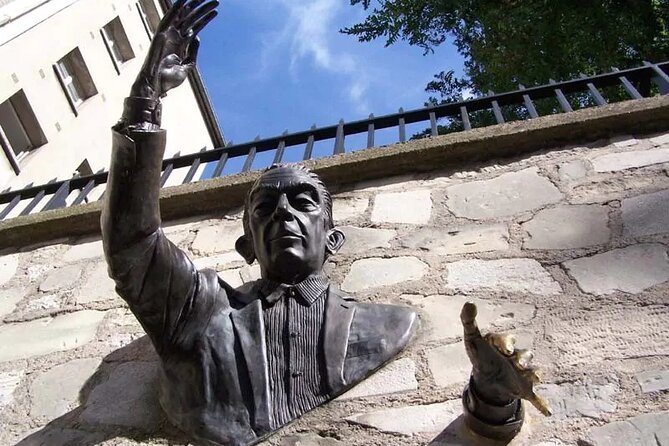
At Le Passe-Muraille, you’ll find the curious sculpture of a man passing through a wall, based on a French novel by Marcel Ayme. This stop is short but memorable because it gives Montmartre its playful, slightly rebellious streak.
Why it matters: it’s a reminder that the neighborhood’s creativity isn’t only paintings and buildings. It’s also public art, symbolism, and storytelling.
Le Lapin Agile: cabaret history you can almost hear
You’ll discover the historic cabaret venue Le Lapin Agile. This is one of those places where the walls feel like they’ve absorbed laughter and music over decades. The tour connects it to notable Montmartre figures, including Pablo Picasso, Max Jacob, and Blaise Cendrars.
Practical tip: if you want to experience it at night, you can plan a separate evening outing. This tour gives you the introduction.
Dalida Statue + La Maison de Dalida: pop stardom with real emotion
Two stops keep the story moving into music history:
- Dalida Statue
- La Maison de Dalida, where she lived
This is a smart pairing because it’s not just “famous singer” trivia. It grounds the legend in a specific place on the map, so you feel how Montmartre relates to French popular culture too.
Van Gogh’s House: the Theo connection matters
You’ll then visit Van Gogh’s House, tied to Vincent Van Gogh and his brother Theo. Even though this is a short stop, it adds a strong art lineage to the route.
Why it helps: it balances Picasso-era modernism with a different kind of artistic intensity. You walk away with Montmartre’s creativity spanning different generations.
Café des Deux Moulins: Amélie’s film magic, without needing the movie
Next comes Café des Deux Moulins, filmed for Amélie (as referenced in the tour info). This is a fun stop if you like pop culture landmarks. Even if you’re not a movie buff, it’s a good place to feel how Montmartre sells itself—and how cinema can lock a place into people’s memories.
Rue des Abbesses: a pretty street you’ll remember later
You’ll stroll Rue des Abbesses, described as one of Paris’s most beautiful streets. This is where the tour shifts from “major landmark stops” into “wandering for your own eyes.”
Why it’s valuable: it lets you slow down. You’ll notice storefronts, street texture, and small Paris details that you’d normally speed past.
Price, Value, and What’s Actually Included
At $59.13 per person for about 3 hours, this tour can be good value if you care about guided context more than a self-guided checklist.
Here’s why the price can make sense:
- Many key stops list admission ticket free (including Sacré-Cœur inside, plus several art-related and landmark stops)
- You’re paying for an organized route, timing, and interpretation—not just walking
- A coffee stop is included, which cuts down on one expense during your trip
- The group size is capped at 20, which helps the guide keep things coherent
What’s not included:
- Snacks and drinks beyond the included coffee
- The Moulin Rouge show (this is just the classic exterior stop)
- Anything beyond the listed free-entry stops (so if you want extra experiences inside venues, budget accordingly)
If you’re comparing tours, I’d focus on one thing: does the itinerary give you actual connections, or just a string of famous names? This one is built around an art-and-culture storyline, which is where the value shows.
Physical Reality Check: Hills, Stairs, and Footwear
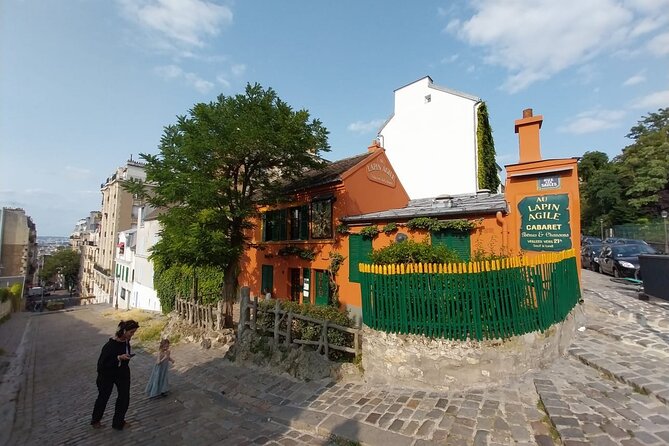
Montmartre is pretty, but it’s not gentle. The walk includes steep sections, lots of uphill/downhill movement, and stairs. Even with the funicular ride to Sacré-Cœur, you should expect you’ll be using your legs for most of the 3 hours.
So I’d come prepared:
- Wear shoes with real grip
- If you’re traveling with kids, keep expectations realistic
- If you’re managing mobility limits, plan for breaks and choose shoes you can trust
This is also the kind of tour where wind can hit harder on exposed spots. Bring a light layer even if the forecast looks mild.
On the plus side, the tour is designed to be most travelers can participate, and service animals are allowed.
How the Guide Helps You See More Than Photos
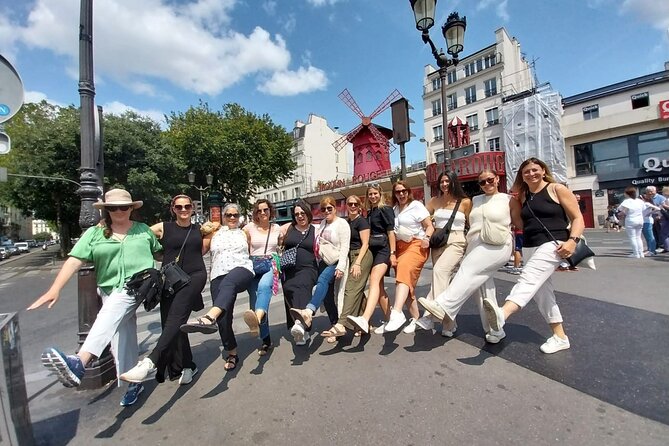
This kind of tour lives or dies by the guide’s ability to make connections. The strongest feedback for this experience is consistently about guides who are friendly, easy to follow, and able to explain what you’re looking at without turning it into a boring lecture.
You’ll get:
- A clear narrative for why Picasso, Dalida, Van Gogh, and the cabaret world matter here
- Explanations tied to the streets and buildings you’re walking past
- Time at key moments so you can actually look, not just stand and move on
My practical advice: if you want the most out of it, ask questions during the walk. This tour is best when you’re active, not passive.
Ending Near Moulin Rouge: Turn the Finish into a Plan
Finishing at Moulin Rouge is convenient, because it puts you at a major landmark with tons of options nearby. You can keep going for photos, pick a dinner spot, or just enjoy the area at a slower pace.
Just remember what Montmartre feels like at street level: it’s busy, sometimes windy, and not all blocks feel equally comfortable depending on time of day. If you’re sensitive to that, have your next move ready before you step away from the group.
Should You Book This Montmartre Walking Tour?
Book it if you want:
- A guided Montmartre overview in about 3 hours
- A route that connects Sacré-Cœur, artists’ corners, music legends like Dalida, and film culture like Amélie
- Many stops listed as free entry, plus an included coffee break
- An English-speaking experience with a small group feel
Skip or rethink it if:
- You’re not up for hills and stairs, even with the funicular ride
- You specifically want the Moulin Rouge show included (it’s not part of this tour)
- You prefer long time inside major venues rather than a structured “see a lot, understand it” pace
For most first-time Montmartre visits, this tour is a strong way to get oriented and leave with a clearer story than you’d get from wandering alone.
FAQ
How long is the Montmartre walking tour?
It lasts about 3 hours.
Where does the tour start and where does it end?
It starts at Anvers 75018 Paris, France and ends at Moulin Rouge, 82 Bd de Clichy, 75018 Paris, France.
What language is the tour offered in?
The tour is offered in English.
What’s the price per person?
The price is $59.13 per person.
Are tickets required for the main stops?
For the listed stops, admission tickets are marked as free, with Moulin Rouge specifically noted as not included.
Is the Moulin Rouge show included?
No. You can see Moulin Rouge, but the show is not included.
Is coffee included in the tour?
Yes. The tour includes a coffee stop, and drinks are not included.
How many people are in a group?
The tour has a maximum of 20 travelers.
Is the walking route hilly?
Yes. Montmartre involves walking up and down with stairs, so comfortable shoes are a good idea.
Is free cancellation available?
Yes. You can get a full refund with free cancellation up to 24 hours in advance.
More Tours in Paris
- Paris: Louvre Guided Tour with Reserved Access & Boat Cruise
★ 4.3 · 16,353 reviews - Paris: Big Bus Hop-On Hop-Off Tour with Optional Cruise
★ 4.4 · 13,279 reviews - Louvre Museum Masterpieces Guided Tour with Access
★ 4.5 · 12,023 reviews - Versailles: Skip-the-Line Tour of Palace and Gardens Access
★ 4.7 · 10,429 reviews - Paris: Louvre Overview, Exploration tour and Reserved Entry
★ 4.1 · 10,145 reviews
More Tour Reviews in Paris
- Paris: 1-Hour Seine Cruise departing from the Eiffel Tower
★ 4.4 · 77,472 reviews - Paris: Louvre Museum Timed-Entrance Ticket
★ 4.6 · 71,977 reviews - Disneyland® Paris 1-Day Ticket
★ 4.6 · 49,412 reviews - Paris: Versailles Palace and Gardens Full Access Ticket
★ 4.6 · 41,579 reviews - Paris: Arc de Triomphe Rooftop Tickets
★ 4.6 · 34,264 reviews
More of the Montmartre Hill
- Montmartre Hidden Gems and Scenic Highlights Walking Tour
★ 5.0 · 2,684 reviews - Montmartre Hill French Gourmet Food and Wine Tasting Walking Tour
★ 5.0 · 2,588 reviews - Paris: Montmartre Highlights Walking Tour with a Local Guide
★ 4.9 · 2,318 reviews - Paris: Montmartre Cheese, Wine & Pastry Guided Walking Tour
★ 4.8 · 2,255 reviews - The Secrets of Montmartre Walking Tour
★ 4.8 · 1,258 reviews
Fresh off the review desk in Paris
- Secrets of Paris Bike Tour in English or Dutch★ 5.0 · 5 reviews
- Paris: Mont Saint-Michel Day Tour with Chinese Tour Guide★ 5.0 · 5 reviews
- Private Street Art 2-Hour Guided Tour in Paris★ 4.5 · 5 reviews
- Orsay Museum Tour: 2h Highlights (Private & Small Group)★ 5.0 · 5 reviews
- Discover Paris in electric golf carts★ 4.0 · 5 reviews
- Paris Private Boat Tour with your own Captain Guide★ 5.0 · 5 reviews
Montmartre Tours, compared.
 ★ 5.0Montmartre Hidden Gems and Scenic Highlights Walking TourFrom $382,684 reviews
 ★ 5.0Montmartre Hill French Gourmet Food and Wine Tasting Walking TourFrom $1452,588 reviews
 ★ 4.9Montmartre Highlights Walking Tour with a Local GuideFrom $232,318 reviews
 ★ 4.8Montmartre Cheese, Wine & Pastry Guided Walking TourFrom $1272,255 reviews
The Secrets of Montmartre Walking TourFrom $331,258 reviews
★ 4.8Montmartre Cheese, Wine & Pastry Guided Walking TourFrom $1272,255 reviews
The Secrets of Montmartre Walking TourFrom $331,258 reviews
 ★ 4.1Sacré-Coeur and Montmartre Tour with Expert GuideFrom $281,027 reviews
 ★ 5.0Private Montmartre Food Tour with Wine, Cheese & PastriesFrom $3021,027 reviews
 ★ 5.0Paris Montmartre Food Tour – A Full French Meal by Do Eat BetterFrom $95877 reviews
Browse the lists this tour appears in