
Reviewed · ORSAY MUSEUM TOURS
Impressionist Paris: d’Orsay & Montmartre Exclusive Guided Tour
Paris gets cinematic when you connect art to place.
This tour puts Impressionism back into its neighborhood setting: start at Musée d’Orsay in a former train station, then walk up through Montmartre where artists changed how people saw the world. I like the way the day is built around the art movements, not random facts, and I love that you get a guide focused just on your group with entrance fees handled.
One consideration: you’ll do serious hill-and-street walking after the museum, and the Orsay security rules mean you’ll want a small bag plan from the start.
In This Review
- Key highlights you’ll feel right away
- Musée d’Orsay at 1:30 pm: Why the timing and access matter
- What you’ll see inside Orsay (and how the guide ties it together)
- The private guide effect: choosing pace, not just following a route
- Private car to Montmartre: buying back time (and energy)
- Montmartre on foot: from the Moulin Rouge area to Sacré-Cœur views
- The best-known sites—and the quick stops you shouldn’t skip
- How much walking is involved (and what to wear)
- Price and value: what you’re really paying for at $259.04
- Should you book this Impressionist Paris tour?
- FAQ
- How long is the tour?
- What time does it start?
- Is Musée d’Orsay entry included?
- Is Montmartre part of the ticketed sites?
- Do I need to bring anything for access?
- Will we be going inside Sacré-Cœur?
- Is food included?
Key highlights you’ll feel right away
- Skip-the-line entry at Musée d’Orsay so your time stays inside the galleries
- Private guide attention that keeps the art story clear and tailored to your questions
- Private transport from Orsay to Montmartre to reduce the time drain
- A focused Montmartre route from Moulin Rouge area up to Sacré-Cœur viewpoints
- Entrance fees included for the sites where tickets are part of the experience
Musée d’Orsay at 1:30 pm: Why the timing and access matter
If you’ve ever wandered Orsay for hours and still felt lost, this start time and format helps. You begin at 1:30 pm with a guided museum visit of about 2 hours 30 minutes, which is long enough to see the real highlights without turning into a museum marathon.
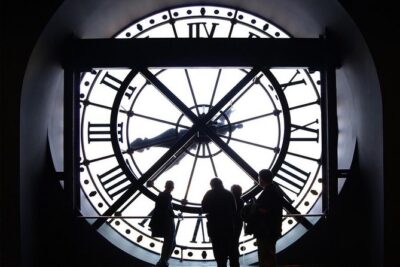
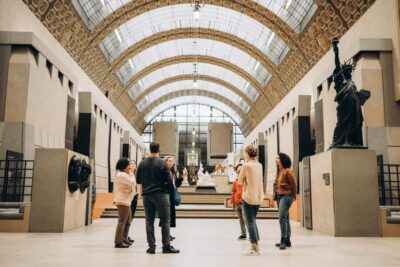
Musée d’Orsay is in a stunning 19th-century Beaux-Arts building, and it used to be a major train station on the river. That former-station feel matters because it pulls your eyes upward and outward. After your first orientation with the guide, the museum’s layout starts to make sense, and you spend less time asking where to go next.
The other big reason this works: the tour includes reserved entry / skip-the-line access, plus all entrance fees for the included portions. In real terms, that means you lose less time to waiting and more time looking closely at the paintings and sculptures that shaped Impressionism.
More hours with the Impressionists at the Orsay
- Paris: Orsay Museum Entry Ticket
★ 4.7 · 25,647 reviews - Paris: Orsay Museum Entry Ticket and Digital Audio Guide App
★ 4.4 · 3,170 reviews - Paris in a Day: Louvre or Orsay, Eiffel Tower, City Walk & Cruise
★ 5.0 · 1,956 reviews - Paris: Musée d’Orsay Skip-the-Line Tour with Expert Guide
★ 4.5 · 1,145 reviews
What you’ll see inside Orsay (and how the guide ties it together)
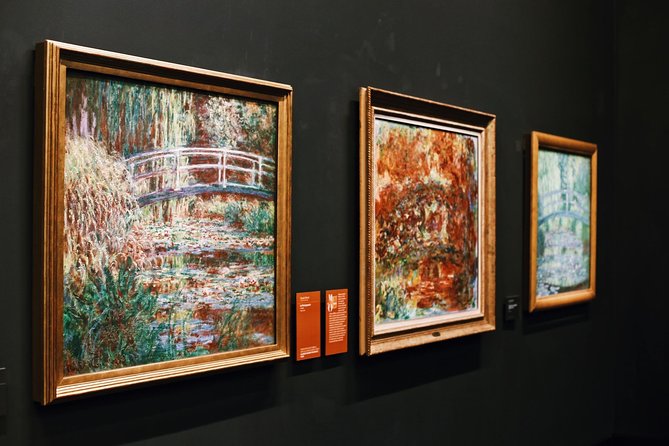
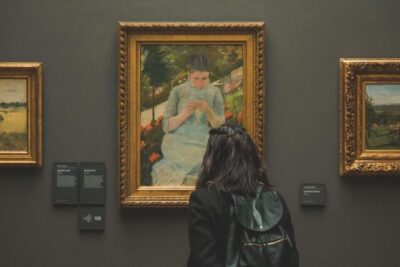
Orsay isn’t just Impressionism. It’s the bridge into it—and that’s where a good guide earns their fee. Your walkthrough starts with the art evolution that led up to Impressionism and then moves forward into what came after. You’ll see major Impressionist and post-Impressionist names and also learn why their ideas looked different at the time.
Here are the headline works you’ll run into during the tour:
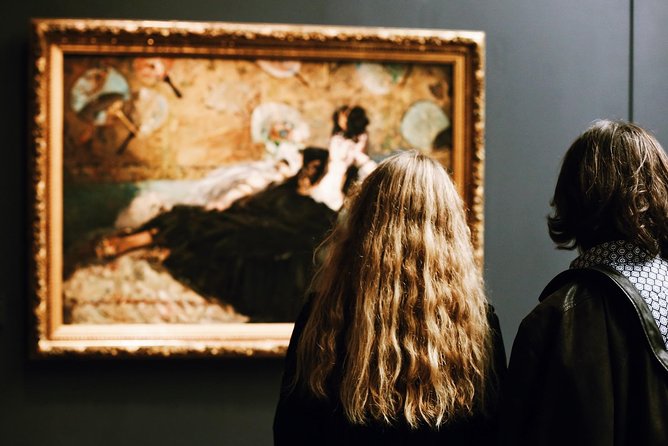
- Luncheon on the Grass by Édouard Manet
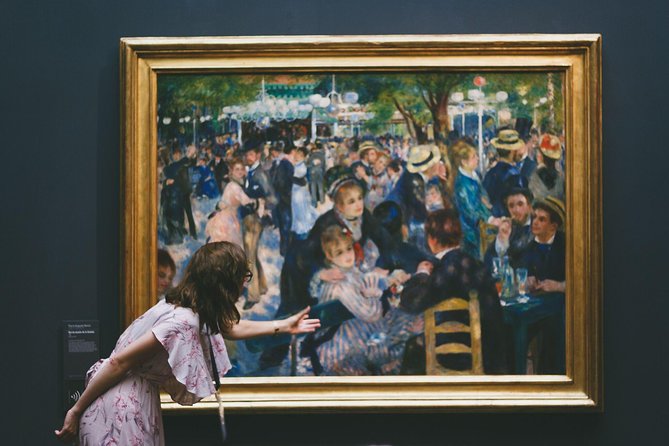
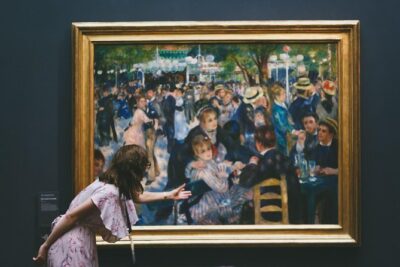
- Dance at Le Moulin de la Galette by Pierre-Auguste Renoir
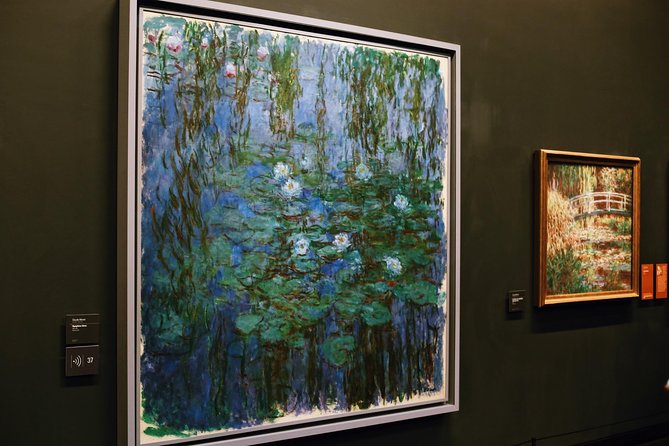
- Claude Monet, including his famous poppies
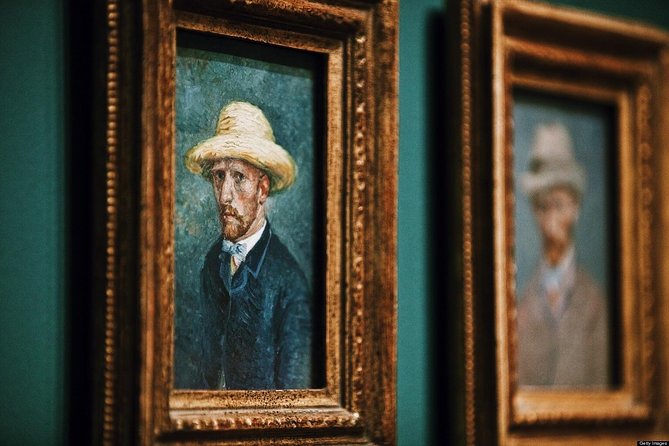
- And you’ll also see works that connect to what followed Impressionism, including Bedroom in Arles by Vincent van Gogh
You’ll also cover the artists who came before—like Millet and The Gleaners—because the guide uses those to show how techniques and tastes shifted over time. And the tour doesn’t treat the movement like a single moment. Instead, it helps you understand how personalities, subject choices, and paint methods all mattered.
A nice detail: the day includes discussion of techniques used by Impressionists and post-Impressionists. That means you’re not only looking at what you can already recognize. You start noticing how the brushwork and color choices create modern effects.
The private guide effect: choosing pace, not just following a route
This tour is structured to feel guided—but not rigid. The format is built so your guide keeps the momentum without bulldozing you through rooms. Many art lovers want to see everything, but the trick is knowing what to linger on.
In the feedback I saw from guides who’ve led this experience—like Lili, Michele, Mattieu, Lucien, Belene, Daniel, Harriet, and Laura—the common thread was using clear explanations and then adjusting based on what the group responds to. Some guides asked questions and made the tour interactive; others focused on art history storytelling that made the museum feel less like homework and more like a narrative you can follow.
Also, keep in mind Orsay has museum rules that can affect group behavior in certain spaces. Some rooms are quieter or have restricted right-to-speak rules, and your guide will point out what applies before you enter those areas.
Private car to Montmartre: buying back time (and energy)
After the museum, you’ll take a private car to Montmartre with a short break built in. That’s not just comfort; it’s practical. Orsay to Montmartre on your own can turn into time spent wrangling transit plus climbing. Here, the transport makes it easier to use your afternoon for the thing you came for: the hill and the art locations.
This transfer also helps you reset. By the time you reach Montmartre, you’re ready to start at the base and work your way up on foot with your guide guiding the story as the streets change.
Montmartre on foot: from the Moulin Rouge area to Sacré-Cœur views
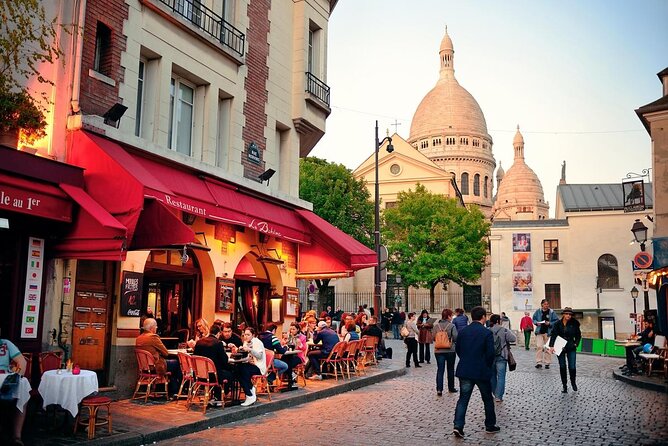
Montmartre is a lesson in how cities shape art. You start at the base of the hill, where the Moulin Rouge’s windmill still spins slowly, and then you climb through cobbled streets. The guide connects what you see to the painters who lived and worked here—figures tied to Impressionism and beyond.
You’ll pass classic landmarks and also get context for why they became famous in art:
- the Moulin Rouge area, which inspired artists like Toulouse-Lautrec
- the winding streets linked to homes and studios associated with Van Gogh and Picasso
- photo moments that build as you gain height, not just random stops
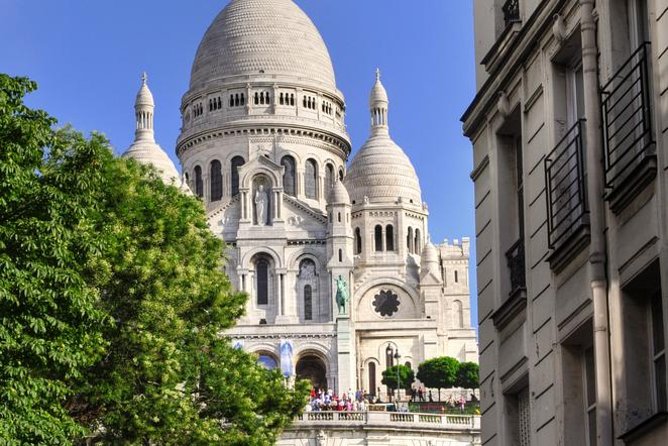
As you reach the top, you’ll enter Basilique du Sacré-Cœur. The tour allows about 20 minutes to explore, and yes, it’s for more than selfies. The interior is known for a major mosaic depicting Jesus Christ, which is a big visual shock after the street-level chaos below.
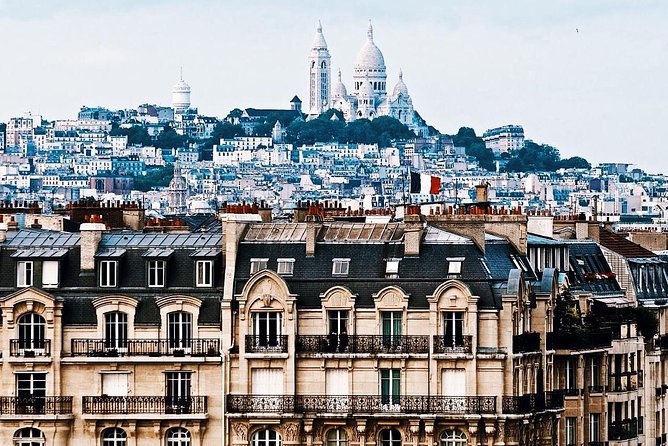
Your payoff at this stage is the view. Montmartre sits high, and Sacré-Cœur gives you that classic Paris panorama over the rooftops.
The best-known sites—and the quick stops you shouldn’t skip
After Sacré-Cœur, the walk continues with a string of art-and-culture markers. Some are brief, but they matter because your guide keeps linking them back to creative life in Montmartre.
Here’s how the route lands in a real-world way:
Van Gogh’s house (Rue Lepic)
You stop to see the place associated with Van Gogh’s home on Rue Lepic, where he lived with his brother starting in 1886. Even if you only catch it from the street, it anchors the whole Impressionism story to a specific human footprint.
Place Dalida
You’ll walk through Place Dalida, a square dedicated to the singer icon Dalida. It’s a small stop, but it gives you a break from painting-focus and shows how Montmartre keeps remixing its culture over time.
Jardin Sauvage de St-Vincent
This one is quiet and unusual: a sloping bit of land where the city has left plants in a fragile, natural state for biodiversity. Elderberry trees, ivy, and wild insects make it feel like a pocket world tucked into dense streets.
Vigne du Clos Montmartre
You’ll pass Le Clos Montmartre, one of the last remaining vines in central Paris. It’s a small scene, but it’s a perfect reminder that Montmartre isn’t only art. It’s also agriculture, old land, and stubborn tradition.
Au Lapin Agile
This cabaret has a famous sign and a connection to the Montmartre bohemian set until 1914. It’s not a full entry stop, but it adds flavor to the street-level story.
Place du Tertre
You’ll pass by the square where artists set up with easels. It’s touristy in the way Montmartre always is, but it also reflects the neighborhood’s long-standing relationship with showing art in public.
Espace Dali and Bateau-Lavoir
You’ll pass by Espace Dali (an exhibition space with around 300 original artworks) and the Bateau-Lavoir (an artist residence and meeting place starting in 1889). Admission here is not included, but seeing the location helps you understand why these artists kept turning the neighborhood into a studio.
Maison de Dalida
You’ll also see La Maison de Dalida, associated with the singer’s life there between 1962 and 1987. It’s a quick stop, but it’s a reminder that Montmartre attracts creative types across generations.
A practical note: several of these are pass-by moments and some sites are listed as admission not included. If you want a deeper ticketed experience inside places like the cabarets or museums, you can plan to do that on your own time afterward.
Keep climbing: more of the Montmartre hill




How much walking is involved (and what to wear)
The itinerary is built around climbing and cobblestones, and the tour specifies you should have moderate physical fitness. Expect a steady pace up the hill and enough walking that you’ll feel it in your legs by the end—especially if you’re already tired from a busy travel day.
Footwear matters. Wear shoes you trust on uneven streets. Also, the tour includes time inside some places and outside others, so dress for changing light and weather.
At Musée d’Orsay, security has rules about bags. You can’t bring large bags or suitcases into the museum. Only handbags or small thin bag packs go through security. If you come with a big daypack, you could lose time trying to solve it on the spot.
Price and value: what you’re really paying for at $259.04
At $259.04 per person for about 5.5 hours, this isn’t a budget afternoon. So the question isn’t the number—it’s what the package saves you from.
You’re paying for:
- a private guide for your group (not a shared lecture with strangers)
- reserved entry to Musée d’Orsay and entrance fees included for the included museum time
- private transport from Orsay to Montmartre
- a route that ties major art locations to the neighborhood you’re standing in
For first-timers who care about art, this can be good value because the guide’s interpretation compresses the learning curve. Instead of wandering Orsay without context, you get explanations about why each movement changed the rules of seeing—then you walk into Montmartre where that creativity took shape in real streets.
If you’re the type who prefers museum browsing with zero structure, you might feel the cost. Likewise, if you want a long sit-down café lunch and minimal walking, the Montmartre climb may feel like more effort than you want.
But if you like your sightseeing with clear links between paintings and streets, this day fits that style perfectly.
Should you book this Impressionist Paris tour?
I’d book it if you:
- want Musée d’Orsay done with meaning, not just a checklist
- enjoy Montmartre but don’t want to build the art story yourself
- like private guiding and hate waiting in lines you could avoid
- are comfortable with moderate walking and hill climbing
I’d skip or swap to something else if you:
- want a low-walking, slow-paced neighborhood hang
- plan to bring a large bag and don’t want to deal with Orsay security limits
- only care about a couple of Montmartre icons and would rather spend more time exploring other areas independently
One more real-world point: Orsay can have occasional closures, and the tour notes that if the museum is delayed by more than an hour from the start time, you’ll receive an alternative but refunds or discounts aren’t offered in those cases. That’s rare, but it’s worth knowing before you plan your whole day.
FAQ
How long is the tour?
The tour runs about 5 hours 30 minutes.
What time does it start?
It starts at 1:30 pm.
Is Musée d’Orsay entry included?
Yes. The tour includes admission for the Orsay portion, and entrance fees are included for the stops that require tickets.
Is Montmartre part of the ticketed sites?
Most Montmartre landmarks on this route are included as part of the guided walk, but some locations you pass by list admission as not included.
Do I need to bring anything for access?
You’ll need a mobile phone number with country code, and you’ll use a mobile ticket.
Will we be going inside Sacré-Cœur?
Yes. The tour includes time to enter Sacré-Cœur, with time allowed to explore the interior.
Is food included?
No. Food and drinks are not included, so you’ll want to plan meals on your own.
More Tour Reviews in Paris
- Paris: 1-Hour Seine Cruise departing from the Eiffel Tower
★ 4.4 · 77,472 reviews - Paris: Louvre Museum Timed-Entrance Ticket
★ 4.6 · 71,977 reviews - Disneyland® Paris 1-Day Ticket
★ 4.6 · 49,412 reviews - Paris: Versailles Palace and Gardens Full Access Ticket
★ 4.6 · 41,579 reviews - Paris: Arc de Triomphe Rooftop Tickets
★ 4.6 · 34,264 reviews
More of the Montmartre Hill
- Montmartre Hidden Gems and Scenic Highlights Walking Tour
★ 5.0 · 2,684 reviews - Montmartre Hill French Gourmet Food and Wine Tasting Walking Tour
★ 5.0 · 2,588 reviews - Paris: Montmartre Highlights Walking Tour with a Local Guide
★ 4.9 · 2,318 reviews - Paris: Montmartre Cheese, Wine & Pastry Guided Walking Tour
★ 4.8 · 2,255 reviews - The Secrets of Montmartre Walking Tour
★ 4.8 · 1,258 reviews
More at the Musee d'Orsay
- Paris: Orsay Museum Entry Ticket
★ 4.7 · 25,647 reviews - Paris: Orsay Museum Entry Ticket and Digital Audio Guide App
★ 4.4 · 3,170 reviews - Paris in a Day: Louvre or Orsay, Eiffel Tower, City Walk & Cruise
★ 5.0 · 1,956 reviews - Paris: Musée d’Orsay Skip-the-Line Tour with Expert Guide
★ 4.5 · 1,145 reviews - Musée d’Orsay Skip-the-Line Tour with Expert Guide
★ 4.8 · 1,088 reviews
Fresh off the review desk in Paris
- Secrets of Paris Bike Tour in English or Dutch★ 5.0 · 5 reviews
- Paris: Mont Saint-Michel Day Tour with Chinese Tour Guide★ 5.0 · 5 reviews
- Private Street Art 2-Hour Guided Tour in Paris★ 4.5 · 5 reviews
- Orsay Museum Tour: 2h Highlights (Private & Small Group)★ 5.0 · 5 reviews
- Discover Paris in electric golf carts★ 4.0 · 5 reviews
- Paris Private Boat Tour with your own Captain Guide★ 5.0 · 5 reviews
Orsay Museum Tours, compared.
 ★ 4.7Orsay Museum Entry TicketFrom $1525,647 reviews
 ★ 4.4Orsay Museum Entry Ticket and Digital Audio Guide AppFrom $313,170 reviews
 ★ 5.0Paris in a Day: Louvre or Orsay, Eiffel Tower, City Walk & CruiseFrom $1571,956 reviews
 ★ 4.5Musée d’Orsay Skip-the-Line Tour with Expert GuideFrom $671,145 reviews
 ★ 4.8Musée d’Orsay Skip-the-Line Tour with Expert GuideFrom $821,088 reviews
 ★ 5.0The Musée d’Orsay Guided Tour Orsay Museum Semi-Private 6ppl MaxFrom $144904 reviews
 ★ 5.0Louvre & Musée d’Orsay Guided Museum Tour Semi-Private 6ppl MaxFrom $288619 reviews
 ★ 4.7Musée d’Orsay Ticket and Guided TourFrom $69569 reviews
Browse the lists this tour appears in