
Reviewed · WALKING TOURS
Jewish Marais – Yiddish world : Walking tour and pastries
The Marais feels layered in real time. This 90-minute walk through Le Marais shows you Jewish Paris through street-level landmarks, then backs it up with visits to courtyard spaces tied to Jewish memory.
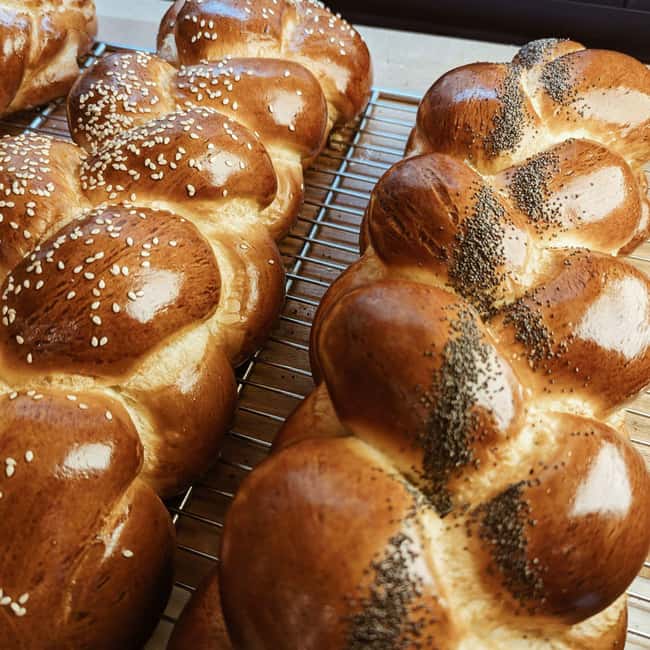
I especially liked how the guide kept the pace human—short blocks, clear context, and lots of on-the-spot questions. I also love the food stop: the tasting from Florence Kahn includes strudel, babka, and cheesecake, so you get something you can actually taste (not just hear about).
One thing to consider: the tour is compact. If you want long, quiet time inside each site, 90 minutes may feel a bit tight, especially once you reach the solemn end point at the Shoah memorial.
In This Review
- Quick hits before you go
- Le Marais, but with the Jewish street-level context
- Meeting point at 69 Rue du Temple: how you start clean
- Rue du Temple: the opening street story
- Le Marais essentials: where medieval walls meet Jewish Paris
- Rue des Rosiers: community life you can see today
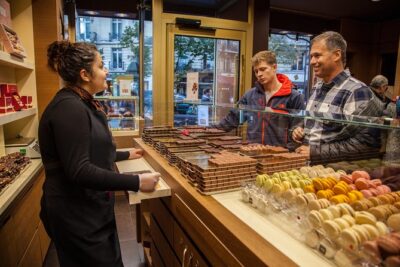
- The Florence Kahn tasting: strudel, babka, cheesecake
- Synagogue Agoudas Hakehilos (Rav Rottenberg): photo stop with context
- Courtyard access: Museum of Jewish Art and History
- Pletzl tour in the Marais: walking the neighborhood’s heartbeat
- Ending at the Mémorial de la Shoah: why the tour lands here
- Price and value: what $41 gets you
- Who this tour is best for
- Should you book Jewish Marais – Yiddish world?
- FAQ
- FAQ
- How long is the Jewish Marais walking tour?
- How much does the tour cost?
- How large is the group?
- What languages are available for the live guide?
- Where do I meet the guide?
- How do I recognize the guide?
- Where does the tour finish?
- What food is included in the tasting?
- What’s included besides the food?
- Can I cancel for a refund?
Quick hits before you go
- Le Marais streets made readable: You’ll pass Rue du Temple and Rue des Rosiers with a guided lens, not a scavenger hunt.
- Medieval wall moment: A look at the Muraille de Philippe Auguste helps you place the neighborhood in time.
- Courtyard access matters: You get to see the courtyards tied to Jewish cultural history, not just the street view.
- Synagogue exterior + stories: You’ll stop at Agoudas Hakehilos (Rav Rottenberg) for photos and context.
- Pastry tasting is built in: Expect an assortment tasting from Florence Kahn.
- Small group keeps it personal: Limited to 10 participants, with a live guide in French, English, or German.
Le Marais, but with the Jewish street-level context
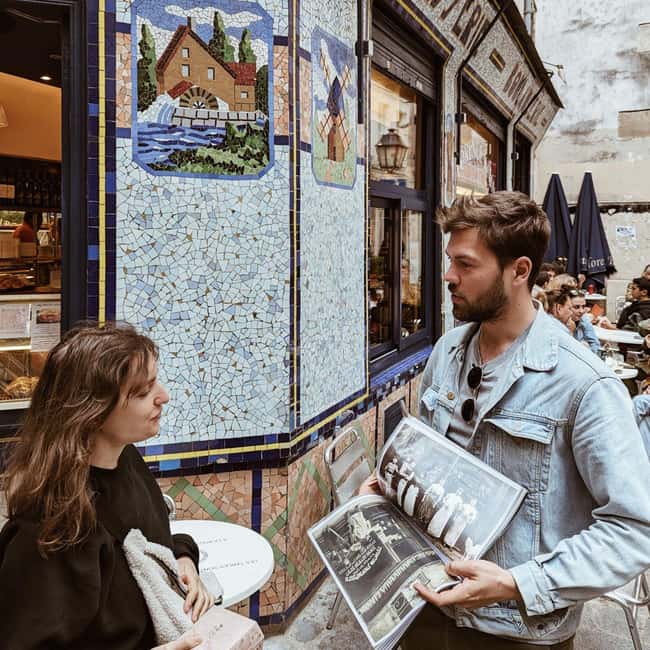
Le Marais is one of those Paris neighborhoods that can look like one big “pretty area” until someone gives you the right framework. On this tour, I liked that you don’t just drift from landmark to landmark. You’re guided into how the neighborhood developed, how communities lived here, and how major Jewish institutions shaped daily life.
The route is built for walking comfort, with frequent stops for both explanations and quick photo moments. You’ll cover key stretches like Rue du Temple and Rue des Rosiers, and you’ll also see a physical reminder of older Paris at the Muraille de Philippe Auguste. That combination—old stone plus community stories—helps you understand the area as more than a backdrop.
Also, because it’s a small group (10 people max), the guide can actually adjust. In the feedback I saw, people praised guides who stayed engaged and answered questions thoughtfully. That matters here because Jewish history in Paris isn’t one topic—it’s many threads, connected.
Worth weighing up next to this Paris pick
- Paris Top Sights Half Day Walking Tour with a Fun Guide
★ 5.0 · 2,893 reviews - Montmartre Hidden Gems and Scenic Highlights Walking Tour
★ 5.0 · 2,684 reviews - Montmartre Hill French Gourmet Food and Wine Tasting Walking Tour
★ 5.0 · 2,588 reviews - Paris: Montmartre Highlights Walking Tour with a Local Guide
★ 4.9 · 2,318 reviews
Meeting point at 69 Rue du Temple: how you start clean
The meeting point is specific: between the LCL bank and the little wood door of 69 rue du Temple. You’ll spot the guide in a white shirt with a leather satchel.
This kind of exact meeting setup is a small quality-of-life detail, but it matters in the Marais. Streets twist, there are lots of storefronts, and it’s easy to waste 10 minutes trying to figure out where your group is. Here, you get a clear visual target.
You’ll also be doing a tight 90-minute experience, so arriving a few minutes early helps you start without rushing. If you’re coming from another part of central Paris, I’d plan to arrive early enough to take a breath before you meet.
Rue du Temple: the opening street story
Rue du Temple is the kind of street that looks straightforward until you realize it’s a corridor through layered time. Right from the start, the guide sets the tone: what you’re seeing, why it matters, and what to notice as you walk.
This first stretch is also where I’d suggest you get your bearings. When the guide points out where things sit in relation to the neighborhood, you stop thinking of it as random streets and start reading it like a map. That makes the rest of the tour easier to follow—especially once you reach more “institutional” stops later.
The pace at the beginning is designed to get you oriented fast. If you’re the type who gets lost in Paris streets, you’ll likely appreciate that early structure.
Le Marais essentials: where medieval walls meet Jewish Paris
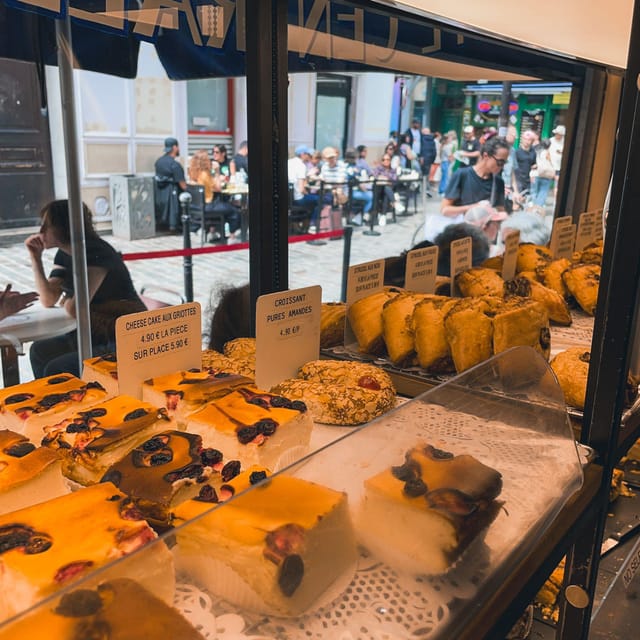
One standout stop is the Muraille de Philippe Auguste. Even if you don’t know the details of medieval Paris, seeing a surviving stretch of wall gives you something physical to anchor to. It’s not just architecture trivia; it helps you understand how far back the neighborhood’s story goes.
Then you move through the 4th arrondissement with quick, focused sightseeing. The goal here isn’t to sprint past everything. It’s to keep your attention on the moments that help you connect the dots: street names, urban layout, and how community spaces fit into this part of the city.
This is where the “walk” format is a real advantage. You can’t fully get this same feeling from a bus. On foot, you naturally slow down. You see the scale. And you notice how narrow streets and corners shape movement—exactly the kind of thing that affects how communities lived and gathered.
Rue des Rosiers: community life you can see today
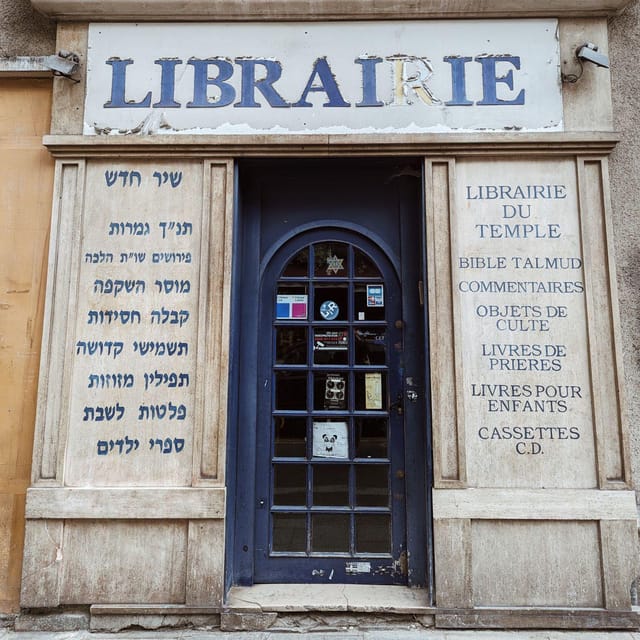
Rue des Rosiers is famous for good reason. On the tour, you don’t just pass by; you’re given context so it feels like a living neighborhood, not just a list of photo angles.
This is one of the best streets for first-time visitors because it combines recognizable Paris energy with Jewish heritage markers. You’ll have time for a visit here (more than a quick glance), so you can actually look around.
What I like about including this stop is that it balances the heavier themes later. You see how community and culture are part of the neighborhood’s daily rhythm.
The Florence Kahn tasting: strudel, babka, cheesecake
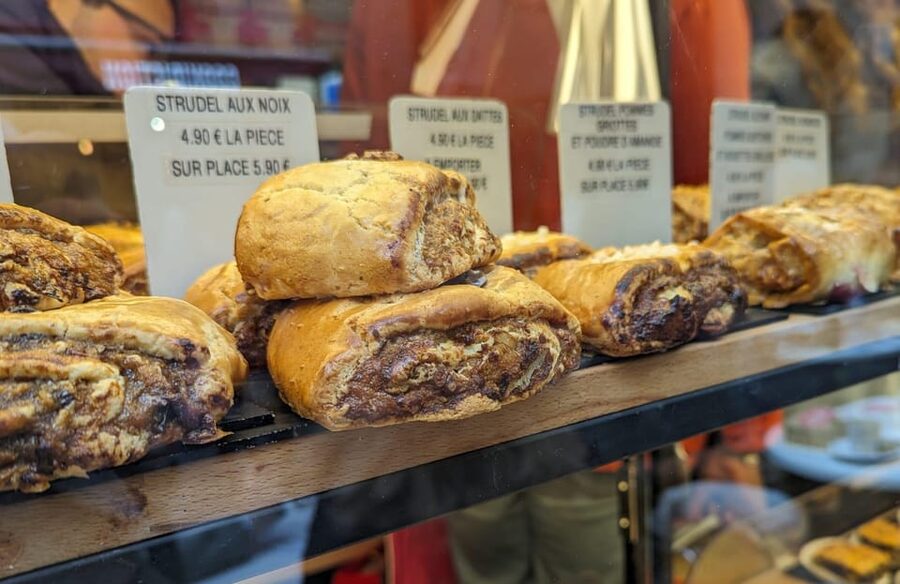
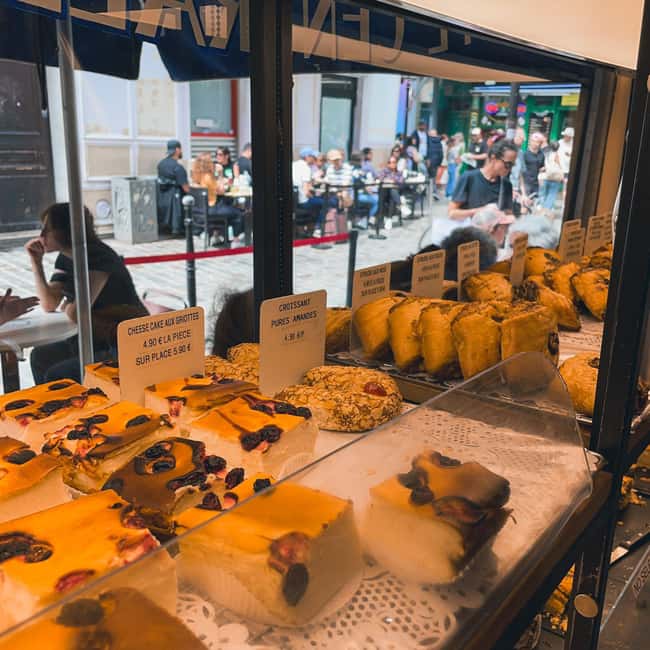
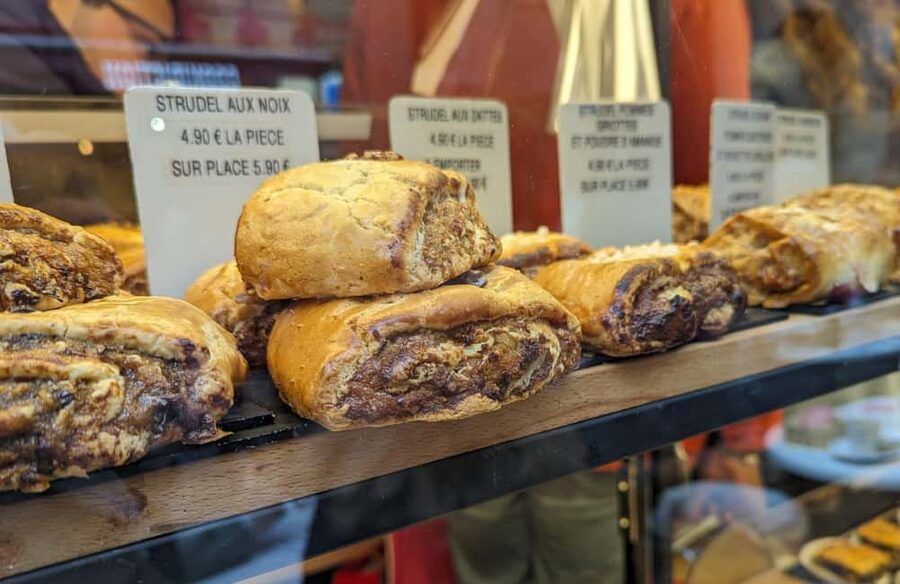
Now for the practical part: food that shows up at the right moment. The tasting at Florence Kahn happens during the walk, and the assortment includes strudel, babka, and cheesecake.
This isn’t just a random snack. It’s a shortcut into culture. Pastry styles in Jewish communities often carry family traditions and migration stories, and in Paris they’re part of the modern food identity of the area. Even if you’re not a “food history” person, you’ll probably enjoy how quickly the guide connects pastry to lived tradition.
A small planning tip: if you’re very hungry, show up ready to eat. If you’re not, try to keep expectations realistic—this is a tasting assortment, not a full meal.
Worth weighing up next to this Paris pick

Synagogue Agoudas Hakehilos (Rav Rottenberg): photo stop with context
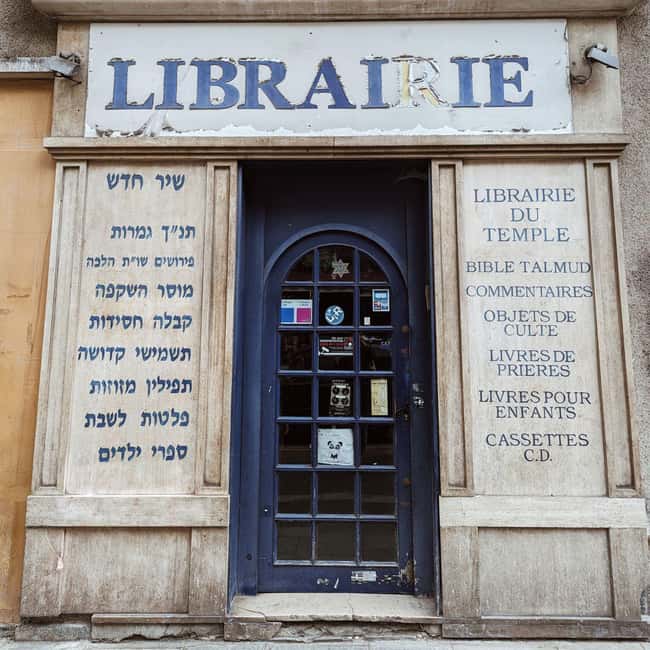
The tour includes a stop at the Agoudas Hakehilos synagogue, with a reference to Rav Rottenberg. You’ll have a photo stop here, plus guidance on what you’re looking at and why that building and its story fit into the neighborhood’s Jewish landscape.
Photo stops can be hit-or-miss on tours—either too rushed or too vague. Here, the focus is on meaning, not just pictures. You should leave with a clearer understanding of what the synagogue represents beyond the exterior.
Because this is a functioning landmark within the area’s community fabric, keep your movement respectful and follow the guide’s timing.
Courtyard access: Museum of Jewish Art and History
One of the included items I’d call out is access to and a tour of the courtyard of the Museum of Jewish Art and History. Courtyards are often where Paris buildings feel most human—light, texture, and the sense that there’s a real place behind the walls.
This courtyard visit gives you a calmer “pause point” during a walking tour. It’s also a good bridge between street-level landmarks and the more solemn memorial experience later. You’re not just zooming through the neighborhood; you’re stepping into a space that supports reflection.
If you like tours that add structure—one stop that informs, another stop that contextualizes—you’ll likely appreciate this layout.
Pletzl tour in the Marais: walking the neighborhood’s heartbeat
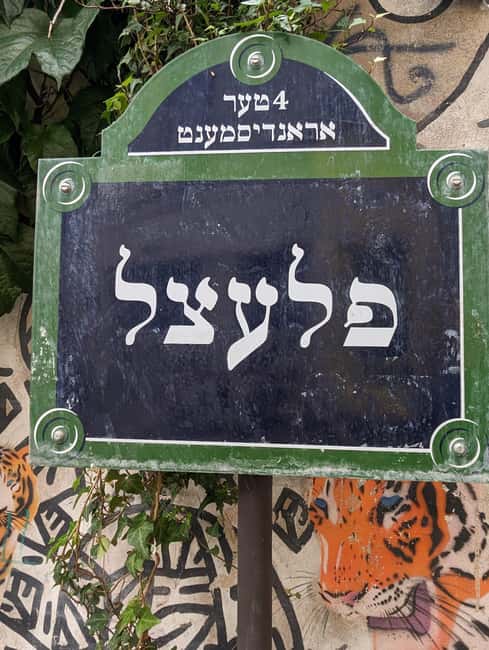
The tour of the Pletzl (Marais) is one of those “this is the point” moments. Pletzl is often used to describe the core Jewish area of the Marais, and the tour treats it like more than a nickname.
You’ll walk the Pletzl with a guided lens: where people gathered, what the neighborhood looked like, and how Jewish life took shape in this part of Paris.
This kind of stop is valuable because it teaches you how to see the area after you leave. When you return later on your own, you’ll likely notice the places you previously would have just walked past.
Ending at the Mémorial de la Shoah: why the tour lands here
The final stop is the Mémorial de la Shoah, with access and a tour of the courtyard of the Shoah memorial. Ending here gives the experience its emotional weight and historical grounding.
It’s also a smart pacing choice. You build through the neighborhood: streets, institutions, community landmarks, then you land at a place designed for memory. That progression can help you hold both perspectives—life and loss—without one swallowing the other.
A practical note: expect the mood to change. If you’re traveling with kids, teens, or anyone who gets overwhelmed easily, this ending still works, but you may want to prepare them that the last part is serious.
Price and value: what $41 gets you
At $41 per person for 90 minutes with a small group (up to 10), I see this as good value because you’re not paying just for a walk. You’re paying for:
- guided storytelling in multiple languages (French, English, German),
- included courtyard access tied to Jewish cultural history,
- included tasting from Florence Kahn (strudel, babka, cheesecake),
- and a meaningful stop at the Shoah memorial.
If you were to do this on your own, you’d need to do extra planning to find the same courtyard access and to understand the “why” behind each site. This tour saves you that research time and gives you a coherent route in a limited window.
It also helps that feedback points to guides like Robin who were praised for staying engaged, answering questions, and keeping explanations clear and enjoyable even for a 13-year-old. That kind of guide quality is the real value driver on a short tour.
Who this tour is best for
This works best if you want a guided way to understand Jewish Paris without spending a full day on planning.
You’ll likely enjoy it if you:
- like walking tours with real landmark stops,
- want both cultural context and food,
- enjoy hearing stories tied to specific streets and buildings,
- or you’re traveling with someone who appreciates a clear structure.
It may be less ideal if you’re the type who wants to linger in museums for a long time. This is a walking-and-courtyard experience, not an all-day deep museum session.
Should you book Jewish Marais – Yiddish world?
If you’re deciding between a generic Marais stroll and something more focused, I’d book this. The combination of street landmarks, courtyard access, and the Florence Kahn tasting makes it more than a standard sightseeing circuit.
Also, the tour is short enough to fit into a busy itinerary, but structured enough to leave you with a clearer sense of where Jewish life shaped this neighborhood. Just go in knowing the ending at the Shoah memorial is serious, and you’ll get the full emotional arc the tour is designed for.
FAQ
FAQ
How long is the Jewish Marais walking tour?
It lasts 90 minutes.
How much does the tour cost?
The price is $41 per person.
How large is the group?
It is limited to 10 participants.
What languages are available for the live guide?
The guide is available in French, English, and German.
Where do I meet the guide?
Meet between the LCL bank and the little wood door of 69 rue du Temple.
How do I recognize the guide?
You’ll recognize the guide by a white shirt and a leather satchel.
Where does the tour finish?
The tour finishes at the Mémorial de la Shoah.
What food is included in the tasting?
The tasting includes an assortment of pastries from Florence Kahn: strudel, babka, and cheesecake.
What’s included besides the food?
Included is access and a tour of the courtyard of the Museum of Jewish Art and History, a tour of the Pletzl (Marais), and access and a tour of the courtyard of the Shoah Memorial.
Can I cancel for a refund?
Yes. Free cancellation is available up to 24 hours in advance for a full refund.
More Walking Tours in Paris
- Paris Top Sights Half Day Walking Tour with a Fun Guide
★ 5.0 · 2,893 reviews - Montmartre Hidden Gems and Scenic Highlights Walking Tour
★ 5.0 · 2,684 reviews - Montmartre Hill French Gourmet Food and Wine Tasting Walking Tour
★ 5.0 · 2,588 reviews - Paris: Montmartre Highlights Walking Tour with a Local Guide
★ 4.9 · 2,318 reviews - Paris Île de la Cité and Notre-Dame Walking Tour With Crypt
★ 5.0 · 2,272 reviews
More Tours in Paris
- Paris: Louvre Guided Tour with Reserved Access & Boat Cruise
★ 4.3 · 16,353 reviews - Paris: Big Bus Hop-On Hop-Off Tour with Optional Cruise
★ 4.4 · 13,279 reviews - Louvre Museum Masterpieces Guided Tour with Access
★ 4.5 · 12,023 reviews - Versailles: Skip-the-Line Tour of Palace and Gardens Access
★ 4.7 · 10,429 reviews - Paris: Louvre Overview, Exploration tour and Reserved Entry
★ 4.1 · 10,145 reviews
More Tour Reviews in Paris
- Paris: 1-Hour Seine Cruise departing from the Eiffel Tower
★ 4.4 · 77,472 reviews - Paris: Louvre Museum Timed-Entrance Ticket
★ 4.6 · 71,977 reviews - Disneyland® Paris 1-Day Ticket
★ 4.6 · 49,412 reviews - Paris: Versailles Palace and Gardens Full Access Ticket
★ 4.6 · 41,579 reviews - Paris: Arc de Triomphe Rooftop Tickets
★ 4.6 · 34,264 reviews
Fresh off the review desk in Paris
- Secrets of Paris Bike Tour in English or Dutch★ 5.0 · 5 reviews
- Paris: Mont Saint-Michel Day Tour with Chinese Tour Guide★ 5.0 · 5 reviews
- Private Street Art 2-Hour Guided Tour in Paris★ 4.5 · 5 reviews
- Orsay Museum Tour: 2h Highlights (Private & Small Group)★ 5.0 · 5 reviews
- Discover Paris in electric golf carts★ 4.0 · 5 reviews
- Paris Private Boat Tour with your own Captain Guide★ 5.0 · 5 reviews
Walking Tours, compared.
 ★ 5.0Paris Top Sights Half Day Walking Tour with a Fun GuideFrom $762,893 reviews
 ★ 5.0Montmartre Hidden Gems and Scenic Highlights Walking TourFrom $382,684 reviews
 ★ 5.0Montmartre Hill French Gourmet Food and Wine Tasting Walking TourFrom $1452,588 reviews
 ★ 4.9Montmartre Highlights Walking Tour with a Local GuideFrom $232,318 reviews
 ★ 5.0Paris Île de la Cité and Notre-Dame Walking Tour With CryptFrom $482,272 reviews
 ★ 4.8Montmartre Cheese, Wine & Pastry Guided Walking TourFrom $1272,255 reviews
 ★ 5.0Paris in a Day: Louvre or Orsay, Eiffel Tower, City Walk & CruiseFrom $1571,956 reviews
 ★ 5.0Paris City Center Free Walking Tour (Tip-Based)From $31,340 reviews
Browse the lists this tour appears in