
Reviewed · MONTMARTRE TOURS
Montmartre District and Sacre Coeur – Exclusive Guided Walking Tour
Montmartre feels different with a guide. This walk strings together Montmartre’s famous sights and the quieter art corners between them, ending with Sacré-Cœur views that really change how you see the neighborhood. I love the small-group feel that makes it easy to ask questions, and I love how guides keep the stories practical and place-based, with English that’s been praised in past tours (names like Hugo Kennedy and Eden M. come up often).
The main drawback is simple: this is a very hilly walking route. You’ll climb, you’ll step, and a few stops are view-and-story stops rather than full entry, since some places can’t be entered due to security.
In This Review
- Key takeaways before you go
- Starting near Blanche: how you kick off the Montmartre climb
- Montmartre streets to Sacré-Cœur: the big views make the effort worth it
- Moulin Rouge and the nightlife legend stop
- Rue Lepic and van Gogh’s house: seeing the art route in real streets
- Place Dalida and the quiet corners of fandom
- Jardin Sauvage de St-Vincent: a nature breather inside the city
- Vigne du Clos Montmartre: how central Paris still grows grapes
- Le Lapin Agile: bohemian history with a recognizable sign
- The Basilica of Sacré-Cœur: interior time plus a hilltop reality check
- Place du Tertre and the artist square vibe
- Espace Dali, Bateau-Lavoir, and more creator landmarks
- La Maison de Dalida and the Abbesses art nouveau metro entrance
- What pace feels like: timing, hills, and how much you’ll actually do
- Price and value: $59.69 for a guided Montmartre loop that makes sense
- Who should book this tour (and who should consider skipping)
- Final call: should you book the Montmartre and Sacré-Cœur exclusive guided walk?
- FAQ
- How long is the Montmartre and Sacré-Cœur walking tour?
- What language is the tour offered in?
- Where does the tour start and end?
- Is this tour private?
- Does the tour run in bad weather?
- Are tickets included for Sacré-Cœur and other attractions?
- How strenuous is the walk?
- Is free cancellation available?
Key takeaways before you go
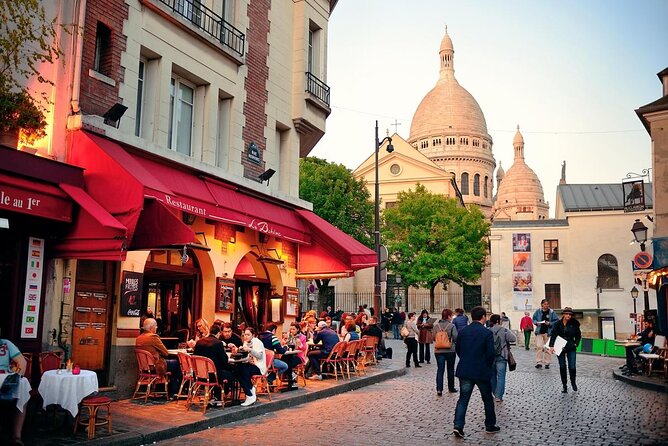
- One route, many icons: you cover Sacré-Cœur, Moulin Rouge area views, van Gogh spots, and more in one coordinated loop
- Top-of-the-hill photo payoff: the Sacré-Cœur area gives you postcard panoramas from one of Paris’s highest points
- Art stops that explain why they mattered: you’ll pass key creator-linked places like Bateau-Lavoir and Place du Tertre
- Music culture built in: Dalida show up twice, including a dedicated square and her house location
- Some interiors are limited: several sites are typically exterior or quick passes, and security can affect inside access
- Rain or shine planning: the tour keeps moving, and the route may adjust for national celebrations
Starting near Blanche: how you kick off the Montmartre climb
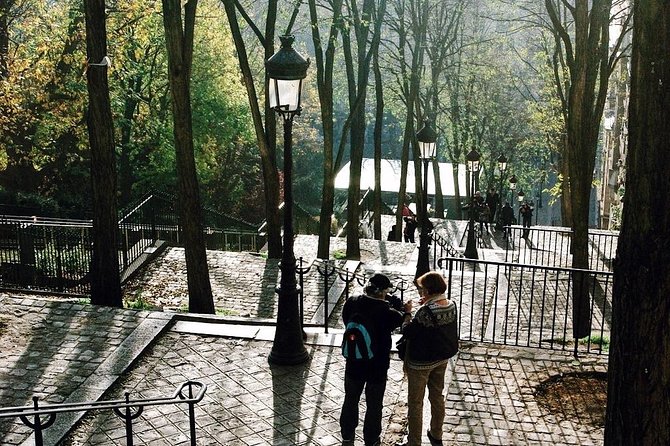
The walk starts at Blanche (75018), right where you can plug into the Metro and get moving fast. From there, the tour’s rhythm is built around the hill: you don’t just wander—you climb with context, so each bend in the street has a reason.
This is also where the small details start to matter. Montmartre isn’t only about a single landmark. It’s a patchwork of streets, squares, and viewpoints, and the guide helps you connect them instead of treating them like separate checkboxes.
Keep climbing: more of the Montmartre hill
- Montmartre Hidden Gems and Scenic Highlights Walking Tour
★ 5.0 · 2,684 reviews - Montmartre Hill French Gourmet Food and Wine Tasting Walking Tour
★ 5.0 · 2,588 reviews - Paris: Montmartre Highlights Walking Tour with a Local Guide
★ 4.9 · 2,318 reviews - Paris: Montmartre Cheese, Wine & Pastry Guided Walking Tour
★ 4.8 · 2,255 reviews
Montmartre streets to Sacré-Cœur: the big views make the effort worth it
You’ll begin in the Montmartre area and work your way uphill toward Sacré-Cœur. Along the way, the guide frames the neighborhood as an artist-invented world—cobbled lanes, classic Paris angles, and the sense that people have been creating here for generations.
A few things make this part especially satisfying:
- You start from the base area where the Moulin Rouge windmill still turns slowly in the background.
- You move through streets that feel like a film set—especially if you’re the kind of traveler who spots recognizable scenes and wants the real-world version.
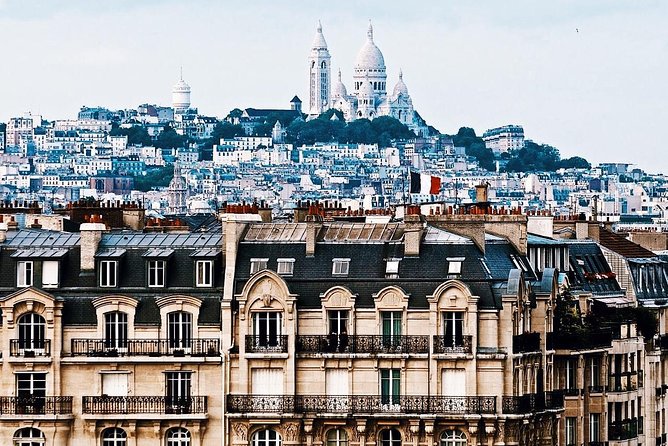
- You end this segment at the top, where Sacré-Cœur’s white facade and the Paris panorama do the heavy lifting.
Inside Sacré-Cœur, you’ll have time to explore. Past tours also note the guide’s knack for keeping questions flowing, which helps if you want to understand what you’re seeing rather than only snapping photos.
Moulin Rouge and the nightlife legend stop
Once you’ve got your bearings, the tour points you toward the Moulin Rouge area. It’s famous for cabaret energy and for inspiring international artists, and the guide connects that influence to the wider Montmartre scene.
This stop is short, and that’s the key to the pacing. You get context and sightlines, but you don’t lose the rest of the walk to one long detour. If you’re hoping to spend hours there, you’ll do better planning a separate night out. This tour’s job is to explain why the neighborhood matters, not to replace an evening show.
Rue Lepic and van Gogh’s house: seeing the art route in real streets
You’ll pass the area tied to van Gogh on Rue Lepic, including the home where he lived with his brother starting in 1886. Even if you don’t go inside a museum or ticketed site, this is the kind of stop that makes the artist story feel grounded.
What you gain here is orientation. Montmartre’s “artist trail” can feel random if you walk it alone. With a guide, the stops connect: you understand where the working life happened, not just where famous paintings were made.
Place Dalida and the quiet corners of fandom
Dalida isn’t just a name in the history books here. You’ll pause at a square dedicated to the singer, and it feels like a specific kind of pilgrimage—people stop, look, and pay respect in a place that’s more tucked away than you’d expect.
Then later, the tour returns to Dalida again at her house location (including the address where she lived for years). This two-stop approach is smart. It shows her influence in two ways: public tribute and private life location.
Jardin Sauvage de St-Vincent: a nature breather inside the city
Not every Montmartre walk includes a botany moment. Here, you’ll stroll past Jardin Sauvage de St-Vincent, a sloped plot intentionally left in a fragile, semi-wild state so you can observe biodiversity and wild plants.
If you enjoy the “Paris behind the postcard” angle, this stop delivers. You’ll see the idea of the city as habitat, not only as monuments. Elderberry trees, ivy, and wild insects are part of what makes it distinct, even if the visit is brief.
Worth weighing up next to this Paris pick



Vigne du Clos Montmartre: how central Paris still grows grapes
Next up: the Vigne du Clos Montmartre, a hidden vineyard tucked into smaller streets behind Sacré-Cœur. It’s one of the last remaining vines in central Paris, which is exactly why the guide includes it—this isn’t a random photo stop. It’s a reminder that Montmartre isn’t only culture-on-stone; it’s also land.
This is a good moment to slow down and look around, because the surrounding streets hide the vineyard until you’re close. If you’ve been wandering all day, this section gives your brain a new category: Paris as agriculture.
Le Lapin Agile: bohemian history with a recognizable sign
You’ll head toward Le Lapin Agile, a cabaret tied to the Montmartre bohemian set until 1914. The tour notes that the sign remains a memorable symbol of the district, and that’s the point: you’re looking for continuity in a neighborhood that changed fast.
Again, it’s mostly an outside-and-story stop. But for the value of the tour, that makes sense. You get the cultural map without spending your time buying tickets or waiting in lines.
The Basilica of Sacré-Cœur: interior time plus a hilltop reality check
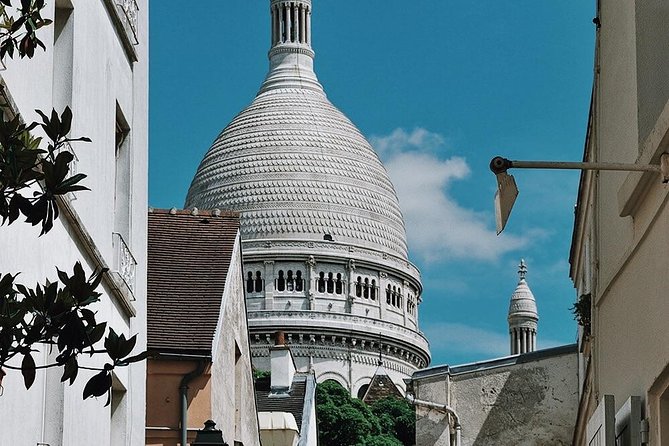
Sacré-Cœur is the emotional payoff. The white basilica, completed in 1914, is dedicated to the Sacred Heart of Jesus, and the interior features one of the world’s largest mosaics depicting Jesus Christ.
You’ll also get the best kind of practical gift: a chance to slow down and look outward afterward. From the high point, Paris stops being a list of places and turns into a sense of place—rivers, bridges, neighborhoods, and distance.
Place du Tertre and the artist square vibe
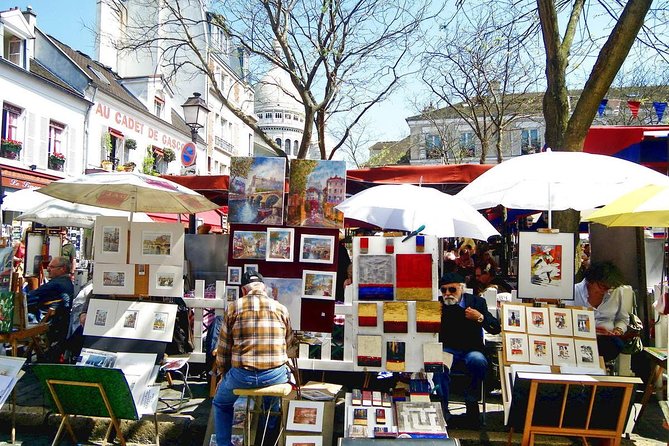
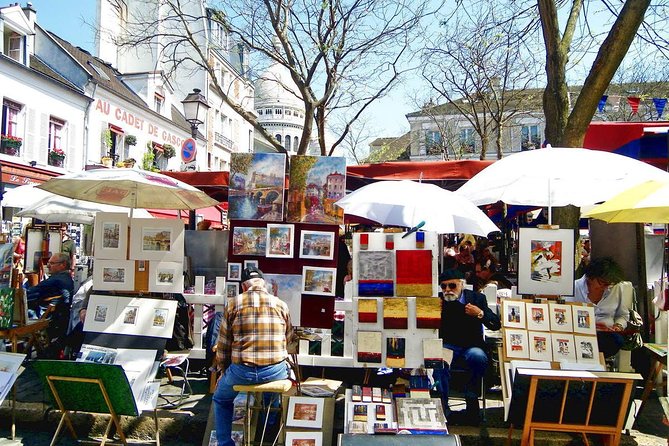
Near Sacré-Cœur, the tour passes Place du Tertre, where artists set up with easels. The guide frames it as a reminder of when Montmartre was the mecca of modern art, not just a sightseeing district.
This stop is great for one reason: it shows how art culture survives in different forms. Even if the square has changed over the decades, you can still feel the Montmartre “creative street” identity here.
Espace Dali, Bateau-Lavoir, and more creator landmarks
After Place du Tertre, you’ll pass the Dali Museum Paris area (the Espace Dali), described as a permanent exhibition of original works tied to Salvador Dali and his sculptures and engravings.
Then you’ll see Bateau-Lavoir, one of Montmartre’s famous artistic creation sites. It’s historically known as a residence and a meeting place for painters, writers, actors, and art sellers. If you like the idea of creative communities clustering in real places, this is one of the most meaningful stops.
The guide’s storytelling matters most here, because these places can look like ordinary buildings unless someone connects them to the time when they buzzed.
La Maison de Dalida and the Abbesses art nouveau metro entrance
The tour continues past La Maison de Dalida, the house where Dalida lived between 1962 and 1987. The stop also highlights the location associated with her death in 1987, so it’s more reflective than spectacle.
Near the end, you’ll reach Place des Abbesses and the Art Nouveau Metro entrance designed by Hector Guimard. This is the kind of detail you’d miss alone. It also gives you a satisfying “last image” before the tour ends: a beautiful piece of design that ties to how Paris blends daily life with art.
What pace feels like: timing, hills, and how much you’ll actually do
This tour runs about 2 hours 30 minutes and moves steadily through key areas. It’s rated for moderate physical fitness, and the biggest physical factor is the hill.
Here’s how I’d plan your expectations:
- You’ll get short stops at several landmarks, not long museum-style blocks everywhere.
- You do get time to explore inside Sacré-Cœur, but other sites are often pass-by or quick view-and-story moments.
- Some access can be affected by security at attractions, so think of the tour as a guided walk with viewing time, not a guarantee of inside access at every stop.
Also, it runs rain or shine. I’d treat this like any good walking tour: wear shoes you trust on uneven streets, bring water, and plan for an umbrella if the sky looks questionable.
Price and value: $59.69 for a guided Montmartre loop that makes sense
At $59.69 per person for roughly 2.5 hours, the value comes from three things:
- Planning efficiency: you cover a lot of Montmartre territory in one go, instead of piecing together routes on your own.
- Context for the “why”: you’re not just seeing places; you’re learning how artists and culture fit into the streets.
- Time saved through guidance: a guide helps you move through the neighborhood with fewer dead ends and better sightlines.
One more practical point: this can be a smart choice if you want a private experience with a strong focus on conversation and questions. If you hate “silent group tours,” the small-group style (and the fact that many guides are praised for tailoring the pace) is exactly what you’re paying for.
Who should book this tour (and who should consider skipping)
Book it if you:
- Want a clear route through Montmartre without spending hours building your own map.
- Care about art history that stays tied to real locations—van Gogh, Dali connections, and Montmartre’s creator community.
- Like asking questions, because the pace is built to allow them.
Skip or adjust your plan if you:
- Struggle with steep hills and lots of steps. This walk climbs.
- Want long ticketed time at every big name attraction. A few major stops are not ticketed here, and some inside access can be limited.
If you’re traveling with teens or kids who get bored easily, a good guide choice and a watchful group pace can make it work well. If your group includes slower walkers, past tours have noted guides being patient with the pace, which helps a lot.
Final call: should you book the Montmartre and Sacré-Cœur exclusive guided walk?
Yes—if your goal is to see Montmartre’s highlights in one smart loop and come away with a real sense of how the art scene shaped the streets. This tour is strong where it matters: the hilltop payoff, the artist-linked stops, and a guide experience that’s designed to keep the walk lively and understandable.
You might skip it if your priorities are ticketed time inside places like Moulin Rouge or van Gogh’s house. In that case, use this tour for orientation and context, then add separate visits on another day.
FAQ
How long is the Montmartre and Sacré-Cœur walking tour?
It lasts about 2 hours 30 minutes.
What language is the tour offered in?
The tour is offered in English.
Where does the tour start and end?
It starts at Blanche (75018 Paris) and ends in Montmartre (75018 Paris).
Is this tour private?
This is a private walking tour, and only your group participates. There is an option for a semi-private version, which changes what is included.
Does the tour run in bad weather?
Yes. The tour runs rain or shine.
Are tickets included for Sacré-Cœur and other attractions?
Sacré-Cœur entry is listed as free with time allowed to explore inside. Several other locations mentioned are listed as ticket not included.
How strenuous is the walk?
It requires moderate physical fitness. The route is hilly, with climbing through Montmartre’s streets.
Is free cancellation available?
Yes. You can cancel up to 24 hours in advance for a full refund.
More Tours in Paris
- Paris: Louvre Guided Tour with Reserved Access & Boat Cruise
★ 4.3 · 16,353 reviews - Paris: Big Bus Hop-On Hop-Off Tour with Optional Cruise
★ 4.4 · 13,279 reviews - Louvre Museum Masterpieces Guided Tour with Access
★ 4.5 · 12,023 reviews - Versailles: Skip-the-Line Tour of Palace and Gardens Access
★ 4.7 · 10,429 reviews - Paris: Louvre Overview, Exploration tour and Reserved Entry
★ 4.1 · 10,145 reviews
More Tour Reviews in Paris
- Paris: 1-Hour Seine Cruise departing from the Eiffel Tower
★ 4.4 · 77,472 reviews - Paris: Louvre Museum Timed-Entrance Ticket
★ 4.6 · 71,977 reviews - Disneyland® Paris 1-Day Ticket
★ 4.6 · 49,412 reviews - Paris: Versailles Palace and Gardens Full Access Ticket
★ 4.6 · 41,579 reviews - Paris: Arc de Triomphe Rooftop Tickets
★ 4.6 · 34,264 reviews
More of the Montmartre Hill
- Montmartre Hidden Gems and Scenic Highlights Walking Tour
★ 5.0 · 2,684 reviews - Montmartre Hill French Gourmet Food and Wine Tasting Walking Tour
★ 5.0 · 2,588 reviews - Paris: Montmartre Highlights Walking Tour with a Local Guide
★ 4.9 · 2,318 reviews - Paris: Montmartre Cheese, Wine & Pastry Guided Walking Tour
★ 4.8 · 2,255 reviews - The Secrets of Montmartre Walking Tour
★ 4.8 · 1,258 reviews
Fresh off the review desk in Paris
- Secrets of Paris Bike Tour in English or Dutch★ 5.0 · 5 reviews
- Paris: Mont Saint-Michel Day Tour with Chinese Tour Guide★ 5.0 · 5 reviews
- Private Street Art 2-Hour Guided Tour in Paris★ 4.5 · 5 reviews
- Orsay Museum Tour: 2h Highlights (Private & Small Group)★ 5.0 · 5 reviews
- Discover Paris in electric golf carts★ 4.0 · 5 reviews
- Paris Private Boat Tour with your own Captain Guide★ 5.0 · 5 reviews
Montmartre Tours, compared.
 ★ 5.0Montmartre Hidden Gems and Scenic Highlights Walking TourFrom $382,684 reviews
 ★ 5.0Montmartre Hill French Gourmet Food and Wine Tasting Walking TourFrom $1452,588 reviews
 ★ 4.9Montmartre Highlights Walking Tour with a Local GuideFrom $232,318 reviews
 ★ 4.8Montmartre Cheese, Wine & Pastry Guided Walking TourFrom $1272,255 reviews
The Secrets of Montmartre Walking TourFrom $331,258 reviews
★ 4.8Montmartre Cheese, Wine & Pastry Guided Walking TourFrom $1272,255 reviews
The Secrets of Montmartre Walking TourFrom $331,258 reviews
 ★ 4.1Sacré-Coeur and Montmartre Tour with Expert GuideFrom $281,027 reviews
 ★ 5.0Private Montmartre Food Tour with Wine, Cheese & PastriesFrom $3021,027 reviews
 ★ 5.0Paris Montmartre Food Tour – A Full French Meal by Do Eat BetterFrom $95877 reviews
Browse the lists this tour appears in