
Reviewed · MONTMARTRE TOURS
Montmartre Paris Hidden Gems Small Group Walking Tour
Montmartre is easier when someone maps your feet. I love the small group size and the way you move from Dalida to Sacré-Cœur without guessing your way, and I love how the guide (including Nafi in recent experiences) stays tuned to your questions. One thing to plan for: it is still a walking tour, so wear good shoes and expect some hill time.
You get about two hours of stop-and-look moments with plenty of free sights along the way. Because the group tops out at eight, you can actually hear what’s being said and keep your questions moving instead of waiting for a gap in the noise.
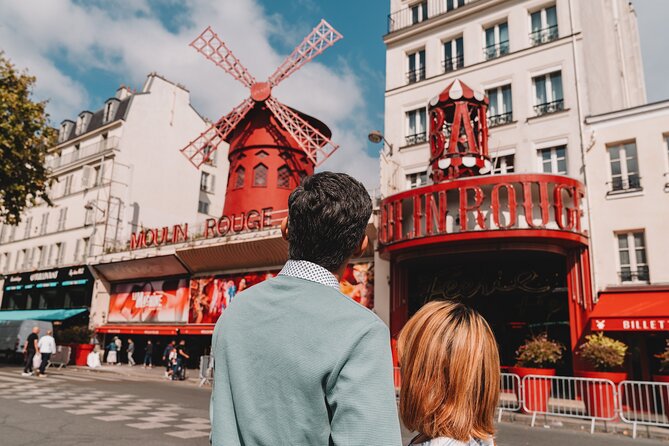
The tour ends at Moulin Rouge, which is a smart finish if you want an obvious landmark to navigate from next. If you’re short on time or you’re visiting Montmartre for the first time, this format helps you see the big names and the quieter corners without turning your day into a checklist.
In This Review
- Key Points Worth Booking For
- Why This Montmartre Walk Fits Two Hours
- Start at Chez Ginette and Get Your Bearings Fast
- Dalida Statue to La Petite Maison Rose: Icon Culture on Cobblestones
- Clos Montmartre Vineyard: Paris Gets Real About Farming
- Au Lapin Agile: A 19th-Century Cabaret Atmosphere
- Sacré-Cœur and the Big Views: What Ten Minutes Can Do
- Place du Tertre: Artists, Street Energy, and Human Scale
- Vieux-Moulin and Moulin de la Galette: From Windmill to Dance Hall
- Le Bateau-Lavoir: Where Modern Art Started to Take Shape
- Wall of Love: Hundreds of Languages, One Sentiment
- Café des Deux Moulins: Amélie Fans’ Short Walk to Movie Memory
- Ending at Moulin Rouge: A Landmark Finish With Real Next Steps
- Price and Value: What $54.13 Buys You
- Who This Tour Suits Best (and Who Might Want Another Option)
- Should You Book This Montmartre Tour?
- FAQ
- How long is the Montmartre Paris Hidden Gems small group walking tour?
- How many people are in the group?
- Is the tour offered in English?
- Where does the tour start and end?
- What stops are included?
- Is admission included for all stops?
- Is snacks included?
- Can I get a refund if I cancel?
Key Points Worth Booking For

- Up to 8 people so the walk stays personal and you can ask questions
- Licensed guide in English for clear context at each landmark
- Mostly free stops, so you’re not paying entrance fees all day
- Clos Montmartre vineyard tucked right into the neighborhood
- Artist and art stops like Le Bateau-Lavoir and Place du Tertre
- Finish at Moulin Rouge with an easy handoff to metro and food options nearby
Why This Montmartre Walk Fits Two Hours
Montmartre can feel like a maze—stairs, curves, views, and sudden scenes from different decades all competing for your attention. This tour is built to reduce the mental load. You walk, you pause, and you get just enough story at each spot to make the area click.
I like that it focuses on both the famous sights and the less-obvious stops. You’re not only collecting photos of postcard angles; you’re also seeing the neighborhood’s creative DNA in places tied to music, painting, and film.
The other big win is pacing. One recent highlight was how the walk felt a bit slower and more intimate than another Montmartre day. That matters because Montmartre hills turn even a short walk into a workout if you’re not careful. With an eight-person cap, the guide can manage the group so you’re not constantly playing catch-up.
Keep climbing: more of the Montmartre hill
- Montmartre Hidden Gems and Scenic Highlights Walking Tour
★ 5.0 · 2,684 reviews - Montmartre Hill French Gourmet Food and Wine Tasting Walking Tour
★ 5.0 · 2,588 reviews - Paris: Montmartre Highlights Walking Tour with a Local Guide
★ 4.9 · 2,318 reviews - Paris: Montmartre Cheese, Wine & Pastry Guided Walking Tour
★ 4.8 · 2,255 reviews
Start at Chez Ginette and Get Your Bearings Fast

You begin at Chez Ginette, 101 Rue Caulaincourt in the 18th arrondissement. Starting there is convenient because you’re positioned close to the heart of what most people want from Montmartre: quick access to lanes that feel old, and an easy route into the hillier zones.
If you like a smooth start, show up a few minutes early. Montmartre is popular, and this meeting point can be surrounded by foot traffic and tour groups. Once you’re with your guide, you’ll get the walking order and the reason behind the route, so the day doesn’t feel random.
You also get a mobile ticket, which simplifies your pre-walk routine. No scrambling for paper once you’re in the city. Just have your phone ready and you’re set.
Dalida Statue to La Petite Maison Rose: Icon Culture on Cobblestones
Stop one is the Dalida Statue. You pause to pay tribute to Dalida, the French singer and actress who became a legend in French music. This isn’t just a random monument; it’s a quick way to understand why Montmartre has always attracted performers and dreamers. The statue gives you a cultural anchor before you move into the more tourist-known street scenes.
Next comes La Petite Maison Rose de Montmartre, a pastel-pink café landmark associated with artists and photographers for more than a century. The value here is practical: you’ll see the exterior and get context without losing time to long waits. It also works as a color reset for your brain after the formal statue moment—Montmartre is all about shifting moods.
A good consideration: these early pauses are short. That’s by design, because the tour tries to cover multiple areas in about two hours. If you like lingering for longer at photo spots, plan to add a little extra time later on your own.
Clos Montmartre Vineyard: Paris Gets Real About Farming
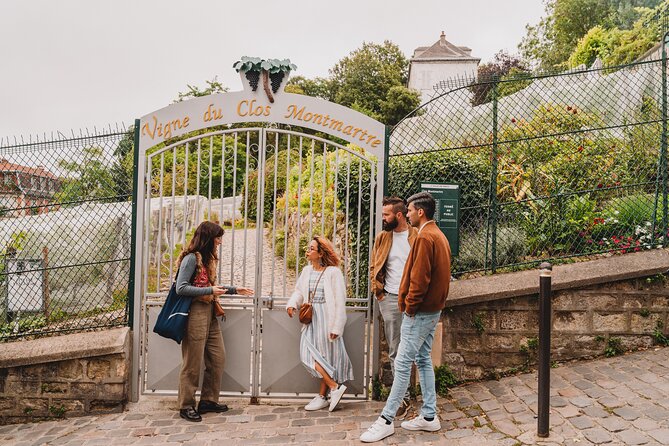
Then you hit Vigne du Clos Montmartre. Clos Montmartre is described as a working vineyard right in the city, which is exactly the kind of detail that makes Montmartre feel different from the rest of Paris. You’re not only seeing art districts and cabarets; you’re seeing food production history that survived urban change.
Even in ten minutes, this stop can change how you read the neighborhood. It’s a reminder that Montmartre wasn’t always just scenery for visitors. It’s been a place where real work happened, and the vines helped define its identity over time.
If you’re the type who loves a quick “wait, this is real?” moment, this is one of the stops that delivers that feeling fast. If you’re mainly here for architecture and views, you might treat this as a brief texture stop, but it still gives you a more complete Montmartre picture.
Au Lapin Agile: A 19th-Century Cabaret Atmosphere
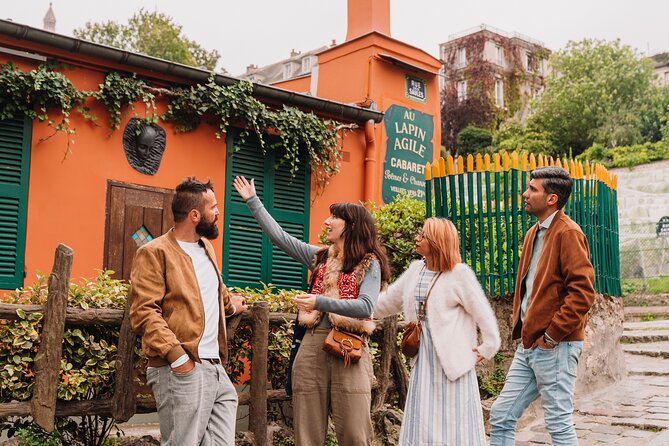
At Au Lapin Agile, you step into a historic cabaret dating to the 19th century. It’s known as a gathering place for artists, writers, and musicians, including famous names like Picasso, Modigliani, and Apollinaire.
What I like here is the way the tour links people to place. Montmartre isn’t just a backdrop; it’s a magnet. Once you’ve heard a bit about why these artists found their way here, the neighborhood’s bohemian reputation stops sounding like marketing and starts sounding like a pattern.
Because the stop is brief, you won’t leave feeling like you toured the whole venue. But you’ll get the story and the vibe signal. That helps you decide whether to go back later for a longer look on your own.
Sacré-Cœur and the Big Views: What Ten Minutes Can Do
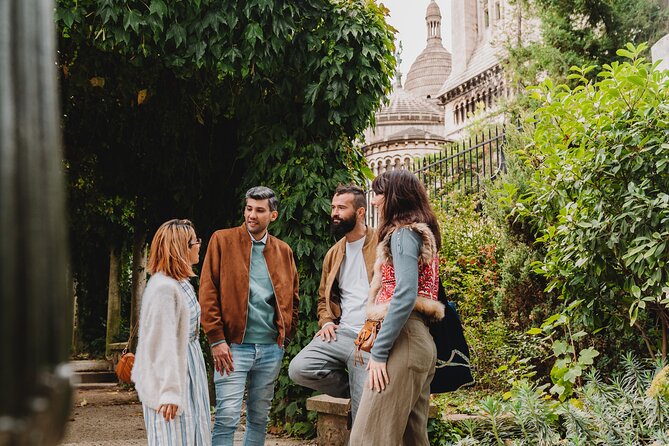
You’ll reach Basilique du Sacré-Cœur de Montmartre, where the headline is simple: panoramic views of Paris. Even if you don’t spend much time inside, the view is the point. It’s the spot where Montmartre’s height pays off and where your photos actually make sense.
This is one of those moments where I think a guided stop helps. The guide can point your attention toward what’s relevant in the distance, instead of you spending your ten minutes only scanning the skyline without direction.
One practical note: Sacré-Cœur areas can get crowded in peak hours. Ten minutes is enough to see the view, but not always enough to linger if it’s packed. If you’re visiting during busy times, aim for an earlier departure or be ready for a slow-moving crowd.
Worth weighing up next to this Paris pick




Place du Tertre: Artists, Street Energy, and Human Scale
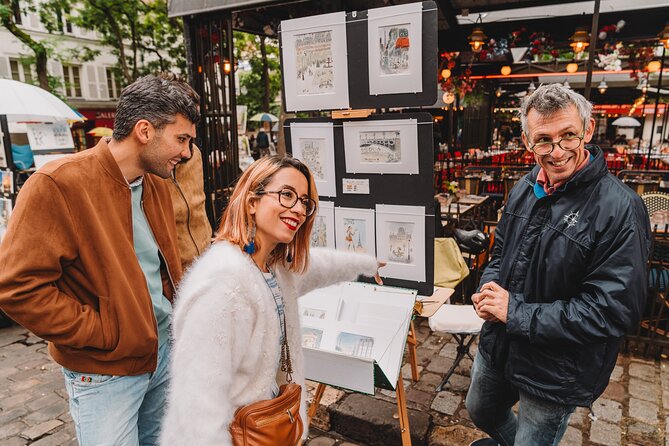
Place du Tertre is where the neighborhood’s art economy becomes visible. You’ll pause to take in the lively atmosphere where local artists capture the spirit of Montmartre.
This stop can be fun even if you’re not shopping. Watch how the artists work and how visitors interact. It gives you a sense of how Montmartre sells its creative image today, and why the area continues to attract artists.
The possible drawback: this is a well-known square, so it’s naturally popular. If you hate crowds, be prepared for busy foot traffic and activity around you. Ten minutes helps you get the flavor without getting stuck too long.
Vieux-Moulin and Moulin de la Galette: From Windmill to Dance Hall
Next up is Vieux-Moulin, tied to the Moulin de la Galette. The tour highlights this as one of the last remaining windmills in Montmartre, originally part of a flour mill and later transformed into a dance hall in the 19th century.
This is more than trivia. It gives you a clear timeline for how Montmartre changed as Paris modernized. You see the physical structure, then the story behind its purpose shifts from production to entertainment.
If you’re a photography person, this is often where the angles feel especially Montmartre. But if your feet are already tired from the hill, prioritize standing still and letting the guide explain what you’re looking at. You’ll get more out of the stop without draining energy you need later.
Le Bateau-Lavoir: Where Modern Art Started to Take Shape
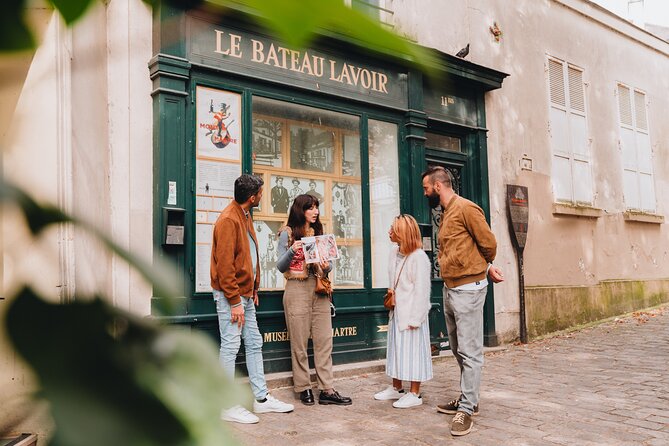
At Le Bateau-Lavoir, you step into the cradle of modern art in Montmartre. The building is described as the historic heart of the neighborhood’s artistic community.
The value of this stop is context. By the time you arrive here, you’ve already heard about singers, cabarets, vineyards, and windmills. So when you reach Le Bateau-Lavoir, it feels like the pieces are finally connecting. The neighborhood turns into a living timeline of creativity.
This is also a good stop if you want to go beyond postcard Montmartre. The story is less about famous facades and more about how people worked, met, and created.
Wall of Love: Hundreds of Languages, One Sentiment
The Wall of Love is exactly what you hope it is: romance written in hundreds of languages. In ten minutes, you can read a few lines, take a photo, and feel the playful side of Montmartre that sits beside the artsy seriousness.
I like this stop for a simple reason: it breaks up the day. After museums-and-history moments, the Wall of Love gives you a lighter, human pause—something you can enjoy without needing to study.
If you prefer quieter experiences, keep your expectations realistic. This type of photo spot tends to attract people. The upside is that it’s short, so you can usually get what you need quickly.
Café des Deux Moulins: Amélie Fans’ Short Walk to Movie Memory
You’ll reach Café des Deux Moulins, made famous by its role in the 2001 film Amélie. This is the kind of stop that works for both movie fans and non-fans. Even if you don’t know the film, you get a classic Montmartre café setting and a sense of why certain places become symbols.
I find these film-linked stops useful because they give visitors a bridge. When your brain recognizes a reference, the neighborhood’s atmosphere feels more personal and less unfamiliar.
A small practical consideration: the tour does not include snacks. If you think you’ll want a drink or bite here, plan to buy it on your own after the tour. Bring water if you tend to run dry during warm days.
Ending at Moulin Rouge: A Landmark Finish With Real Next Steps
The tour ends in front of Moulin Rouge at 82 Bd de Clichy. That’s a strong finish because it’s obvious. You don’t have to guess where you are or how to continue your day.
From there, your guide directs you to the nearest metro and can also point you toward local food recommendations in SOPI. If you still want more Montmartre energy up the hill, you can also look into funicular or little train options, depending on what fits your schedule.
This ending matters if you’re trying to stitch together the rest of your Paris day. Many Montmartre walks end somewhere vague, which can leave you feeling stuck. Here, you finish at a major landmark with transport options close by.
Price and Value: What $54.13 Buys You
At $54.13 per person for about two hours, this tour isn’t just paying for “someone to walk with you.” You’re paying for a licensed guide, a tight route, and a curated mix of places you’d miss or misunderstand if you went solo.
Most stops are listed as free to access, which helps your budget. The main exception mentioned is that admission at Moulin Rouge is not included, but you’re not being charged entry fees at every single stop. That keeps the tour from turning into surprise costs.
The small-group cap at eight is also part of the value. In practical terms, you get more time at the stops and less time dealing with noise or crowd gaps. If you’re visiting with limited time, that matters more than you might expect.
One more detail to consider: the tour is commonly booked about 42 days in advance on average. That’s a sign of steady demand, especially when the weather is good. If your dates are fixed, book early so you can pick an easier departure time.
Who This Tour Suits Best (and Who Might Want Another Option)
This walk is a great fit if you want to cover the key Montmartre moments without turning your day into a long slog. It also suits first-time visitors who need stories to connect the names—Dalida, Sacré-Cœur, artists’ squares, and classic landmarks—so the area feels coherent.
It’s also a good option if you like the idea of asking questions. Nafi is specifically praised in recent experiences for being accommodating and for explaining Montmartre in a way that keeps the walk interesting.
If you want to spend an hour at each location, this probably won’t feel slow enough. Ten-minute pauses are designed for breadth. And if you struggle with uneven ground or steep sections, plan around the walking nature of the day. Good shoes are not optional here.
Should You Book This Montmartre Tour?
Book it if you want a smart Montmartre overview that blends major landmarks with art-and-culture stops, in a group that stays small. The finish at Moulin Rouge plus metro guidance makes it easy to continue your evening without stress.
Skip it (or think twice) if you prefer deep, stop-by-stop time for shopping, long interior visits, or you hate crowds at popular squares like Place du Tertre. Also, if you don’t want to walk hills at all, you might want a different format.
FAQ
How long is the Montmartre Paris Hidden Gems small group walking tour?
The tour lasts about 2 hours.
How many people are in the group?
The experience has a maximum of 8 travelers.
Is the tour offered in English?
Yes, it is offered in English.
Where does the tour start and end?
It starts at Chez Ginette, 101 Rue Caulaincourt, 75018 Paris, and ends in front of Moulin Rouge at 82 Bd de Clichy, 75018 Paris.
What stops are included?
The tour includes stops at the Dalida Statue, La Petite Maison Rose de Montmartre, Vigne du Clos Montmartre, Au Lapin Agile, Basilique du Sacre-Cœur de Montmartre, Place du Tertre, Vieux-Moulin (Moulin de la Galette), Le Bateau-Lavoir, the Wall of Love, Café des Deux Moulins, and it finishes in front of Moulin Rouge.
Is admission included for all stops?
The provided info lists admission tickets as free for most stops, and Moulin Rouge admission is not included.
Is snacks included?
No, snacks are not included.
Can I get a refund if I cancel?
Yes. You can cancel up to 24 hours in advance for a full refund.
More Tours in Paris
- Paris: Louvre Guided Tour with Reserved Access & Boat Cruise
★ 4.3 · 16,353 reviews - Paris: Big Bus Hop-On Hop-Off Tour with Optional Cruise
★ 4.4 · 13,279 reviews - Louvre Museum Masterpieces Guided Tour with Access
★ 4.5 · 12,023 reviews - Versailles: Skip-the-Line Tour of Palace and Gardens Access
★ 4.7 · 10,429 reviews - Paris: Louvre Overview, Exploration tour and Reserved Entry
★ 4.1 · 10,145 reviews
More Tour Reviews in Paris
- Paris: 1-Hour Seine Cruise departing from the Eiffel Tower
★ 4.4 · 77,472 reviews - Paris: Louvre Museum Timed-Entrance Ticket
★ 4.6 · 71,977 reviews - Disneyland® Paris 1-Day Ticket
★ 4.6 · 49,412 reviews - Paris: Versailles Palace and Gardens Full Access Ticket
★ 4.6 · 41,579 reviews - Paris: Arc de Triomphe Rooftop Tickets
★ 4.6 · 34,264 reviews
More of the Montmartre Hill
- Montmartre Hidden Gems and Scenic Highlights Walking Tour
★ 5.0 · 2,684 reviews - Montmartre Hill French Gourmet Food and Wine Tasting Walking Tour
★ 5.0 · 2,588 reviews - Paris: Montmartre Highlights Walking Tour with a Local Guide
★ 4.9 · 2,318 reviews - Paris: Montmartre Cheese, Wine & Pastry Guided Walking Tour
★ 4.8 · 2,255 reviews - The Secrets of Montmartre Walking Tour
★ 4.8 · 1,258 reviews
Fresh off the review desk in Paris
- Secrets of Paris Bike Tour in English or Dutch★ 5.0 · 5 reviews
- Paris: Mont Saint-Michel Day Tour with Chinese Tour Guide★ 5.0 · 5 reviews
- Private Street Art 2-Hour Guided Tour in Paris★ 4.5 · 5 reviews
- Orsay Museum Tour: 2h Highlights (Private & Small Group)★ 5.0 · 5 reviews
- Discover Paris in electric golf carts★ 4.0 · 5 reviews
- Paris Private Boat Tour with your own Captain Guide★ 5.0 · 5 reviews
Montmartre Tours, compared.
 ★ 5.0Montmartre Hidden Gems and Scenic Highlights Walking TourFrom $382,684 reviews
 ★ 5.0Montmartre Hill French Gourmet Food and Wine Tasting Walking TourFrom $1452,588 reviews
 ★ 4.9Montmartre Highlights Walking Tour with a Local GuideFrom $232,318 reviews
 ★ 4.8Montmartre Cheese, Wine & Pastry Guided Walking TourFrom $1272,255 reviews
The Secrets of Montmartre Walking TourFrom $331,258 reviews
★ 4.8Montmartre Cheese, Wine & Pastry Guided Walking TourFrom $1272,255 reviews
The Secrets of Montmartre Walking TourFrom $331,258 reviews
 ★ 4.1Sacré-Coeur and Montmartre Tour with Expert GuideFrom $281,027 reviews
 ★ 5.0Private Montmartre Food Tour with Wine, Cheese & PastriesFrom $3021,027 reviews
 ★ 5.0Paris Montmartre Food Tour – A Full French Meal by Do Eat BetterFrom $95877 reviews
Browse the lists this tour appears in