
Reviewed · MONTMARTRE TOURS
Montmartre Walking Tour, A Journey Through Art and History
Montmartre tells stories if you slow down. This small-group walk through famous corners and quietly beautiful streets turns scattered art names into one easy-to-follow neighborhood story. You’ll pass landmarks like the Moulin Rouge, Van Gogh’s Paris connection, artist hangouts, and end by the back of Sacré-Cœur.
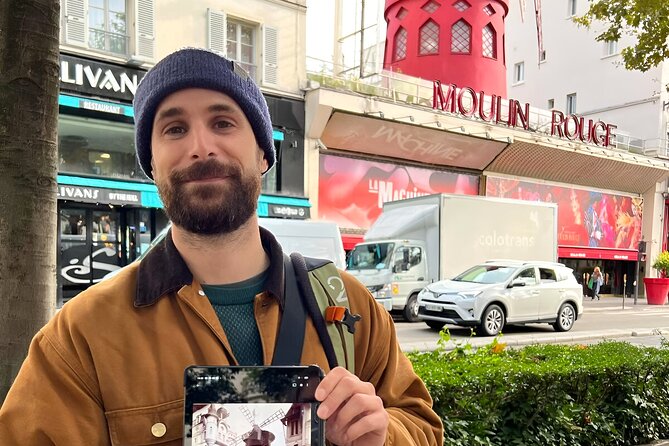
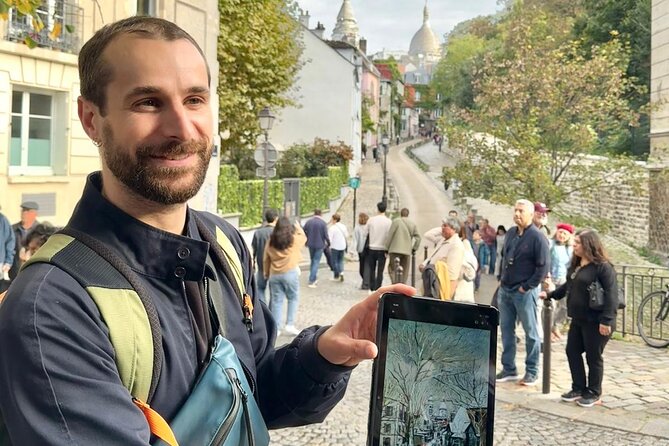
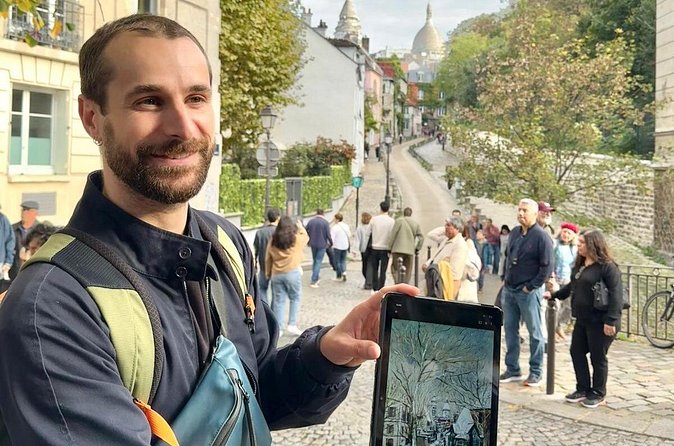
I especially like the way the guide makes the places feel connected. In the style shown by guides like Arthur, you may even see supporting images on an iPad, which helps when you’re spotting details in real time. I also like the pace: it feels like strolling, with short stops and room to ask questions instead of a rushed lecture.
One possible drawback: you’re walking in a hill-and-stairs kind of area for about 2 hours 30 minutes, so come with moderate physical fitness and plan for good weather. If the weather is rough, the experience depends on it.
In This Review
- Key highlights to know before you go
- Montmartre’s art trail: turning streets into a story you can remember
- Price and group size: value at about $34.55 for 2.5 hours
- Meeting at Place Blanche and getting oriented fast
- Stop 1: Moulin Rouge entrance panels and the story behind the show
- Stop 2: Van Gogh’s Paris connection at his Theo-linked residence entrance
- Stop 3: Le Bateau-Lavoir and the artist residency vibe
- Stop 4: Place Dalida and a view down Rue de l’Abreuvoir
- Stop 5: La Petite Maison Rose area, since 1920
- Stop 6: Vigne du Clos Montmartre, one of two remaining Paris vineyards
- Stop 7: Au Lapin Agile, the oldest still-in-activity cabaret
- Stop 8: Musée de Montmartre and the Belle-Epoque female artists focus
- Stop 9: Sacré-Cœur’s back side, architecture and the tragic creation story
- Shoes, hills, and how to make the 2.5 hours easier
- Who this Montmartre walk is best for
- Final verdict: should you book this Montmartre walking tour?
- FAQ
- How long is the Montmartre walking tour?
- What language is the tour offered in?
- How many people are in the group?
- Where does the tour start and end?
- Are there entrance fees at the stops?
- Is the tour dependent on weather?
- Can I get a full refund if I cancel?
Key highlights to know before you go
- Max 10 people means you can actually hear the guide and ask questions
- Art-focused storytelling links names you know with streets you’ll recognize
- Photo stops without the tourist crush at spots like the Maison Rose area
- Pairing art with place: you learn why each landmark matters in Montmartre
- End at Sacré-Cœur’s back side so you see more than just the front-view crowd
Montmartre’s art trail: turning streets into a story you can remember
Montmartre works best when someone connects the dots for you. Left on your own, you can visit the famous spots and still miss the “why.” On this walk, the guide builds a clear thread across the neighborhood, using art history and local context to explain what you’re looking at as you move.
The big win here is how the tour balances art and atmosphere. You get time near recognizable places like Moulin Rouge and Sacré-Cœur, but you also spend meaningful moments around lesser-noticed corners that explain the neighborhood’s creative pull. The route is designed for seeing details up close, not just collecting selfies.
Small group size matters more than you’d think. With a limit of 10 travelers, the conversation stays audible, and you can clarify things that don’t click at first. One person noted that a specific story about a saint sent them on a mini scavenger hunt across the rest of their stay, like Where is Waldo—but for Montmartre details. That’s the kind of “carry it forward” learning you’re aiming for.
Keep climbing: more of the Montmartre hill
- Montmartre Hidden Gems and Scenic Highlights Walking Tour
★ 5.0 · 2,684 reviews - Montmartre Hill French Gourmet Food and Wine Tasting Walking Tour
★ 5.0 · 2,588 reviews - Paris: Montmartre Highlights Walking Tour with a Local Guide
★ 4.9 · 2,318 reviews - Paris: Montmartre Cheese, Wine & Pastry Guided Walking Tour
★ 4.8 · 2,255 reviews
Price and group size: value at about $34.55 for 2.5 hours
At $34.55 per person for roughly 2 hours 30 minutes, you’re paying for guided direction and the added meaning you can’t easily find while wandering. This is not a ticketed museum day. It’s a street-level history and art walk where the guide helps you read the neighborhood.
You also get practical value in the way the stops are set up. Each listed stop indicates admission ticket free, which keeps the day simple if you don’t want extra lines or extra costs. You’re seeing places from the outside or around entrances, and you’re using the guide to focus on details you might otherwise overlook.
The maximum of 10 people is the other value driver. A larger group tends to turn “walking tour” into “follow the dots.” Here, the tour feels more like a shared walk with structured pauses.
Meeting at Place Blanche and getting oriented fast
The tour starts at 3 Pl. Blanche (75009) and ends at 1 Rue de la Bonne (75018) near the back of Sacré-Cœur. That matters because you’re not stuck in a dead-end loop. You’ll finish where you can keep exploring, then link back to public transportation or a cab.
Early on, you’ll get your bearings in Montmartre without burning energy on guesswork. The guide’s job is to translate what you see into something you understand, and the best time to do that is right at the start—before the hill, views, and street names blur together.
Stop 1: Moulin Rouge entrance panels and the story behind the show
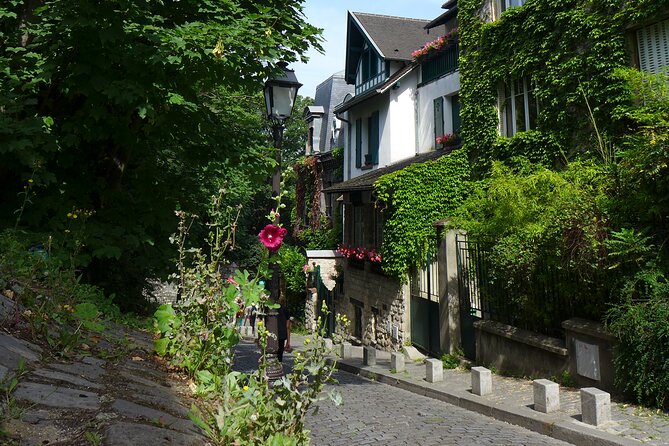
Your first major landmark is the entrance of the Moulin Rouge. You’ll pass by and the guide talks about its history, plus points out the painted panels along the entrance area.
This stop is a good opener because it anchors you to the idea of Montmartre as performance and art mixed together. Even if you’ve heard of Moulin Rouge a thousand times, the tour helps you notice what’s physically there—so the landmark isn’t just a name, it’s a visual.
The main tradeoff: since you’re only there for about 15 minutes, don’t expect a long, slow look. If you want extra time in front of the entrance or photos, you’ll probably need to plan that before or after the tour.
Stop 2: Van Gogh’s Paris connection at his Theo-linked residence entrance
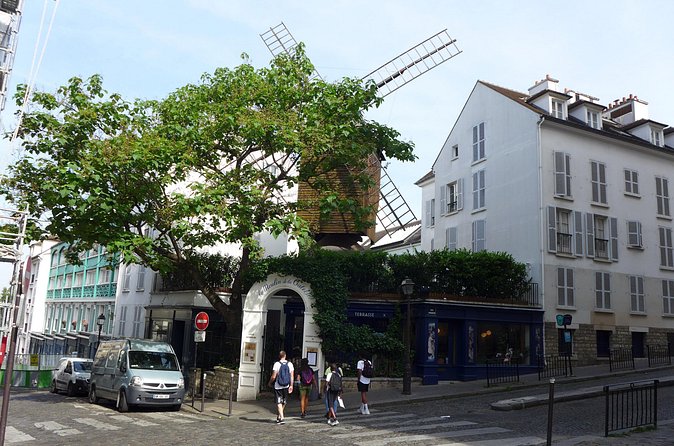
Next you’ll stop near the entrance of the building connected to Vincent Van Gogh living in Paris with his brother Theo. The tour gives you the “why this location matters” piece, using the spot as a springboard for how artists and ideas moved through Montmartre.
I like this stop because it grounds the neighborhood in an artist’s life instead of only in fame. When you connect Van Gogh to Theo and then move onward to other creative addresses, Montmartre starts to feel like a real network, not a set of random famous points on a map.
Again, the timing is brief—about 15 minutes—so focus on the guide’s explanation and the entrance area you’re looking at. If you want more time, you can always come back later, but the tour is what helps you know what to look for.
Stop 3: Le Bateau-Lavoir and the artist residency vibe
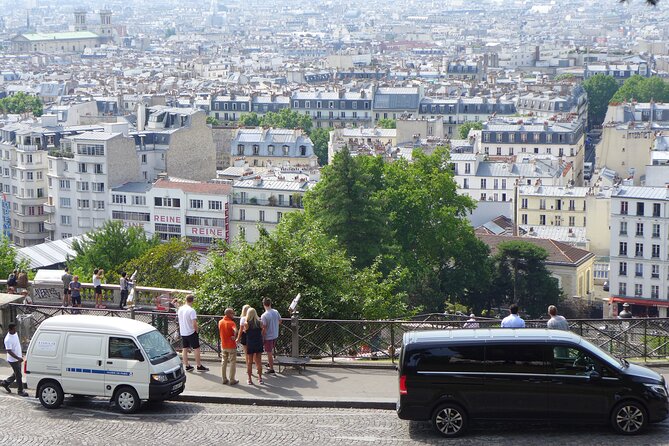
You’ll pass by Le Bateau-Lavoir, described as a legendary artist residency where some famous early 20th-century artists lived, including Pablo Picasso. This is where the tour shifts from single names to a broader creative atmosphere.
What you gain here is a sense of how Montmartre functioned for artists: a place where people gathered, lived, and worked in close proximity. Even without stepping inside, the guide’s framing can make the street feel like part of the artistic process rather than just a backdrop for tourists.
The potential drawback is that because it’s a pass-by, your view is limited. That’s also why the guide’s pointing out details matters. If you’re the type who reads informational plaques slowly, you may want extra time after the tour.
Worth weighing up next to this Paris pick




Stop 4: Place Dalida and a view down Rue de l’Abreuvoir
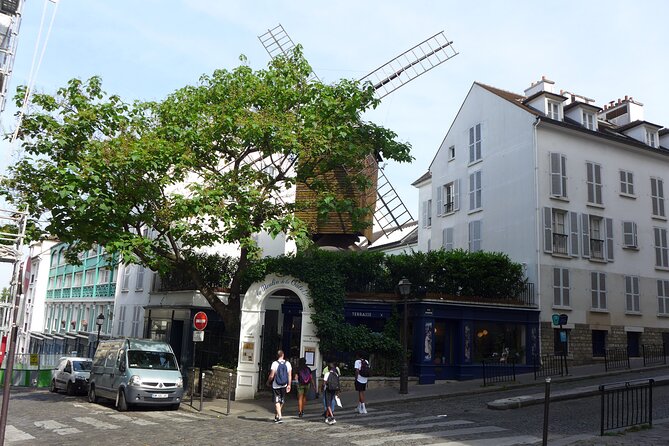
At Place Dalida, the tour highlights a view of Rue de l’Abreuvoir, considered one of Paris’s prettiest streets. It’s a short stop—about 5 minutes—but it’s a useful one because it gives your brain a visual pause.
These “look outward” moments help the rest of the tour land. After name-heavy art talk, a quick view teaches you how steep streets and angles shaped the neighborhood experience. You’ll also get a better sense of where you are when you continue walking.
If you’re taking photos, remember that a brief time window means you should be ready. I’d suggest checking your camera settings before you arrive at the viewpoint.
Stop 5: La Petite Maison Rose area, since 1920
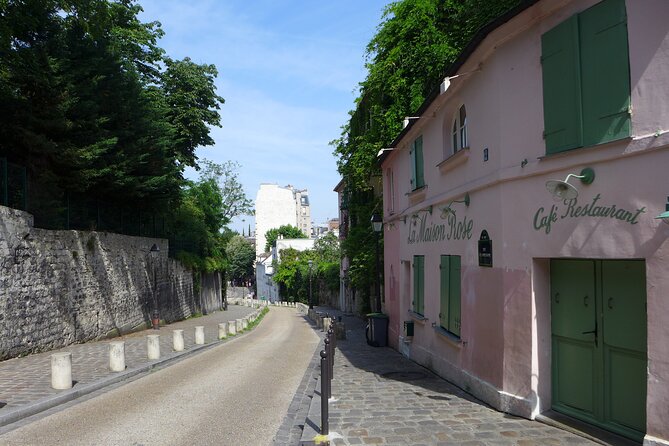
Next comes La Petite Maison Rose de Montmartre (since 1920), linked to a restaurant created by an artist model at the beginning of the 20th century. You’ll pass by, and it’s also described as a very famous picture spot.
This is one of those stops where you might think you already know the visual. The value is in hearing the context first—what it’s connected to and why it became part of Montmartre’s story. Then, when you see it again later, the place sticks in your mind for reasons beyond aesthetics.
The watch-out: with only about 5 minutes, don’t count on long photos or chatting. Use the moment well, and you’ll still have energy for the rest of the walk.
Stop 6: Vigne du Clos Montmartre, one of two remaining Paris vineyards
Then you’ll reach Vigne du Clos Montmartre, described as one of the two remaining vineyards in the city of Paris. For me, this stop changes the mood. It shifts Montmartre away from only “artist legend” and toward the physical reality of the neighborhood.
Even if you’re not a wine person, seeing that a vineyard remains in Paris (and learning this is one of only two) adds a new layer. Montmartre isn’t just streets and studios. It’s also land and tradition that survived modernization pressures.
Time is short here too—about 5 minutes—so you’re mostly getting a guided orientation and a chance to look at the vineyard area rather than linger.
Stop 7: Au Lapin Agile, the oldest still-in-activity cabaret
Next is Au Lapin Agile, called the oldest cabaret of Paris still in activity, where many artists used to go. You’ll stop for about 10 minutes.
This is one of the stops that makes Montmartre feel alive rather than archived. Cabarets are where art, talk, music, and people overlap, and Montmartre’s creative scene clearly depended on those kinds of spaces. The guide’s framing helps you understand why this fits the bigger story the tour is building.
Consideration: since it’s a cabaret-linked stop, you may want to keep an eye on timing so you don’t slow the group down if you’re also trying to take lots of photos.
Stop 8: Musée de Montmartre and the Belle-Epoque female artists focus
You’ll pass by the Musée de Montmartre and the guide tells a story linked to the idea of female artists of the Belle-Epoque. The tour notes that artists like Pierre-Auguste Renoir used to live there, and it uses that connection to broaden the conversation.
I like this stop because it pushes past the usual “great male names” pattern you often get with art tours. The guide’s goal here is to connect a physical place to a theme: who gets remembered, and why stories about women artists matter.
It’s also another pass-by stop—about 10 minutes—so listen closely during the guide’s explanation. That’s what turns a building you might otherwise ignore into a point of meaning.
Stop 9: Sacré-Cœur’s back side, architecture and the tragic creation story
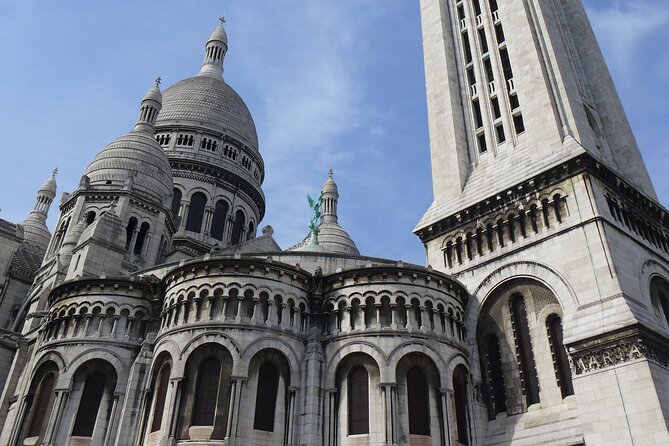
The tour ends at the back of the Sacré-Cœur Basilica, where you’ll talk about its architecture and the tragic story of its creation. The stop is about 15 minutes.
Ending here works well because the neighborhood keeps rising toward Sacré-Cœur, so your final moment feels like a payoff. You’re not just leaving; you’re finishing in a spot where you can look around, orient yourself, and decide what to do next.
Because the story includes a tragic element, it gives the tour emotional weight in a good way. Montmartre isn’t only romance and art postcards. It also carries real history and difficult chapters.
After the walk, the guide will help you find the best way toward the subway or where to catch a cab.
Shoes, hills, and how to make the 2.5 hours easier
This tour is for people with moderate physical fitness. You’re in Montmartre, so expect uneven footing, slopes, and the general reality of walking on streets that were built for feet, not convenience.
What helps most is planning your comfort. Wear shoes you trust on cobblestones, and keep water handy. Since this experience depends on good weather, also bring a light layer you can adjust if the conditions change.
If you’re already tired from climbing around Paris that morning, this tour might feel like one more hill. On the other hand, if you pace yourself and use the short stops well, the duration is very manageable.
Who this Montmartre walk is best for
This works especially well if you:
- Want art history but don’t want museum crowds or long indoor sessions
- Like small groups where you can ask questions
- Enjoy learning through streets, not just standing in one place
- Want a route that includes both major landmarks and quick stops at quieter details
It may be less ideal if you:
- Need very long time at each site (this is short, guided viewing)
- Struggle with hill walking for extended periods
- Only want ticketed museum time, since these are mostly outside-focused stops
Final verdict: should you book this Montmartre walking tour?
I’d book it if you want Montmartre to click. For $34.55, you get a structured walk through major art-linked landmarks and a guide-led story thread that helps you see more than the obvious postcard views. The small-group size (max 10) and the conversational pace make it feel like a real experience, not a conveyor belt.
If weather is questionable, keep an eye on the forecast. And if you’re worried about walking hills, plan accordingly so the day stays fun. Overall, this is a smart way to turn Montmartre from a place you visited into a place you remember.
FAQ
How long is the Montmartre walking tour?
It’s about 2 hours 30 minutes.
What language is the tour offered in?
The tour is offered in English.
How many people are in the group?
The tour has a maximum of 10 travelers.
Where does the tour start and end?
It starts at 3 Pl. Blanche, 75009 Paris and ends at 1 Rue de la Bonne, 75018 Paris, near the back of Sacré-Cœur.
Are there entrance fees at the stops?
Each listed stop shows admission ticket free, so you’re not paying separate admission for those points on the route.
Is the tour dependent on weather?
Yes. The experience requires good weather. If it’s canceled due to poor weather, you’ll be offered another date or a full refund.
Can I get a full refund if I cancel?
Yes. You can cancel for free up to 24 hours before the experience starts for a full refund.
More Tours in Paris
- Paris: Louvre Guided Tour with Reserved Access & Boat Cruise
★ 4.3 · 16,353 reviews - Paris: Big Bus Hop-On Hop-Off Tour with Optional Cruise
★ 4.4 · 13,279 reviews - Louvre Museum Masterpieces Guided Tour with Access
★ 4.5 · 12,023 reviews - Versailles: Skip-the-Line Tour of Palace and Gardens Access
★ 4.7 · 10,429 reviews - Paris: Louvre Overview, Exploration tour and Reserved Entry
★ 4.1 · 10,145 reviews
More Tour Reviews in Paris
- Paris: 1-Hour Seine Cruise departing from the Eiffel Tower
★ 4.4 · 77,472 reviews - Paris: Louvre Museum Timed-Entrance Ticket
★ 4.6 · 71,977 reviews - Disneyland® Paris 1-Day Ticket
★ 4.6 · 49,412 reviews - Paris: Versailles Palace and Gardens Full Access Ticket
★ 4.6 · 41,579 reviews - Paris: Arc de Triomphe Rooftop Tickets
★ 4.6 · 34,264 reviews
More of the Montmartre Hill
- Montmartre Hidden Gems and Scenic Highlights Walking Tour
★ 5.0 · 2,684 reviews - Montmartre Hill French Gourmet Food and Wine Tasting Walking Tour
★ 5.0 · 2,588 reviews - Paris: Montmartre Highlights Walking Tour with a Local Guide
★ 4.9 · 2,318 reviews - Paris: Montmartre Cheese, Wine & Pastry Guided Walking Tour
★ 4.8 · 2,255 reviews - The Secrets of Montmartre Walking Tour
★ 4.8 · 1,258 reviews
Fresh off the review desk in Paris
- Secrets of Paris Bike Tour in English or Dutch★ 5.0 · 5 reviews
- Paris: Mont Saint-Michel Day Tour with Chinese Tour Guide★ 5.0 · 5 reviews
- Private Street Art 2-Hour Guided Tour in Paris★ 4.5 · 5 reviews
- Orsay Museum Tour: 2h Highlights (Private & Small Group)★ 5.0 · 5 reviews
- Discover Paris in electric golf carts★ 4.0 · 5 reviews
- Paris Private Boat Tour with your own Captain Guide★ 5.0 · 5 reviews
Montmartre Tours, compared.
 ★ 5.0Montmartre Hidden Gems and Scenic Highlights Walking TourFrom $382,684 reviews
 ★ 5.0Montmartre Hill French Gourmet Food and Wine Tasting Walking TourFrom $1452,588 reviews
 ★ 4.9Montmartre Highlights Walking Tour with a Local GuideFrom $232,318 reviews
 ★ 4.8Montmartre Cheese, Wine & Pastry Guided Walking TourFrom $1272,255 reviews
The Secrets of Montmartre Walking TourFrom $331,258 reviews
★ 4.8Montmartre Cheese, Wine & Pastry Guided Walking TourFrom $1272,255 reviews
The Secrets of Montmartre Walking TourFrom $331,258 reviews
 ★ 4.1Sacré-Coeur and Montmartre Tour with Expert GuideFrom $281,027 reviews
 ★ 5.0Private Montmartre Food Tour with Wine, Cheese & PastriesFrom $3021,027 reviews
 ★ 5.0Paris Montmartre Food Tour – A Full French Meal by Do Eat BetterFrom $95877 reviews
Browse the lists this tour appears in