
Reviewed · MONTMARTRE TOURS
Montmartre Walking Tour: A Journey Through Art and History
Art and politics climb Montmartre with you. I love the small interactive group capped at 10, and I love that the guide explains everything with tablet pictures right on the street. One drawback to consider: you’ll be walking a lot up and down a major hill, and it’s not recommended for kids under 10 or people over 80.
This is a story-first walk through Paris’s most famous “on-a-hill” neighborhood, with stops that connect landmarks to the artists who worked and lived here around the turn of the 20th century. You also get a guide vibe that feels attentive and human, like you’re learning with someone who actually lives here—not just delivering a script.
In This Review
- Key things to know before you go
- Ten people, English comfort, and a guide who keeps it moving
- Place Blanche start: getting your bearings on Paris’s big hill
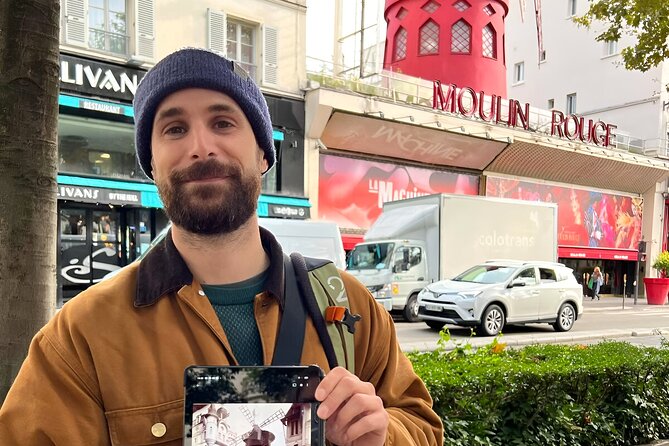
- Moulin Rouge: a photo stop with a guided reason to look
- Secret stop and viewpoints: the route that avoids the loudest crowds
- Le Bateau-Lavoir: where artists’ lives turn into street-level stories
- Windmills and extra viewpoints: quick stops that pay off
- Maison Rose and the Montmartre vineyard: everyday color with a backstory
- Musee de Montmartre: when the neighborhood’s story turns into culture
- Sacré-Cœur finish: the hill’s meaning lands at the top
- Price and value: why $34 can be a fair deal here
- What to pack (and what to skip) so the walk stays fun
- Who this tour fits best (and who should consider another option)
- Should you book the Montmartre Walking Tour?
- FAQ
- Where is the meeting point?
- How long is the Montmartre walking tour?
- How many people are in the group?
- Is the tour guide available in English?
- Is the tour wheelchair accessible, and is it suitable for all ages?
- Which sights are included on the route?
- What should I bring, and are snacks included?
- Are video or audio recordings allowed?
- What’s the cancellation and reserve/pay-later policy?
- Where does the tour end?
Key things to know before you go
- Ten-person limit means questions don’t get lost in a crowd
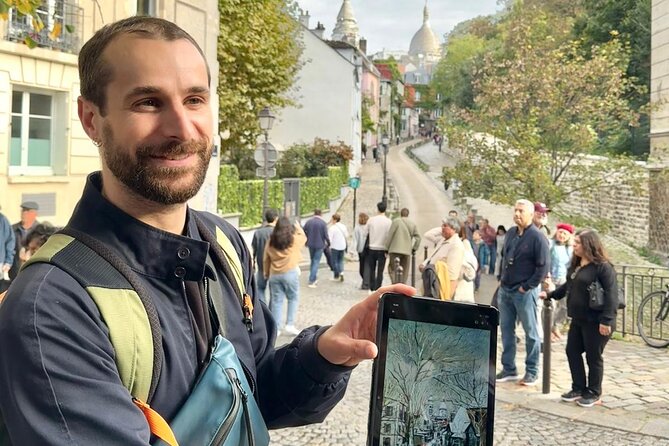
- Tablet-based visuals help you match what you’re hearing to what you’re seeing
- Arthur’s art-and-history storytelling links streets to artists like Picasso and Van Gogh
- Photo stops plus guided moments keeps the walk relaxed but still informative
- A feminist lens brings women artists into a story often told only through men
- No selling pressure: all stops are just for seeing and learning
Ten people, English comfort, and a guide who keeps it moving
Montmartre can swallow big groups fast—so I like that this one stays small and interactive. When you’re limited to 10 people, it’s easier to follow the thread of the story, and it’s easier to ask questions without shouting over everyone else.
The guide’s English is described as excellent, and the pacing feels designed for real understanding, not a “look and go” shuffle. Plus, the guide uses pictures on a tablet to illustrate key points while you’re outside, which helps especially if you’re not a trained art-history person.
One practical note: you won’t be able to record video or audio during the tour. That keeps things focused on the live storytelling, but it also means you’ll rely on your own notes and memories.
Keep climbing: more of the Montmartre hill
- Montmartre Hidden Gems and Scenic Highlights Walking Tour
★ 5.0 · 2,684 reviews - Montmartre Hill French Gourmet Food and Wine Tasting Walking Tour
★ 5.0 · 2,588 reviews - Paris: Montmartre Highlights Walking Tour with a Local Guide
★ 4.9 · 2,318 reviews - Paris: Montmartre Cheese, Wine & Pastry Guided Walking Tour
★ 4.8 · 2,255 reviews
Place Blanche start: getting your bearings on Paris’s big hill
The tour meets just outside Five Guys at 3 Place Blanche (75009). It’s a straightforward meeting spot, and you’ll start the walk with an orientation to Montmartre—its hill, its layout, and why the neighborhood has always attracted people who want to create ideas (and argue about them).
From the start, you’re not just gathering photos. You’re building context: how this area blends art, religion, and politics into one very visible Paris hillside story. That’s also why the route works well if it’s your first time in Montmartre, or if you’ve already “done the basics” and want a fresh angle.
Montmartre also has its own weather attitude. It can be colder than the rest of the city, so plan your layers accordingly.
Moulin Rouge: a photo stop with a guided reason to look
The walk hits Moulin Rouge early. You’ll have a photo stop, followed by a guided segment of about 20 minutes.
What I like about this setup is that it doesn’t treat Moulin Rouge as a single postcard. Instead, the guide uses the building’s cultural punch to connect the place to the broader Montmartre story—how artists and bohemian life made the neighborhood famous, and how the image of the area grew alongside the people living here.
If you tend to rush past busy landmarks, this stop is where you reset. You pause, you look closely, and you get meaning while the location is right in front of you.
Secret stop and viewpoints: the route that avoids the loudest crowds
After Moulin Rouge, you’ll move into smaller streets and calmer moments. There’s a secret stop built into the walk, then a viewpoint where you get a short sightseeing break.
These in-between pieces matter more than people expect. The viewpoint time isn’t only about taking pictures; it’s also when the guide can explain how Montmartre’s geography shapes the neighborhood’s identity. From the outside, the hill can look like “just steep streets.” During the tour, it starts to feel like a map of creative and political energy.
And yes, the walk is designed to lead you away from the heaviest tourist crush. You’ll still see famous places, but you’ll also get that “I found a quieter corner” feeling that makes Montmartre worth repeating.
Le Bateau-Lavoir: where artists’ lives turn into street-level stories
One of the strongest parts of the walk is Le Bateau-Lavoir, with a guided tour around 20 minutes. This is where the tour’s art focus becomes very real.
You’ll walk in the footsteps of the legendary artists connected with the area around the end of the 19th century and the beginning of the 20th century—specifically including Picasso and Van Gogh. The guide’s tablet pictures help you connect what you’re hearing to what you’re looking at, so it feels less like memorizing dates and more like understanding how a place shaped creativity.
One extra value point: the guide doesn’t only talk about famous works. You also get the sense of how artists lived, where they moved, and how the neighborhood’s energy fed their output.
Windmills and extra viewpoints: quick stops that pay off
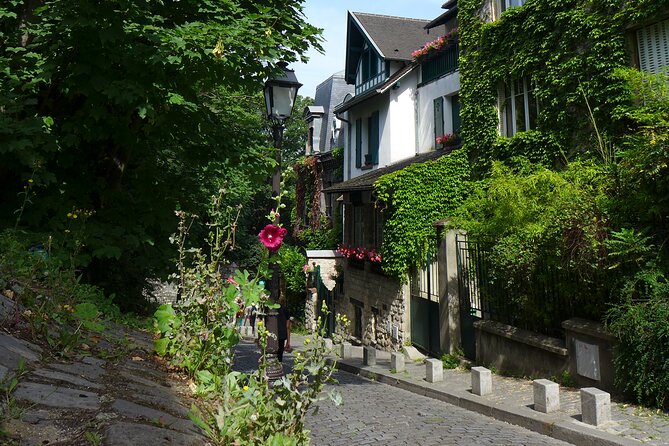
You’ll hit windmills next, with a short guided and photo-focused break. After that, there’s another viewpoint stop with sightseeing time.
These segments are brief, but they’re intentionally placed. I like that the tour doesn’t try to force a marathon of one long lecture. Instead, you get short bursts of story tied to specific visual cues—then you get a moment to breathe, look around, and take it in.
If you’re the kind of traveler who likes views but hates standing around waiting for them, this pacing feels smart. You don’t “kill time.” You use the time you have.
Worth weighing up next to this Paris pick




Maison Rose and the Montmartre vineyard: everyday color with a backstory
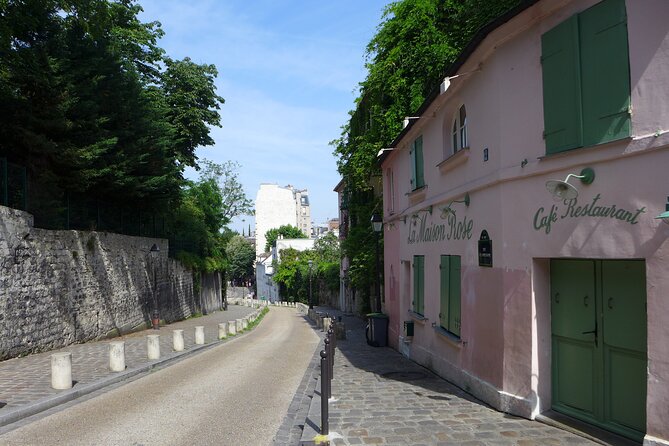
A big part of Montmartre’s appeal is that it feels theatrical and ordinary at the same time. The tour leans into that with stops like La Maison Rose (photo stop plus guided time), and a vineyard segment.
This is where the neighborhood’s identity shifts from famous faces to lived-in character. The guide connects the visual details to the larger theme: how artists and locals shaped what Montmartre became—socially, creatively, and politically.
These pauses also help if you’re traveling with someone who doesn’t love “museum mode.” A photo stop is a low-pressure moment, and the guided explanations still keep the experience from turning into simple sightseeing.
Musee de Montmartre: when the neighborhood’s story turns into culture
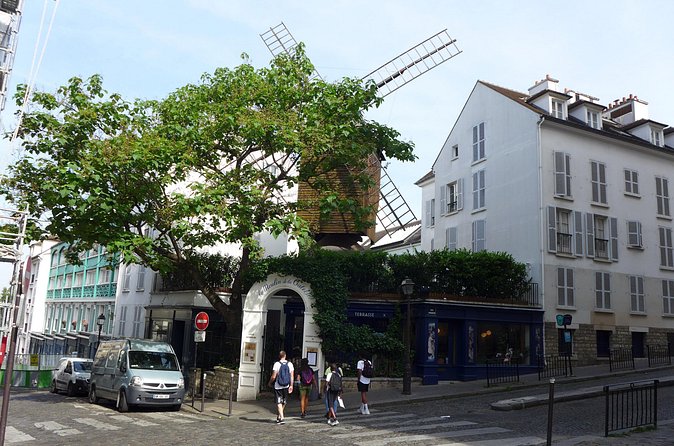
Next comes Musee de Montmartre, with a guided segment of about 15 minutes. Even if you don’t want to spend a half day in museums, this short stop is valuable because it anchors the walk in something more concrete.
I like how the tour uses this moment to connect the outdoor streets to the art-and-history themes it’s been building. Think of it as the place where the guide’s storytelling gains sharper edges—less “vibes,” more structure.
Then there’s another viewpoint photo stop before the big finale.
Sacré-Cœur finish: the hill’s meaning lands at the top
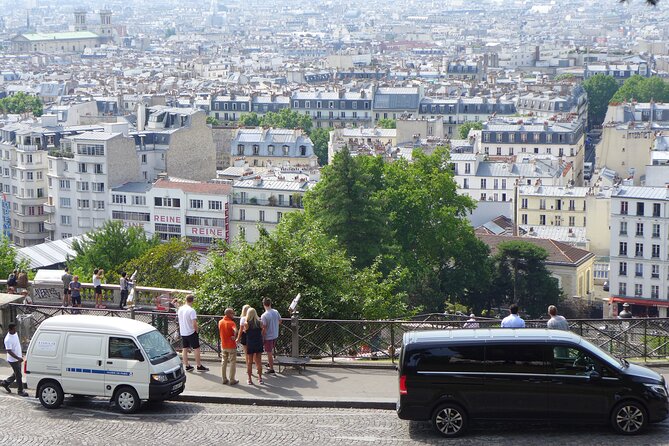
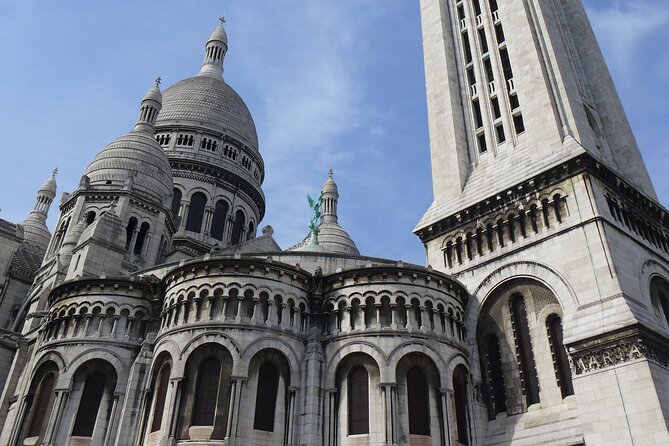
The last major stop is Sacré-Cœur Basilica, with a photo stop and guided segment of about 20 minutes. This is the emotional finish of the story because it’s where Montmartre’s layers feel most visible: the spiritual draw, the artistic pull, and the neighborhood’s long-running desire to be seen.
You’ll take in the views one more time, but the focus stays on understanding why this hill matters—how it became a place where art, religion, and politics repeatedly overlap.
The tour ends at 35 Rue du Chevalier de la Barre, 75018 Paris. This drop-off matters because you’ll finish near the action on the Montmartre side, ready to keep exploring on your own.
Price and value: why $34 can be a fair deal here
At $34 per person for about 160 minutes, the value comes from the shape of the experience, not just the number on the ticket.
You’re paying for:
- a small group (so you’re not swallowed by noise)
- a guide who combines art + neighborhood history
- tablet illustrations that support the talk
- multiple guided moments at major locations plus calmer side stops
It also helps that the operator (Parisian Tales) has a long track record through Airbnb experiences: five years of experience and a 4.98/5 rating across 1200+ comments. That’s not a promise of perfection, but it does signal consistency in how the guide delivers.
Another value detail: there’s nothing to sell, and the tour is built as a no-pressure walk. That keeps the focus where it belongs—on places and stories.
What to pack (and what to skip) so the walk stays fun
This is not a “sandals and vibes” tour. Wear comfortable shoes, because you’ll be on a steep hill and moving between stops.
Plan for weather. You might need an umbrella or rain coat if it’s raining, and Montmartre tends to be colder than the rest of the city, so bring warm clothes. If it’s hot, bring water—there’s a supermarket just by the meeting point.
Also, snacks and drinks aren’t included, so budget for a stop on your own if you want one.
Who this tour fits best (and who should consider another option)
This walk is a solid match for art lovers, history-minded travelers, and anyone who wants to understand Montmartre beyond its headline sights. It’s also described as ideal for families, but the tour isn’t suitable for children under 10, so plan around that.
If you’re solo, the small group format makes it feel easier to connect than larger tours. And if you’re a couple, it’s a good “do something meaningful without needing to plan museums all day” kind of outing.
On the other hand, people over 80 aren’t recommended for this specific tour. Wheelchair accessibility is listed, but the age guidance suggests the route’s physical demands are still a real consideration. If you’re unsure, you’ll want to assess mobility realistically before booking.
Should you book the Montmartre Walking Tour?
If you want Montmartre as an art and history story, this is a strong pick—especially because the guide uses tablet pictures and focuses on how artists lived in the neighborhood. The small group size makes it feel like a guided art class you can actually ask questions during, not a race from one landmark to the next.
I’d book it if:
- you like walking tours that explain meaning, not just locations
- you want off-the-main-path moments away from the biggest crowds
- you care about seeing more than the usual male-centered art narrative, since the guide includes women artists
I’d skip it if:
- you’re not comfortable with a major hill and lots of walking
- you need a tour where video or audio recording is part of how you learn
Bottom line: for $34, you get a lot more than photos. You get context, pacing that stays friendly, and a Montmartre viewpoint that makes the neighborhood feel like a living story—not a set of postcards.
FAQ
Where is the meeting point?
You meet just outside the Five Guys restaurant at 3 Place Blanche, 75009 Paris.
How long is the Montmartre walking tour?
The duration is 160 minutes (about 2.5 hours).
How many people are in the group?
The tour is limited to a small group of 10 participants.
Is the tour guide available in English?
Yes, the tour is in English and you’ll have a live guide.
Is the tour wheelchair accessible, and is it suitable for all ages?
Wheelchair accessibility is listed. The tour is not suitable for children under 10, and it’s not recommended for people over 80.
Which sights are included on the route?
You’ll see stops including Moulin Rouge, Le Bateau-Lavoir, windmills, La Maison Rose, a vineyard area, Musee de Montmartre, and Sacre-Coeur Basilica, plus several viewpoints.
What should I bring, and are snacks included?
Bring comfortable shoes, and check the weather for what you’ll need (umbrella or rain coat if raining, warm clothes if cold, and water if hot). Snacks and drinks are not included.
Are video or audio recordings allowed?
No. Video recording and audio recording are not allowed.
What’s the cancellation and reserve/pay-later policy?
Free cancellation is available up to 24 hours in advance for a full refund. You can reserve now and pay later.
Where does the tour end?
The tour finishes at 35 Rue du Chevalier de la Barre, 75018 Paris.
More Tours in Paris
- Paris: Louvre Guided Tour with Reserved Access & Boat Cruise
★ 4.3 · 16,353 reviews - Paris: Big Bus Hop-On Hop-Off Tour with Optional Cruise
★ 4.4 · 13,279 reviews - Louvre Museum Masterpieces Guided Tour with Access
★ 4.5 · 12,023 reviews - Versailles: Skip-the-Line Tour of Palace and Gardens Access
★ 4.7 · 10,429 reviews - Paris: Louvre Overview, Exploration tour and Reserved Entry
★ 4.1 · 10,145 reviews
More Tour Reviews in Paris
- Paris: 1-Hour Seine Cruise departing from the Eiffel Tower
★ 4.4 · 77,472 reviews - Paris: Louvre Museum Timed-Entrance Ticket
★ 4.6 · 71,977 reviews - Disneyland® Paris 1-Day Ticket
★ 4.6 · 49,412 reviews - Paris: Versailles Palace and Gardens Full Access Ticket
★ 4.6 · 41,579 reviews - Paris: Arc de Triomphe Rooftop Tickets
★ 4.6 · 34,264 reviews
More of the Montmartre Hill
- Montmartre Hidden Gems and Scenic Highlights Walking Tour
★ 5.0 · 2,684 reviews - Montmartre Hill French Gourmet Food and Wine Tasting Walking Tour
★ 5.0 · 2,588 reviews - Paris: Montmartre Highlights Walking Tour with a Local Guide
★ 4.9 · 2,318 reviews - Paris: Montmartre Cheese, Wine & Pastry Guided Walking Tour
★ 4.8 · 2,255 reviews - The Secrets of Montmartre Walking Tour
★ 4.8 · 1,258 reviews
Fresh off the review desk in Paris
- Secrets of Paris Bike Tour in English or Dutch★ 5.0 · 5 reviews
- Paris: Mont Saint-Michel Day Tour with Chinese Tour Guide★ 5.0 · 5 reviews
- Private Street Art 2-Hour Guided Tour in Paris★ 4.5 · 5 reviews
- Orsay Museum Tour: 2h Highlights (Private & Small Group)★ 5.0 · 5 reviews
- Discover Paris in electric golf carts★ 4.0 · 5 reviews
- Paris Private Boat Tour with your own Captain Guide★ 5.0 · 5 reviews
Montmartre Tours, compared.
 ★ 5.0Montmartre Hidden Gems and Scenic Highlights Walking TourFrom $382,684 reviews
 ★ 5.0Montmartre Hill French Gourmet Food and Wine Tasting Walking TourFrom $1452,588 reviews
 ★ 4.9Montmartre Highlights Walking Tour with a Local GuideFrom $232,318 reviews
 ★ 4.8Montmartre Cheese, Wine & Pastry Guided Walking TourFrom $1272,255 reviews
The Secrets of Montmartre Walking TourFrom $331,258 reviews
★ 4.8Montmartre Cheese, Wine & Pastry Guided Walking TourFrom $1272,255 reviews
The Secrets of Montmartre Walking TourFrom $331,258 reviews
 ★ 5.0Private Montmartre Food Tour with Wine, Cheese & PastriesFrom $3021,027 reviews
 ★ 4.1Sacré-Coeur and Montmartre Tour with Expert GuideFrom $281,027 reviews
 ★ 5.0Paris Montmartre Food Tour – A Full French Meal by Do Eat BetterFrom $95877 reviews
Browse the lists this tour appears in