
Reviewed · MONTMARTRE TOURS
Montmartre Walking Tour Cultural Charm and Tasty Treats
Montmartre feels like a time machine. In just about two hours, this walking tour maps the art and cabaret legends of the hill onto real streets and recognizable landmarks, with plenty of photo stops along the way. You’ll move from Moulin Rouge up toward Sacré-Cœur, with breaks for stories, viewpoints, and a few corners most people rush past.
I especially like the way the guide connects big artist names to specific places, from the Bateau-Lavoir area to the windmill that helped shape the scene. I also like the steady pace: each stop is short, so you still get that Montmartre feeling without spending your whole day climbing.
One thing to consider: you’re walking in a compact route with lots of uphill stretches. If your legs are sensitive or you hate cobbles, plan for slower moments and bring comfortable shoes.
In This Review
- Key highlights
- Montmartre Walking Tour: what you’re really getting in 2 hours
- Starting at Cœur Sacré: quick orientation before you climb
- Moulin Rouge and Rue Lepic: cabaret glamour meets café street charm
- Le Moulin de la Galette and Abbesses: windmill views and Art Nouveau details
- Le Mur des Je t’aime plus Rue des Abbesses: art feeling on a human scale
- Bateau-Lavoir and Saint-Pierre de Montmartre: where creators worked and older Paris holds steady
- Place du Tertre and Sacré-Cœur: street art energy to the city’s best view
- Price, group size, and what makes it good value
- Should you book this Montmartre tour?
- FAQ
- How long is the Montmartre walking tour?
- How much does the tour cost?
- Where is the meeting point?
- Where does the tour end?
- What kind of ticket do I get?
- How many people are in a group?
- Are there admission tickets required at the stops?
- What’s included in the price?
- Are tips included?
- What’s the cancellation policy?
- Is the tour near public transportation, and can service animals join?
Key highlights
- Moulin Rouge origins and the can-can legacy in a quick, story-first stop
- Rue Lepic stroll past the Café des 2 Moulins, made famous by Amélie
- Le Moulin de la Galette for Paris’ last-standing windmill stories tied to Renoir and Van Gogh
- Art Nouveau at Abbesses Metro near Place des Abbesses
- Le Mur des Je t’aime featuring the I love you message in over 300 languages
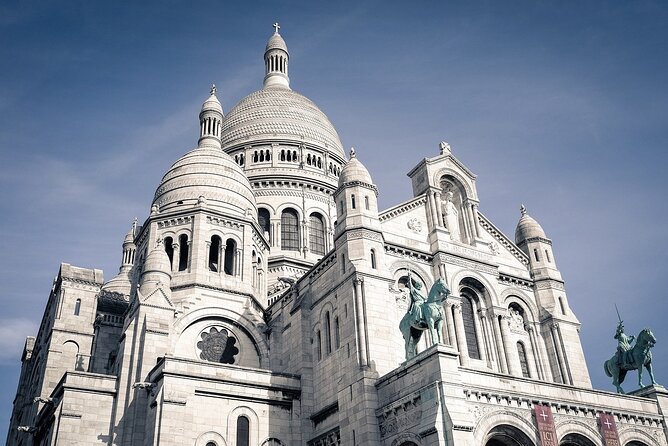
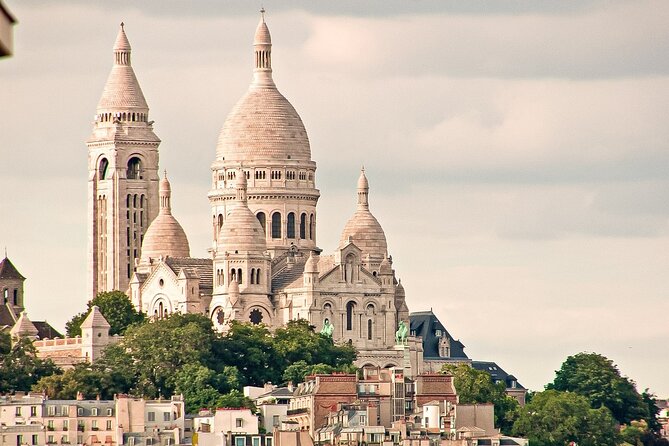
- Sacré-Cœur finish with panoramic views from the highest point in the city
Montmartre Walking Tour: what you’re really getting in 2 hours
This tour is built for seeing Montmartre’s main art corridors without turning it into a long, exhausting day. The structure is simple: a sequence of famous sites plus a handful of side streets, with the guide’s stories acting like glue between landmarks. You’re also not just sightseeing objects. You’re learning how the neighborhood’s creative nightlife and studios shaped the Paris people still talk about.
The experience fits well if you’re short on time, or if this is your first visit and you want a good mental map of the hill. You’ll get to stop for views, street-art energy, and classic Paris café atmosphere while keeping the walking manageable.
If you want to spend hours inside museums or linger over lunch, this format may feel a bit brisk. Still, as an overview of Montmartre’s personality, it hits the sweet spot.
Keep climbing: more of the Montmartre hill
- Montmartre Hidden Gems and Scenic Highlights Walking Tour
★ 5.0 · 2,684 reviews - Montmartre Hill French Gourmet Food and Wine Tasting Walking Tour
★ 5.0 · 2,588 reviews - Paris: Montmartre Highlights Walking Tour with a Local Guide
★ 4.9 · 2,318 reviews - Paris: Montmartre Cheese, Wine & Pastry Guided Walking Tour
★ 4.8 · 2,255 reviews
Starting at Cœur Sacré: quick orientation before you climb
You meet at Cœur Sacré, at 5 Rue Saint-Éleuthère in the 18th arrondissement, and the tour ends back at the meeting point. That matters because Montmartre can feel like a maze when you first arrive, so starting at a clear landmark helps you orient fast.
Right away, you get the rhythm: short stops, a walk between them, and context that makes each corner feel connected to the next. Because it’s near public transportation, you can also plan your day around easy access, whether you’re starting in the morning or fitting this in later.
This isn’t a long, sit-down tour. It’s designed for movement. If you pace yourself and keep water handy, you’ll come out with a much clearer sense of where the neighborhood’s art history lives on foot.
Moulin Rouge and Rue Lepic: cabaret glamour meets café street charm
The tour begins at Moulin Rouge, tied to the birthplace of the can-can dance and the cabaret culture that helped define Montmartre’s nightlife. Even if you already recognize the red windmill image, the value here is the context: you’re not just looking at a postcard. You’re hearing why this place mattered in the neighborhood’s social life.
Next comes Rue Lepic, a charming walk lined with cafés and shops. This is where the tour slows down in a good way because you’re strolling through a street that feels like it belongs to everyday Montmartre life. You’ll also pass the Café des 2 Moulins, known from the movie Amélie, which is a fun bridge if you enjoy films alongside travel.
If there’s a downside, it’s that this part can feel busy with foot traffic at popular times. You’ll still learn a lot here, but don’t expect total solitude on this first stretch.
Le Moulin de la Galette and Abbesses: windmill views and Art Nouveau details
One of the most satisfying stops is Le Moulin de la Galette, where you see Paris’ last-standing windmill. The guide ties its role to the artistic influence around the area, including stories about painters like Renoir and Van Gogh. It’s a great moment because it turns a single landmark into a bigger picture of why artists kept coming back to this hill.
From there, the tour moves to Place des Abbesses. You’ll see the Abbesses Metro Station area, including its Art Nouveau entrance. This is one of those small Paris details that can be easy to miss on your own, and it helps you read Montmartre as a place where art shows up in architecture too, not just in galleries.
This section also sets you up for the rest of the route: you’re halfway or so into your climb, and you start noticing how the streets open and tighten like a storyboard.
Le Mur des Je t’aime plus Rue des Abbesses: art feeling on a human scale
At Le Mur des Je t’aime, you pause at the Wall of Love, a mural with I love you written in over 300 languages. It’s a quick stop, but it lands because the message is simple and warm, and it makes Montmartre’s art identity feel accessible. It also gives you a memorable photo moment without needing tickets or extra planning.
Then you continue along Rue des Abbesses, where the focus shifts back to the everyday artist-meets-neighborhood vibe. Expect historic streets, charming boutiques and cafés, and those little side turns that make Montmartre feel more lived-in than staged.
The practical value here: the guide keeps you moving between big-name landmarks and smaller streets that still feel characterful. That balance is what makes the tour feel like more than a checklist.
If you’re someone who loves to wander on your own after a guided start, this section is a good signal. You’ll likely want to keep your eyes open for the next parallel street back toward your favorite café stop.
Bateau-Lavoir and Saint-Pierre de Montmartre: where creators worked and older Paris holds steady
The tour visits Place Émile Goudeau and the historic site of the Bateau-Lavoir, an important creative spot associated with artists like Picasso and Modigliani. This is the kind of stop where the guide’s stories do a lot of work. Without the explanation, you might just see a location. With it, you start picturing the studios, the ambition, and the scene the area hosted.
Then you head to Église Saint-Pierre de Montmartre, described as one of the oldest churches in Paris, dating back to the 12th century. That time gap is part of the charm: Montmartre isn’t only about 19th- and 20th-century artists. It also has older roots you can feel when you shift from street-level creativity to stone-and-century permanence.
One consideration: churches can be visually powerful, but they also tend to be quieter and sometimes less forgiving if you’re in a hurry. The stops are short here, so if you want extra time for photos inside or a longer look around, add it yourself after the tour.
Worth weighing up next to this Paris pick




Place du Tertre and Sacré-Cœur: street art energy to the city’s best view
Your route ends at Sacré-Cœur Basilica, after a stop at Place du Tertre. At Place du Tertre, you’ll see street artists and portrait painters working, and you get the day-to-day creative atmosphere that makes Montmartre feel like art is part of the neighborhood’s routine. It’s not just history. It’s ongoing practice.
Finally, you reach Basilique du Sacré-Cœur de Montmartre for panoramic views from the highest point in the city. Even if you’ve seen photos, being there helps you understand the layout of Paris in real space. The tour also gives you flexibility: you can explore the interior or relax on the steps depending on your energy and time.
This ending is the payoff. It’s where your understanding of Montmartre clicks into a full “now I get it” moment: creative neighborhoods below, the city spreading outward, and the hill doing what hills do best—making you earn your view.
Price, group size, and what makes it good value
At $40.48 per person for a tour lasting around 2 hours, the price feels reasonable if you want a guided route that ties famous names to actual street corners. You’re paying for the guide’s storytelling and organization, not for entrance fees—each stop listed is marked as admission ticket free.
The group size caps at 20 travelers, which usually means more chances to hear the guide clearly and less time waiting in a crowd. You’ll also get a mobile ticket, and that keeps your planning simple when you’re bouncing between neighborhoods.
The only cost that isn’t included is tips, so if you usually tip guides, you’ll want to budget for that.
If you’re traveling solo, on a first trip, or with someone who loves art but doesn’t want to research every detail, this is a strong value. If you already know Montmartre deeply and prefer total free-form wandering, you might not need guided structure. But most people do better with a framework on the first visit.
Should you book this Montmartre tour?
Book it if you want a quick, organized way to understand Montmartre’s creative history and still enjoy the street-level charm. The combination of Moulin Rouge, the Bateau-Lavoir connection, Le Mur des Je t’aime, and the Sacré-Cœur view is a smart mix of iconic and memorable.
Skip it (or pair it with extra time on your own) if you hate walking hills or you want a slow, museum-style pace. This route is efficient, and that efficiency is part of the appeal.
If you’re going with a partner, this is also the kind of outing that naturally turns romantic: cafés, cobbled lanes, and the climb to a viewpoint tend to do that on their own.
FAQ
How long is the Montmartre walking tour?
It lasts about 2 hours.
How much does the tour cost?
The price is $40.48 per person.
Where is the meeting point?
The tour starts at Cœur Sacré, 5 Rue Saint-Éleuthère, 75018 Paris, France.
Where does the tour end?
It ends back at the meeting point.
What kind of ticket do I get?
You receive a mobile ticket.
How many people are in a group?
The tour has a maximum of 20 travelers.
Are there admission tickets required at the stops?
The stops listed are marked as Admission Ticket Free.
What’s included in the price?
The price includes a local and professional guide and a guided visit of Montmartre.
Are tips included?
Tips are not included.
What’s the cancellation policy?
You can cancel for free up to 24 hours in advance for a full refund.
Is the tour near public transportation, and can service animals join?
Yes, it’s near public transportation, and service animals are allowed.
More Tours in Paris
- Paris: Louvre Guided Tour with Reserved Access & Boat Cruise
★ 4.3 · 16,353 reviews - Paris: Big Bus Hop-On Hop-Off Tour with Optional Cruise
★ 4.4 · 13,279 reviews - Louvre Museum Masterpieces Guided Tour with Access
★ 4.5 · 12,023 reviews - Versailles: Skip-the-Line Tour of Palace and Gardens Access
★ 4.7 · 10,429 reviews - Paris: Louvre Overview, Exploration tour and Reserved Entry
★ 4.1 · 10,145 reviews
More Tour Reviews in Paris
- Paris: 1-Hour Seine Cruise departing from the Eiffel Tower
★ 4.4 · 77,472 reviews - Paris: Louvre Museum Timed-Entrance Ticket
★ 4.6 · 71,977 reviews - Disneyland® Paris 1-Day Ticket
★ 4.6 · 49,412 reviews - Paris: Versailles Palace and Gardens Full Access Ticket
★ 4.6 · 41,579 reviews - Paris: Arc de Triomphe Rooftop Tickets
★ 4.6 · 34,264 reviews
More of the Montmartre Hill
- Montmartre Hidden Gems and Scenic Highlights Walking Tour
★ 5.0 · 2,684 reviews - Montmartre Hill French Gourmet Food and Wine Tasting Walking Tour
★ 5.0 · 2,588 reviews - Paris: Montmartre Highlights Walking Tour with a Local Guide
★ 4.9 · 2,318 reviews - Paris: Montmartre Cheese, Wine & Pastry Guided Walking Tour
★ 4.8 · 2,255 reviews - The Secrets of Montmartre Walking Tour
★ 4.8 · 1,258 reviews
Fresh off the review desk in Paris
- Secrets of Paris Bike Tour in English or Dutch★ 5.0 · 5 reviews
- Paris: Mont Saint-Michel Day Tour with Chinese Tour Guide★ 5.0 · 5 reviews
- Private Street Art 2-Hour Guided Tour in Paris★ 4.5 · 5 reviews
- Orsay Museum Tour: 2h Highlights (Private & Small Group)★ 5.0 · 5 reviews
- Discover Paris in electric golf carts★ 4.0 · 5 reviews
- Paris Private Boat Tour with your own Captain Guide★ 5.0 · 5 reviews
Montmartre Tours, compared.
 ★ 5.0Montmartre Hidden Gems and Scenic Highlights Walking TourFrom $382,684 reviews
 ★ 5.0Montmartre Hill French Gourmet Food and Wine Tasting Walking TourFrom $1452,588 reviews
 ★ 4.9Montmartre Highlights Walking Tour with a Local GuideFrom $232,318 reviews
 ★ 4.8Montmartre Cheese, Wine & Pastry Guided Walking TourFrom $1272,255 reviews
The Secrets of Montmartre Walking TourFrom $331,258 reviews
★ 4.8Montmartre Cheese, Wine & Pastry Guided Walking TourFrom $1272,255 reviews
The Secrets of Montmartre Walking TourFrom $331,258 reviews
 ★ 4.1Sacré-Coeur and Montmartre Tour with Expert GuideFrom $281,027 reviews
 ★ 5.0Private Montmartre Food Tour with Wine, Cheese & PastriesFrom $3021,027 reviews
 ★ 5.0Paris Montmartre Food Tour – A Full French Meal by Do Eat BetterFrom $95877 reviews
Browse the lists this tour appears in