
Reviewed · MONTMARTRE TOURS
Montmartre Walking Tour in English
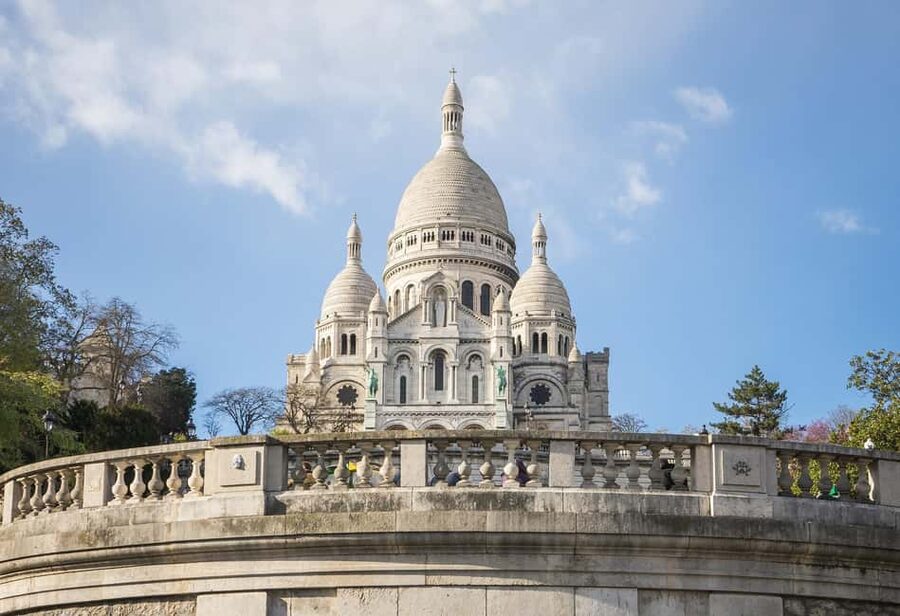
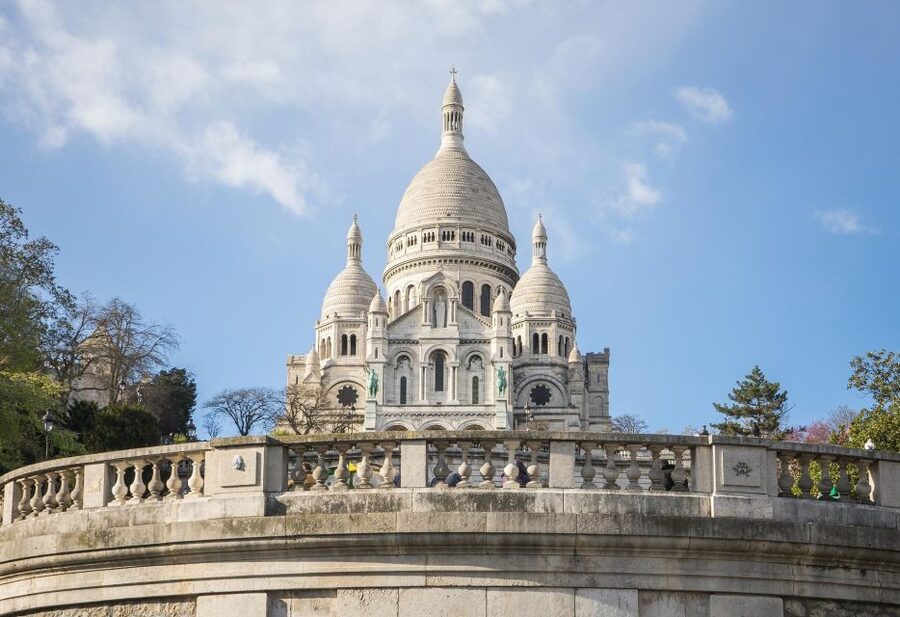
Montmartre is the kind of Paris you feel in your legs. This 150-minute English walking tour turns the hill’s famous sights into a clear story, from legend to artists to the postcard streets. I love the way the guide keeps things moving with a constructed narrative, and I especially like hitting major stops like Van Gogh’s house and Café des Deux Moulins (the Amélie connection).
One possible drawback: the tour can lean into storytelling, with a pace that’s not built for people who want minimal talking. If you prefer lots of silent walking and only short explanations, this may feel a little speech-heavy.
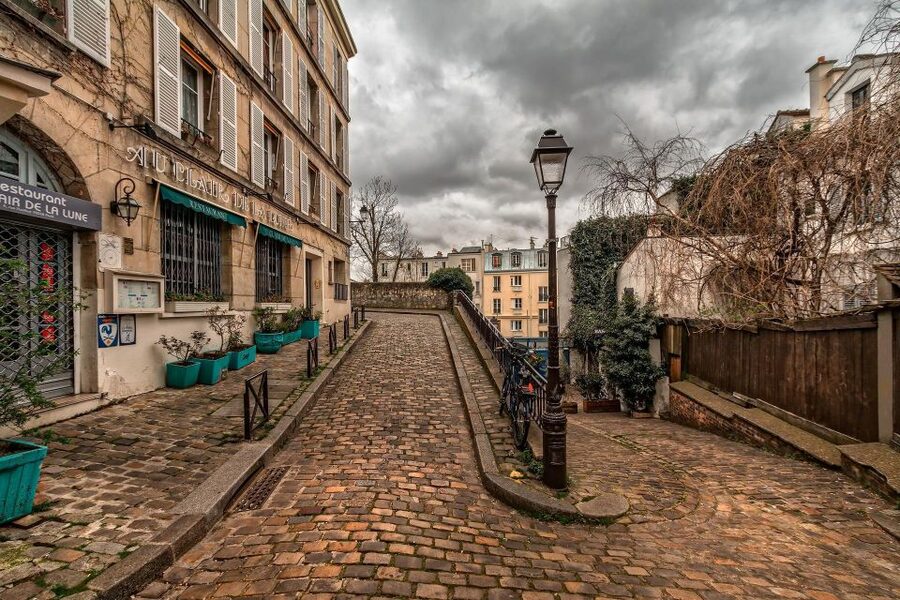
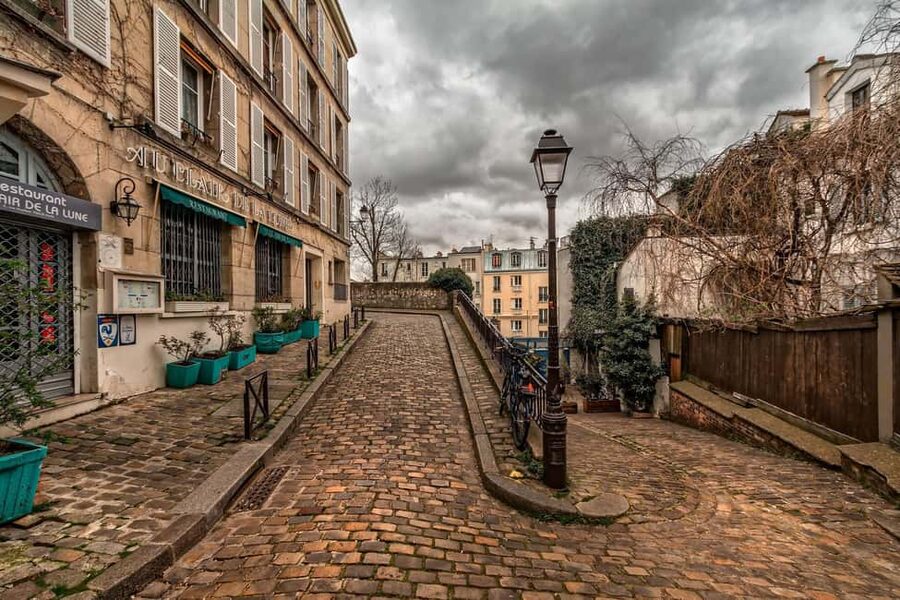
Still, if you like understanding what you’re seeing, Montmartre rewards you fast. You’ll get context for why this neighborhood became an artists’ magnet, and you’ll see how it still works today—crooked streets, steep steps, and plenty of places to pause.
In This Review
- Key highlights worth showing up for
- Meeting at Metro Blanche, then finding the hill’s rhythm
- Mons Martyrum: the legend behind the name, and why that changes how you look
- How Montmartre became an artists’ magnet (and still sells that vibe)
- Café des Deux Moulins: where Amélie meets real street life
- Van Gogh’s house: seeing the artist through place, not poster history
- Picasso and Modigliani studios: when styles share the same sidewalks
- Vineyard views and Le Chat Noir: the cabaret side of the hill
- Moulin Rouge: postcard energy with a historical explanation
- Pace, group feel, and how to get the most from 150 minutes
- Price and value: $31 booking fee vs what you choose for the guide
- Who this Montmartre walking tour fits best
- FAQ
- Do I need hotel pickup for this tour?
- Where exactly do I meet the guide?
- How long is the Montmartre walking tour?
- Is the tour in English?
- Does the tour run in bad weather?
- Is it pay what you wish or a fixed price?
- Should you book this Montmartre walking tour?
Key highlights worth showing up for
- Café des Deux Moulins and the Amélie-era movie magic
- Van Gogh’s house as a personal, human stop (not just a landmark)
- Studios tied to Picasso and Modigliani, where art history overlaps in real streets
- Vineyard views + Paris’s cabaret legacy, linked with Le Chat Noir
- Moulin Rouge, for understanding why this area became world-famous
Meeting at Metro Blanche, then finding the hill’s rhythm
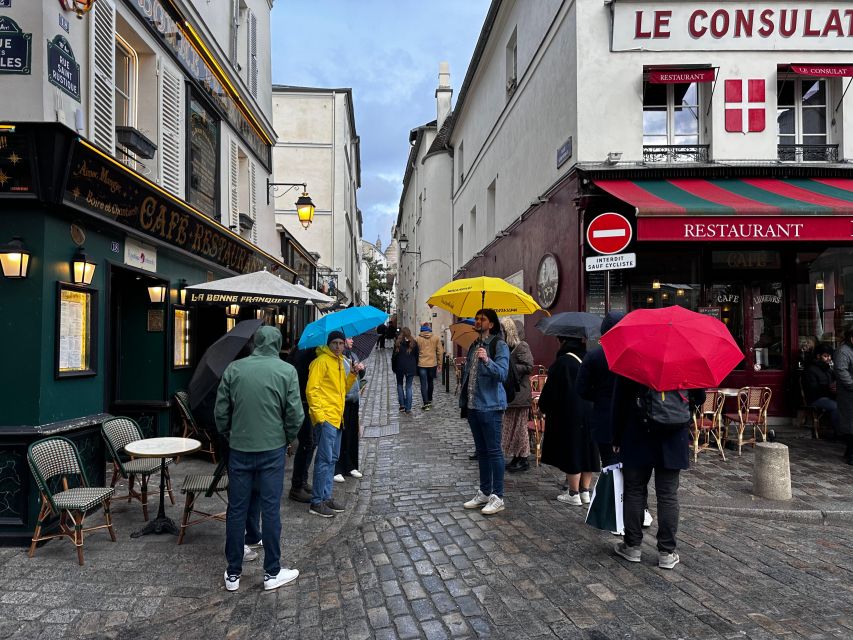
The tour meets in front of Metro Blanche, at the only exit, and you’ll spot the guide by a yellow umbrella. It’s a good plan if you’re staying elsewhere in central Paris because you’re not waiting around for hotel pickup. You can simply arrive, regroup, and start.
From the start, you’ll feel Montmartre’s basic math: steep, winding streets, and viewpoints that appear only after a climb. That matters because you’ll be here long enough (150 minutes) to notice how the neighborhood shifts block by block. Paris at street level is one thing. Paris on a hill is another.
If you’re trying to “fit in Montmartre” on a tight schedule, this kind of tour also helps you get your bearings faster. Instead of bouncing between photos, you’ll understand what each area is doing in the bigger story of the neighborhood.
Keep climbing: more of the Montmartre hill
- Montmartre Hidden Gems and Scenic Highlights Walking Tour
★ 5.0 · 2,684 reviews - Montmartre Hill French Gourmet Food and Wine Tasting Walking Tour
★ 5.0 · 2,588 reviews - Paris: Montmartre Highlights Walking Tour with a Local Guide
★ 4.9 · 2,318 reviews - Paris: Montmartre Cheese, Wine & Pastry Guided Walking Tour
★ 4.8 · 2,255 reviews
Mons Martyrum: the legend behind the name, and why that changes how you look
Montmartre’s name comes from Latin Mons Martyrum, meaning Hill of Martyrs. The area is tied to the legend of Saint Denis, the first bishop of Paris, who was beheaded by the Romans and (in the story) carried his head down the hill until he died. It’s a spooky tale, but it gives Montmartre its early identity as more than just a nightlife zone.
Here’s the practical payoff: once you know the name’s meaning, you start noticing that Montmartre has always been about layers. It’s a holy story that later becomes an artists’ story, then a cabaret story, then a film-and-photo story. When you stand somewhere today, you’re not just seeing a building—you’re standing on a timeline.
You also learn how the landscape helped shape the neighborhood. Montmartre used to be a sleepy village surrounded by vineyards, gardens, and orchards. And because the slopes were built up for working life, you had mills grinding wheat, barley, and rye. The legend says as many as 13 mills once dotted the hill. Only two survived, and they became an enduring symbol of the area’s working past.
That’s why Montmartre feels different from other Paris neighborhoods. It wasn’t designed only for strolling. It grew out of farming and labor, then later reinvented itself for artists and entertainment.
How Montmartre became an artists’ magnet (and still sells that vibe)
By the 19th century, Montmartre changed. The neighborhood had the kind of ingredients creative people look for: drinking establishments, cheap wine, low rents, and a relaxed atmosphere that made it easier to live near the work. It became a hotbed where artists from different places could land, meet, and experiment.
Names you’ll hear in the tour story may include Monet, Renoir, Van Gogh, Picasso, Modigliani, Matisse, Degas, and Toulouse-Lautrec. You don’t need to memorize them. The real benefit is learning the pattern: Montmartre wasn’t famous because of one artist. It was famous because it was a workable scene.
This also changes how you interpret what you see now. The steep streets and dense clusters of cafés and bars aren’t just “cute.” They’re part of the infrastructure that made the artistic life possible back then and keep it going now. You’ll likely pass places where you can imagine rehearsals, debates, and late-night sketching sessions happening all at once.
And the tour doesn’t stop at the past. Montmartre still draws artists, photographers, film directors, and Parisians. Even if you’re only here for a short visit, you’ll feel how the neighborhood keeps reinventing itself around that reputation.
Café des Deux Moulins: where Amélie meets real street life
One of the most fun stops is Café des Deux Moulins, famous from the film Amélie. If you’ve seen the movie, you’ll recognize the vibe right away. If you haven’t, you’ll still understand why this kind of place became part of pop culture: it’s small, charming, and built for lingering.
The tour’s value here isn’t just pointing at a screen memory. It gives you context for Montmartre’s relationship with cafés, cabarets, and everyday people. In other words, the café isn’t a museum object. It’s still a living part of the neighborhood.
Practical tip: you’ll probably want a quick pause here. Even if you don’t sit down for a full drink, take a moment to watch the street energy. That’s where Montmartre’s “story” becomes real. You see how the past is performed every day.
Van Gogh’s house: seeing the artist through place, not poster history
Van Gogh’s house is one of those stops that hits differently because it’s specific. You’re not just hearing a general biography. You’re seeing a physical location that helps you understand why he was drawn to Montmartre’s creative scene.
Van Gogh didn’t work in a vacuum. The neighborhood’s low rents, social life, and artistic density mattered. The tour frames this so his presence feels like part of a bigger pattern, not a random stop.
Here’s what I like about this kind of visit: it’s personal without getting overly sentimental. You can stand there, take in the setting, and let the guide’s explanation put you in the right context. Then you move on with a clearer mental map of where art communities actually form.
If you’re doing Montmartre in a day with other big sites, plan your energy. This is a stop where it’s easy to linger, and that’s not always possible if your schedule is tight. Give yourself enough time to actually look.
Picasso and Modigliani studios: when styles share the same sidewalks
The tour also highlights studios tied to Picasso and Modigliani. For most people, “Picasso and Modigliani” can feel like museum names. On this walk, they become neighborhood names—part of how a creative ecosystem worked.
This is where you get an important takeaway about Montmartre: creative history isn’t neatly separated. People overlapped. Influence traveled. Styles collided. The streets themselves became part of the process.
So when you’re standing near these artistic connections, try thinking less about exact dates and more about proximity. What matters is that Montmartre had space—literal space and social space—where artists could show up and keep working.
One small consideration: if you’re the type who wants a strict, calendar-style chronology, this may feel more like art geography plus storytelling. But if you want to understand the neighborhood as a creative machine, this section delivers.
Worth weighing up next to this Paris pick




Vineyard views and Le Chat Noir: the cabaret side of the hill
Montmartre includes a surprising element: vineyards. The tour works this into the larger picture of the hill as a place that once grew food and wine, not just fame and night scenes. Even if you can’t picture vineyards from every angle today, the idea changes how you see the slopes.
Then you get to the oldest cabaret in Paris, tied to Le Chat Noir. Cabaret isn’t just entertainment here; it’s part of the cultural engine. The guide connects the dots between cafés, dancing halls, and performance spaces that shaped what Montmartre became by the turn of the 19th and 20th centuries.
I like how this part balances the “glamour” with the reality of why it existed. Cheap wine and relaxed social rules mattered. Low rents mattered. People needed affordable places to meet, watch, and try new ideas—onstage and off.
This section is also a good chance to catch views. Montmartre’s look is built on angles and slopes, and the tour’s pacing helps you reach the right viewpoints without feeling like you’re sprinting.
Moulin Rouge: postcard energy with a historical explanation
No Montmartre tour feels complete without Moulin Rouge. It’s the neighborhood’s best-known symbol, and the tour uses it for more than a photo stop. You’ll connect it to the same world of cabarets and dancing halls that helped transform Montmartre into a magnet for artists and visitors.
What you should expect here is a mix of recognition and context. You’ve probably seen Moulin Rouge in posters, films, or memories. The guide’s job is to explain why it became iconic, and how it fits into the shift from quiet village to nightlife hotspot.
If you’re hoping for peaceful, countryside-like Montmartre, this part may not be your calmest moment. But the tradeoff is that you get a clear view of why the neighborhood is famous. And once you understand that history, the crowds and the hype become easier to handle.
Pace, group feel, and how to get the most from 150 minutes
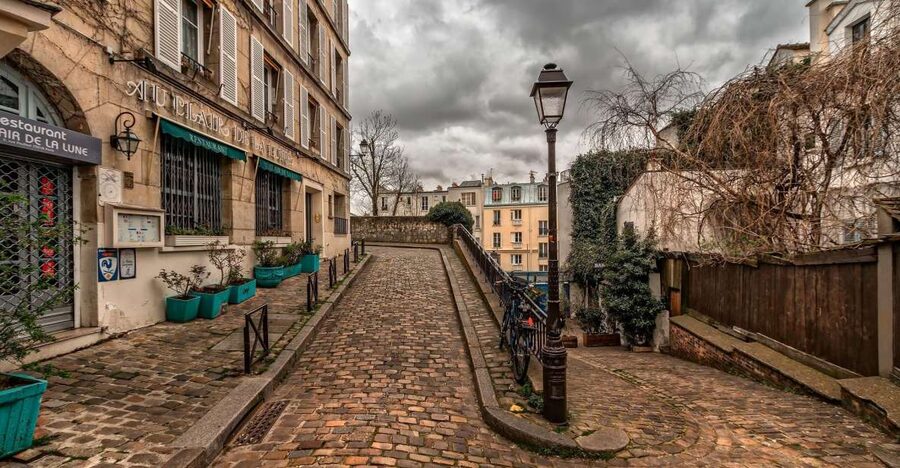
At 150 minutes, you’ll cover a lot of ground without feeling like you’re doing a full-day hike. Still, Montmartre is uphill walking. Wear shoes you trust. Bring a light layer if the weather turns, because “rain or shine” is the tour’s rule, and you’ll find cover if needed.
As for pace: at least one past participant pointed out that the tour could feel slow if you don’t love explanations and storytime. That’s a real consideration. This is a narrative tour, not a “walk, point, move on” tour.
How to make it work for you:
- If you like stories, sit back and let the guide do the stitching between stops.
- If you want more walking time, focus on listening during transitions, then take extra minutes for photos and pauses.
Also note: the tour is in English, led by an expert local guide. Names you may hear across different departures include guides such as Eva (praised for humor and passion) and Raj (praised for lots of information). The exact person can vary, but the goal stays the same: clear, place-based storytelling.
Price and value: $31 booking fee vs what you choose for the guide
The listed price is $31 per person, but this tour works as a pay-what-you-wish format. The key detail is that what you pay now is a small online booking fee, and you decide the amount you give the guide on the day.
So is it good value? Yes, if you treat it like what it is: you’re paying for a competent local guide and a well-told route through major Montmartre stops. You’re not just buying access to landmarks. You’re buying translation of the neighborhood into something you can actually remember.
Here’s a fair way to think about it:
- If you get solid information, helpful pacing, and stops that make sense, you’ll feel good giving more than the minimum.
- If you’re the type who barely listens on walking tours, you might feel the cost more than the value. In that case, consider a shorter or self-guided plan.
Also, you’re paying for 150 minutes of expert local time plus a narrative structure. In a neighborhood this complex, that can save you hours of guesswork and half-baked museum wandering.
Who this Montmartre walking tour fits best
I think this tour is a great match if you want Montmartre’s big names without treating the hill like a checklist. You’ll enjoy it most if you like:
- art history that stays connected to real streets
- film pop culture spots like Café des Deux Moulins
- a guided explanation that makes legends (and mills) feel relevant
- a walk that mixes viewpoint moments with story moments
If you’re traveling with limited time and want a focused circuit, this is also efficient. And if you’re arriving by metro rather than needing hotel pickup, the meeting point setup is straightforward.
If you hate narrative-style tours, or you’re extremely time-bound, then consider whether a more self-guided approach would suit you better. The content is there, but the tour leans on the telling.
FAQ
Do I need hotel pickup for this tour?
No. There is no hotel pickup or drop-off. You meet at the Metro Blanche area.
Where exactly do I meet the guide?
Meet in front of the Metro Blanche, at the only exit. Look for the guide holding a yellow umbrella.
How long is the Montmartre walking tour?
It lasts about 150 minutes.
Is the tour in English?
Yes, the live tour guide speaks English.
Does the tour run in bad weather?
Yes. It takes place rain or shine, and if it gets cold or rains, the group finds cover.
Is it pay what you wish or a fixed price?
It is a general pay-what-you-wish tour. The amount you pay now is only a small online booking fee, and you decide what to pay the guide.
Should you book this Montmartre walking tour?
If you want Montmartre in a way that makes sense—story first, then sights—book it. Café des Deux Moulins, Van Gogh’s house, and the Picasso/Modigliani studio connections give you serious anchors, while the vineyard and Le Chat Noir angle help you understand why this hill became famous for more than nightlife.
I’d pass only if you strongly dislike guided narration and prefer ultra-fast walking. Otherwise, this is a practical way to see the big Montmartre names without just chasing photos.
More Tours in Paris
- Paris: Louvre Guided Tour with Reserved Access & Boat Cruise
★ 4.3 · 16,353 reviews - Paris: Big Bus Hop-On Hop-Off Tour with Optional Cruise
★ 4.4 · 13,279 reviews - Louvre Museum Masterpieces Guided Tour with Access
★ 4.5 · 12,023 reviews - Versailles: Skip-the-Line Tour of Palace and Gardens Access
★ 4.7 · 10,429 reviews - Paris: Louvre Overview, Exploration tour and Reserved Entry
★ 4.1 · 10,145 reviews
More Tour Reviews in Paris
- Paris: 1-Hour Seine Cruise departing from the Eiffel Tower
★ 4.4 · 77,472 reviews - Paris: Louvre Museum Timed-Entrance Ticket
★ 4.6 · 71,977 reviews - Disneyland® Paris 1-Day Ticket
★ 4.6 · 49,412 reviews - Paris: Versailles Palace and Gardens Full Access Ticket
★ 4.6 · 41,579 reviews - Paris: Arc de Triomphe Rooftop Tickets
★ 4.6 · 34,264 reviews
More of the Montmartre Hill
- Montmartre Hidden Gems and Scenic Highlights Walking Tour
★ 5.0 · 2,684 reviews - Montmartre Hill French Gourmet Food and Wine Tasting Walking Tour
★ 5.0 · 2,588 reviews - Paris: Montmartre Highlights Walking Tour with a Local Guide
★ 4.9 · 2,318 reviews - Paris: Montmartre Cheese, Wine & Pastry Guided Walking Tour
★ 4.8 · 2,255 reviews - The Secrets of Montmartre Walking Tour
★ 4.8 · 1,258 reviews
Fresh off the review desk in Paris
- Secrets of Paris Bike Tour in English or Dutch★ 5.0 · 5 reviews
- Paris: Mont Saint-Michel Day Tour with Chinese Tour Guide★ 5.0 · 5 reviews
- Private Street Art 2-Hour Guided Tour in Paris★ 4.5 · 5 reviews
- Orsay Museum Tour: 2h Highlights (Private & Small Group)★ 5.0 · 5 reviews
- Discover Paris in electric golf carts★ 4.0 · 5 reviews
- Paris Private Boat Tour with your own Captain Guide★ 5.0 · 5 reviews
Montmartre Tours, compared.
 ★ 5.0Montmartre Hidden Gems and Scenic Highlights Walking TourFrom $382,684 reviews
 ★ 5.0Montmartre Hill French Gourmet Food and Wine Tasting Walking TourFrom $1452,588 reviews
 ★ 4.9Montmartre Highlights Walking Tour with a Local GuideFrom $232,318 reviews
 ★ 4.8Montmartre Cheese, Wine & Pastry Guided Walking TourFrom $1272,255 reviews
The Secrets of Montmartre Walking TourFrom $331,258 reviews
★ 4.8Montmartre Cheese, Wine & Pastry Guided Walking TourFrom $1272,255 reviews
The Secrets of Montmartre Walking TourFrom $331,258 reviews
 ★ 5.0Private Montmartre Food Tour with Wine, Cheese & PastriesFrom $3021,027 reviews
 ★ 4.1Sacré-Coeur and Montmartre Tour with Expert GuideFrom $281,027 reviews
 ★ 5.0Paris Montmartre Food Tour – A Full French Meal by Do Eat BetterFrom $95877 reviews
Browse the lists this tour appears in