

Reviewed · WALKING TOURS
Neoclassical Paris Architecture 2-Hour Private Walking Tour
Paris’s Neoclassical buildings reward slow looking.
This private, 2-hour walking tour is built for people who want their city-reading skills to level up fast. You move from landmark to landmark—Palais Brongniart, Place des Victoires, Galerie Vivienne, the Tuileries, and the Palais-Royal complex—while an art historian helps you spot what makes the style tick.
What I like most is the way the guide connects design to ideas you can actually feel on the street. I also really enjoyed the private setup: you can ask questions, and the pace stays personal rather than clock-driven. One possible drawback: you’ll do a good bit of standing and walking for 2 hours, so it’s best if your legs are happy with a moderate pace.
In This Review
- Key points to know before you go
- Why Neoclassical Paris Feels Different When You Know the Rules
- Palais Brongniart: Starting With Style, Symbol, and Serious Form
- Place des Victoires: A Royal Square That Teaches Neoclassical Thinking
- Galerie Vivienne: The Arcade That Helped Create the Modern Shopping Mall
- Jardin des Tuileries: Learning to See the “Royal Garden” Through Design Logic
- Palais-Royal and the Cour Carré View: Classical Roots in a Commercial Center
- The Guides: Art Historian Focus and Real-World Teaching Style
- How Much Is It Really Worth? (And When the Price Makes Sense)
- Timing, Walking Pace, and Where You Finish
- A Few Smart Ways to Get More Out of It
- Should You Book This Neoclassical Architecture Tour?
- FAQ
- How long is the Neoclassical Paris private walking tour?
- What is the group size for this private tour?
- How much does the tour cost?
- Where does the tour start and end?
- What language is the tour offered in?
- What’s included in the price?
- Are tickets included for the stops?
- Are food and drinks included?
- Is cancellation free?
- Is the tour okay for people with a moderate fitness level?
- Are service animals allowed?
Key points to know before you go
- Art historian guidance: you’re not just looking; you’re learning how to read neoclassical details.
- Private group up to 6: better questions, better pacing, less crowd pressure.
- Prime central sights: the route links famous places in a logical, architecture-focused thread.
- Arcade and palace views: you’ll see both grand civic buildings and everyday-scale design (Galerie Vivienne).
- English-speaking option: the tour is offered in English, with guides who may be multi-lingual.
Why Neoclassical Paris Feels Different When You Know the Rules
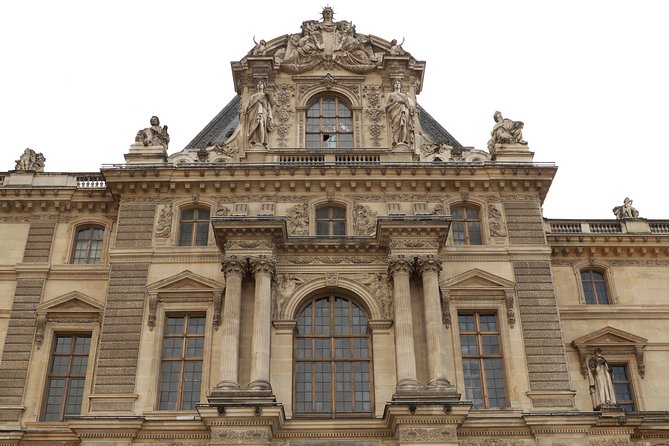
Neoclassical architecture in Paris is often described in textbooks with clean lines and big themes. But on the street, it’s more practical than that: it’s how buildings persuade you. The scale, symmetry, and classical references are doing the work of shaping how power, culture, and public life look.
On this tour, you get a simple framework for what you’re seeing. That means when you spot a façade element—columns, pediments, rhythm in windows—you can connect it to a broader shift in taste and values. It’s the difference between sightseeing and actually understanding why a street scene looks the way it does.
And because it’s private, the guide can tailor examples to your interests. If you care more about politics-as-architecture, you’ll get one angle. If you’re more into art and design mechanics, you’ll get another.
Worth weighing up next to this Paris pick
- Paris Top Sights Half Day Walking Tour with a Fun Guide
★ 5.0 · 2,893 reviews - Montmartre Hidden Gems and Scenic Highlights Walking Tour
★ 5.0 · 2,684 reviews - Montmartre Hill French Gourmet Food and Wine Tasting Walking Tour
★ 5.0 · 2,588 reviews - Paris: Montmartre Highlights Walking Tour with a Local Guide
★ 4.9 · 2,318 reviews
Palais Brongniart: Starting With Style, Symbol, and Serious Form
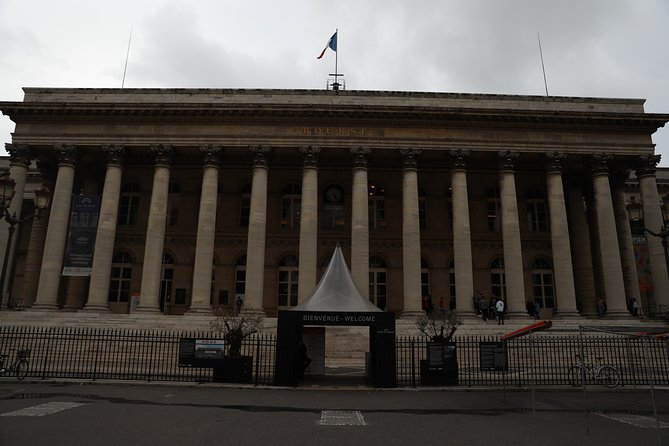
The tour kicks off at Palais Brongniart, the former stock exchange building. Even before the explanation starts, it hits you with neoclassical confidence—this isn’t a quiet style. It was built to project order and credibility, and the building’s values show in the way it presents itself to the city.
This is a strong first stop because it sets the tone for the rest of the walk. You can treat it like your visual baseline: you’ll learn what to look for, then test those ideas again at later stops. It also helps that admission at this first stop is listed as free, so you’re not blocked from soaking in the details where that might matter.
You’ll spend about 30 minutes here, which is enough time to see beyond the postcard view. If you like asking questions, this is a great moment to do it. You’ll get faster at noticing patterns once you’ve heard what the guide is trained to point out.
Place des Victoires: A Royal Square That Teaches Neoclassical Thinking
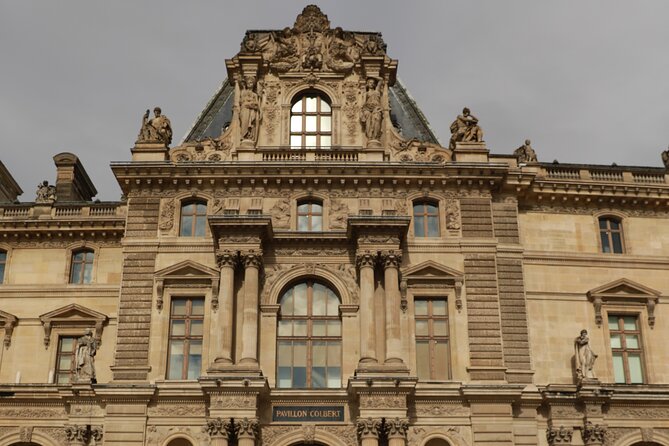
Next up is Place des Victoires, one of Paris’s “royal” squares. Squares are underrated teaching tools. They’re basically outdoor design labs where you can study proportion, layout, and how buildings face each other like actors in a scene.
This stop matters because it sits at the classical-to-neoclassical transition point. The idea isn’t just that it looks important—it’s that the square’s design became a model for how later thinkers approached style. You’ll get that context out loud, not buried in theory.
Plan on about 15 minutes here. That might sound short, but squares work best when the guide gives you a quick reading exercise—look at relationships, not just individual façades. You’ll leave with a better sense of why Paris’s layout feels so intentional.
Galerie Vivienne: The Arcade That Helped Create the Modern Shopping Mall
Then you move into Galerie Vivienne, an elegant arcade that represents a key 19th-century shift. This is where “neoclassical Paris” stops being only about monuments and starts showing up in everyday life.
Arcades are fascinating because they blend public space with a commercial purpose. You get a covered walkway, a controlled environment, and a rhythm of entrances and displays. It’s the ancestor of the shopping mall idea, but with far more architectural character than what we usually see today.
You’ll spend around 20 minutes here. The trick is to look up as much as you look straight ahead. The structure and spacing teach you how designers used geometry and light to make strolling feel planned. If you enjoy design details—materials, spacing, visual repetition—this stop is a highlight.
Jardin des Tuileries: Learning to See the “Royal Garden” Through Design Logic
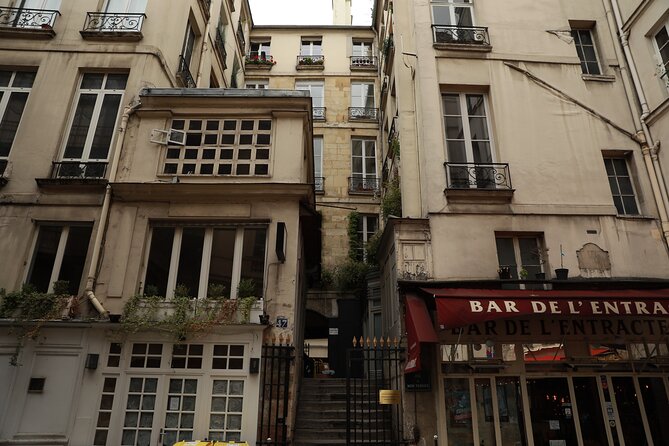
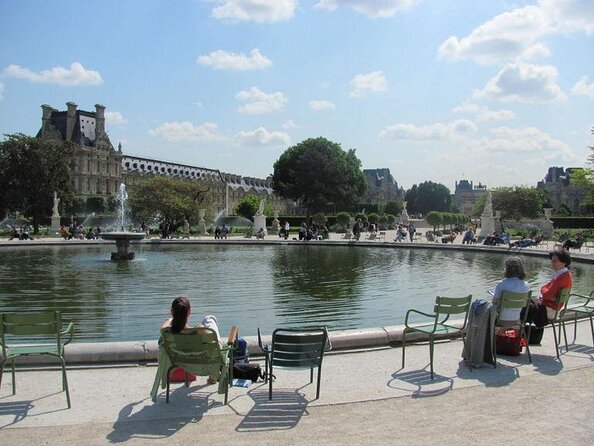
From the arcade world, you head toward Jardin des Tuileries, the former royal garden. This area is all about perspective: the neoclassical viewpoint is how the garden is framed and how buildings relate to what you see from specific positions.
It’s not just pretty landscaping. The value here is learning how the garden was part of a designed worldview. Think of it like architecture that extends outdoors—lines and sightlines become part of the message.
Expect about 20 minutes in this stop. You’ll likely be moving your attention between garden spaces and the surrounding monumental buildings. Even if you’ve visited before, the explanation changes what your eyes do next. You’ll notice alignments and visual “decisions” you would otherwise skip.
Palais-Royal and the Cour Carré View: Classical Roots in a Commercial Center
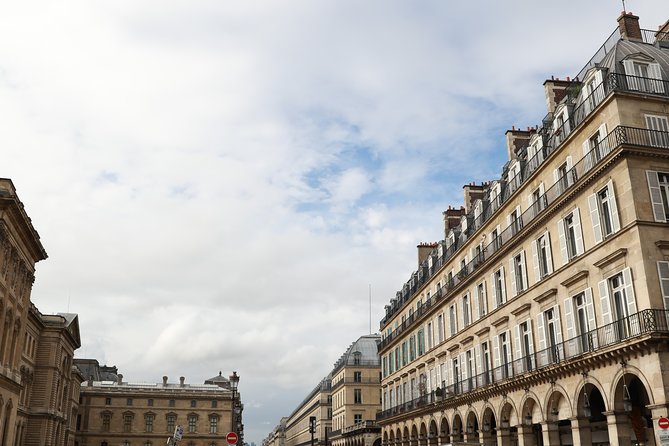
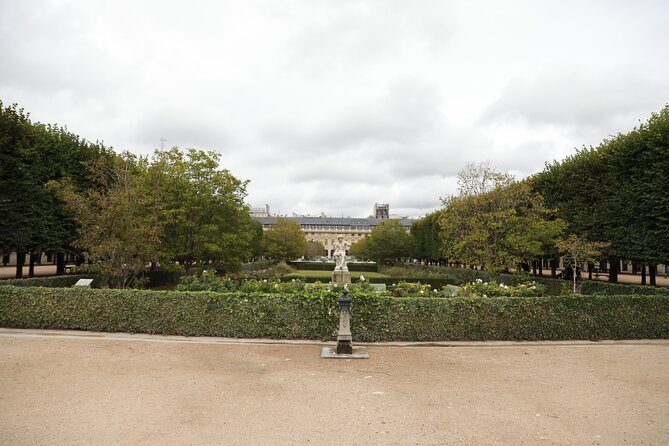
The tour ends with Palais-Royal, a Domaine National complex that has been converted into a commercial center. This stop is where the tour’s theme clicks: classical ideals didn’t disappear. They adapted.
In this part of Paris, you can sense layers. The architectural language looks grounded and orderly, yet the space functions like a living city hub. That contrast is exactly what makes it worth your time. You’re seeing how neoclassicism can be practical, not only ceremonial.
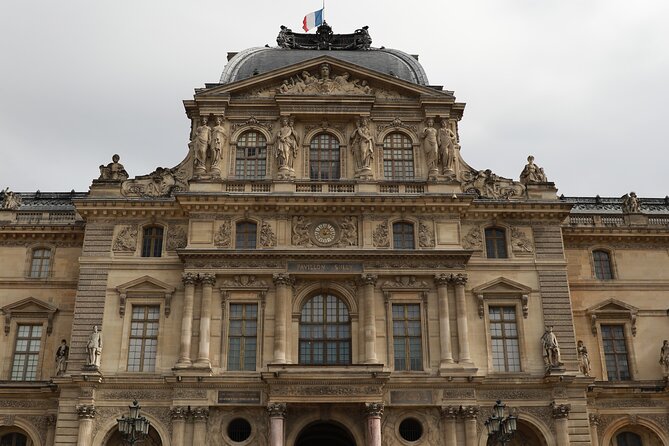
The highlights also mention the Cour Carré, and this area of Palais-Royal is the kind of space where you can recognize that “courtyard logic” that neoclassical planning favored—self-contained, structured, and made for controlled views.
You’ll spend about 20 minutes in this final stretch. It’s a good moment to ask the guide for recommendations on what to see next using the framework you just learned. Many people leave this tour wanting to look at façades differently, and the guide can help you keep that momentum.
Worth weighing up next to this Paris pick




The Guides: Art Historian Focus and Real-World Teaching Style
This experience is led by a professional art historian guide, and the quality shows in how the information is delivered. I’ve seen the guides named Milica/Mila and Melissa, and the broader team includes guides like Boris and Dunya. What matters for you: these are not walk-and-talk lectures. The guide turns architecture into understandable concepts.
In particular, the best moments are when the guide connects design to cultural context. One review-style theme shows up repeatedly: guides make the material feel approachable, and they encourage questions that keep you thinking instead of just listening. That matters in Paris, where you can easily end up with a lot of facts and not much understanding.
Because it’s private, you can tailor the focus. If you’re into art analysis, you’ll get that. If you want more about what the buildings meant for their era, you’ll get that too. And if you’re traveling with a family member, a smart guide can pitch explanations at just the right level.
How Much Is It Really Worth? (And When the Price Makes Sense)
The price is $360.48 per group, for up to 6 people, for about 2 hours. On a per-person basis, that can be a good deal if you’re splitting costs among a small group. It’s also often better value than you’d expect when you care about a niche topic like neoclassical architecture, because specialized guides are rarer and demand more preparation.
Here’s the practical way to judge value. This tour gives you:
- a dedicated art historian (not a general guide),
- private attention (so the Q&A isn’t squeezed),
- a route that ties multiple major spaces into one coherent theme.
If you’re the type who likes museums but also enjoys learning in outdoor settings, you’ll likely feel the value quickly. If you want only a light stroll with minimal explanation, this may feel pricier than you need.
Timing, Walking Pace, and Where You Finish
The tour runs for about 2 hours and ends near Arc de Triomphe du Carrousel at Pl. du Carrousel. It starts at Bourse75002 Paris, so you’re in central, rail-friendly territory from the beginning.
You should have moderate physical fitness. This is still a walking tour, and you’ll be spending time standing to look, then moving on. It’s not described as strenuous, but it’s also not a sit-down experience with long indoor stops.
The tour also says it’s near public transportation, which is helpful for planning your day. You can pair it with other central sightseeing without spending your whole afternoon crisscrossing the city.
A Few Smart Ways to Get More Out of It
If you want this tour to change how you see Paris, bring two habits:
- Ask one question about design before asking for the answer about history. It helps the guide anchor what you’re looking at.
- Take note of one “rule” the guide gives you, then test it at the next stop. That’s how you turn a tour into skill-building.
Also, remember it’s offered in English, and you’ll use a mobile ticket. That means you can move efficiently at the start instead of spending time figuring out paperwork.
Finally, since food and drinks aren’t included, plan a snack or drink break before or after. Architecture walks make time feel shorter, but your energy won’t.
Should You Book This Neoclassical Architecture Tour?
I think you should book if you want more than photos. This tour is for people who enjoy learning how buildings communicate—especially when you get an art historian’s explanations and a private, question-friendly pace.
You might skip it if your travel style is mostly grab-and-go sights with minimal interpretation. The tour’s strength is the guided reading of neoclassical details, not a long list of casual highlights.
If you’re coming to Paris for the first time and want one walking tour that helps you understand a key architectural style, this is a strong pick. If you’re returning and bored by the usual “most famous façades” route, the focus on neoclassicism gives you a fresher lens.
FAQ
How long is the Neoclassical Paris private walking tour?
It lasts about 2 hours.
What is the group size for this private tour?
It’s private, with a group size of up to 6 people.
How much does the tour cost?
The price is $360.48 per group.
Where does the tour start and end?
It starts at Bourse75002 Paris, France and ends at Arc de Triomphe du Carrousel, Pl. du Carrousel, 75001 Paris, France.
What language is the tour offered in?
The tour is offered in English.
What’s included in the price?
The tour includes a professional art historian guide and the private tour.
Are tickets included for the stops?
Admission is free for the first stop mentioned (Palais Brongniart). Other stops are listed without admission fees.
Are food and drinks included?
No, food and drinks are not included.
Is cancellation free?
Yes. You can cancel up to 24 hours in advance for a full refund.
Is the tour okay for people with a moderate fitness level?
The tour is designed for travelers with a moderate physical fitness level.
Are service animals allowed?
Yes, service animals are allowed.
More Walking Tours in Paris
- Paris Top Sights Half Day Walking Tour with a Fun Guide
★ 5.0 · 2,893 reviews - Montmartre Hidden Gems and Scenic Highlights Walking Tour
★ 5.0 · 2,684 reviews - Montmartre Hill French Gourmet Food and Wine Tasting Walking Tour
★ 5.0 · 2,588 reviews - Paris: Montmartre Highlights Walking Tour with a Local Guide
★ 4.9 · 2,318 reviews - Paris Île de la Cité and Notre-Dame Walking Tour With Crypt
★ 5.0 · 2,272 reviews
More Tours in Paris
- Paris: Louvre Guided Tour with Reserved Access & Boat Cruise
★ 4.3 · 16,353 reviews - Paris: Big Bus Hop-On Hop-Off Tour with Optional Cruise
★ 4.4 · 13,279 reviews - Louvre Museum Masterpieces Guided Tour with Access
★ 4.5 · 12,023 reviews - Versailles: Skip-the-Line Tour of Palace and Gardens Access
★ 4.7 · 10,429 reviews - Paris: Louvre Overview, Exploration tour and Reserved Entry
★ 4.1 · 10,145 reviews
More Tour Reviews in Paris
- Paris: 1-Hour Seine Cruise departing from the Eiffel Tower
★ 4.4 · 77,472 reviews - Paris: Louvre Museum Timed-Entrance Ticket
★ 4.6 · 71,977 reviews - Disneyland® Paris 1-Day Ticket
★ 4.6 · 49,412 reviews - Paris: Versailles Palace and Gardens Full Access Ticket
★ 4.6 · 41,579 reviews - Paris: Arc de Triomphe Rooftop Tickets
★ 4.6 · 34,264 reviews
Fresh off the review desk in Paris
- Secrets of Paris Bike Tour in English or Dutch★ 5.0 · 5 reviews
- Paris: Mont Saint-Michel Day Tour with Chinese Tour Guide★ 5.0 · 5 reviews
- Private Street Art 2-Hour Guided Tour in Paris★ 4.5 · 5 reviews
- Orsay Museum Tour: 2h Highlights (Private & Small Group)★ 5.0 · 5 reviews
- Discover Paris in electric golf carts★ 4.0 · 5 reviews
- Paris Private Boat Tour with your own Captain Guide★ 5.0 · 5 reviews
Walking Tours, compared.
 ★ 5.0Paris Top Sights Half Day Walking Tour with a Fun GuideFrom $762,893 reviews
 ★ 5.0Montmartre Hidden Gems and Scenic Highlights Walking TourFrom $382,684 reviews
 ★ 5.0Montmartre Hill French Gourmet Food and Wine Tasting Walking TourFrom $1452,588 reviews
 ★ 4.9Montmartre Highlights Walking Tour with a Local GuideFrom $232,318 reviews
 ★ 5.0Paris Île de la Cité and Notre-Dame Walking Tour With CryptFrom $482,272 reviews
 ★ 4.8Montmartre Cheese, Wine & Pastry Guided Walking TourFrom $1272,255 reviews
 ★ 5.0Paris in a Day: Louvre or Orsay, Eiffel Tower, City Walk & CruiseFrom $1571,956 reviews
 ★ 5.0Paris City Center Free Walking Tour (Tip-Based)From $31,340 reviews
Browse the lists this tour appears in