
Reviewed · MONTMARTRE TOURS
Paris: Hidden Gems of Montmartre Walking Tour
Stairs turn Montmartre into theater. This 2-hour guided walk keeps things moving with interactive questions and real neighborhood turns, ending at the Sacré-Cœur terrace for big Paris views. You also get stories tied to the painters who made Montmartre famous.
I especially like the way the tour treats Place du Tertre as more than a photo stop. Watching artists at work in that historic square adds context fast, and the guide points out details you’d miss wandering on your own.
One note before you go: this walk is stair-heavy, and it isn’t a good fit for wheelchair users or people with mobility impairments. Comfortable shoes are not optional.
In This Review
- Key things to know before you set off
- Where the tour starts: Place des Abbesses and the Montmartre rhythm
- Saint-Jean de Montmartre, Wall of Love, Jardin des Abbesses
- Au Marché Montmartre, Le Bateau-Lavoir, and the artist hangouts vibe
- Dalida locations: Maison de Dalida and the Dalida Statue
- Moulin de la Galette: windmills, panoramas, and can-can energy
- Le Passe-Muraille and the hidden passages between big landmarks
- Place du Tertre: watching artists work in a historic square
- Saint-Pierre de Montmartre and the Sacré-Cœur finish
- Price and value: is $23 worth it for 2 hours?
- Who this tour suits best (and who should choose another option)
- Language, group style, and what the guide actually does
- Quick “how to enjoy it more” checklist
- Should you book this Montmartre walking tour?
- FAQ
- Where does the tour meet?
- How long is the Montmartre walking tour?
- What is the price per person?
- What languages is the live guide available in?
- Is this tour suitable for wheelchair users or mobility impairments?
- Are Sacré-Cœur entrance fees included?
Key things to know before you set off
- Sacré-Cœur panorama as the payoff: a proper terrace view over Paris
- Place du Tertre with live artists: you see how the square still works today
- Hidden passages: quiet backstreets and secret staircases, not just main roads
- Artist-focused storytelling: Picasso, Van Gogh, Renoir, Toulouse-Lautrec, plus can-can culture
- Dalida stops: you’ll spot specific Dalida locations and a statue along the route
- Montmartre’s windmill endures: including Moulin de la Galette
Where the tour starts: Place des Abbesses and the Montmartre rhythm
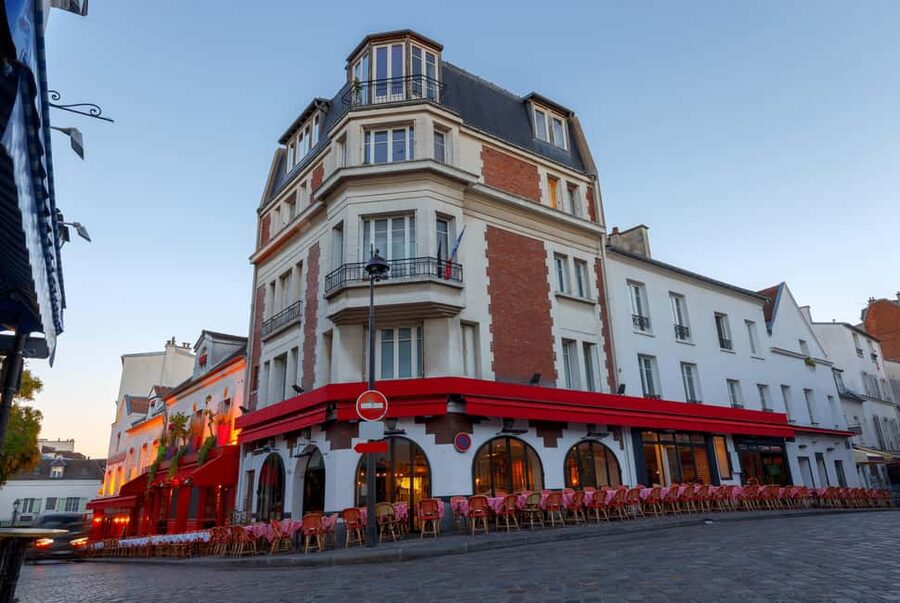
You meet at the front of Abbesses metro station exit, right by Place des Abbesses. That matters because it gets you into the area without wasting time. Montmartre is built like a stack of neighborhoods connected by stairs and winding lanes, so starting here helps you feel the geography early.
What I like about this first stretch is the pacing. You’re not thrown into a long climb immediately; you get time to settle in, then the guide steers you toward the core places that shape the hill’s character. Expect a walking pace that’s friendly for a group, but still focused on progress—this is a 2-hour circuit, not an all-day wander.
Keep climbing: more of the Montmartre hill
- Montmartre Hidden Gems and Scenic Highlights Walking Tour
★ 5.0 · 2,684 reviews - Montmartre Hill French Gourmet Food and Wine Tasting Walking Tour
★ 5.0 · 2,588 reviews - Paris: Montmartre Highlights Walking Tour with a Local Guide
★ 4.9 · 2,318 reviews - Paris: Montmartre Cheese, Wine & Pastry Guided Walking Tour
★ 4.8 · 2,255 reviews
Saint-Jean de Montmartre, Wall of Love, Jardin des Abbesses
This portion sets the emotional tone of Montmartre. First up is Paroisse Saint Jean de Montmartre, where the guide gives context around the area’s spiritual side, not just the building as a postcard object.
Then you hit the Wall of Love, a spot many people know by name but don’t fully understand unless someone explains the background and the way Montmartre’s street culture keeps evolving. You’ll also spend time at Jardin des Abbesses, a quieter pocket that helps you catch your breath after the streets start to climb.
Two practical tips I’d carry into any Montmartre walk:
- Wear shoes with grip. The hill roads can feel slick, and you’ll be moving often.
- Use the pauses the guide offers for photos. If you’re constantly trying to frame shots while walking uphill, you’ll tire out faster.
Au Marché Montmartre, Le Bateau-Lavoir, and the artist hangouts vibe

Next comes a cluster of stops that connects everyday life with art history. At Au Marché Montmartre, you’re in a more local-feeling zone where the hill isn’t just theater and tourists. It’s the kind of place where you can understand how artists once lived in the same streets as everyone else—shopping, errands, and daily routines.
Then the tour moves to Le Bateau-Lavoir, one of those places that makes the whole Montmartre story click. Even if you know the name from art circles, walking there with a guide helps you connect it to why so many creators were drawn to this hill in the first place.
This part is where the guide’s storytelling really matters. You’ll hear the painter legend thread—Picasso’s wild nights, Van Gogh’s struggles, and more—tied to what you’re seeing around you. The goal isn’t just dates. It’s the sense that Montmartre was a working place for artists, with grit, drama, and real human stakes.
Dalida locations: Maison de Dalida and the Dalida Statue
Not all Montmartre tours cover modern icons. This one does, and it changes the mood. You’ll visit the Maison de Dalida and later the Dalida Statue.
Why that’s valuable: it reminds you that Montmartre didn’t stop being a creative magnet with the 1900s painters. The hill keeps feeding new kinds of fame—music, performance, and the kind of public persona that still leaves traces in the streets.
Also, Dalida is an easy entry point if art history feels intimidating. You can treat the stops like chapters in a bigger story: Montmartre as a stage, whether the cast is painters or singers.
Moulin de la Galette: windmills, panoramas, and can-can energy
Now you get to one of the most satisfying moments on the route: Moulin de la Galette. This is where the tour’s “you’ll actually learn something” promise gets tangible.
The guide explains that Montmartre windmills were once common, but this one endures—so when you’re standing at Moulin de la Galette, you’re not just seeing a landmark. You’re seeing one of the last reminders of the hill’s older working landscape.
The storytelling here leans into the showbiz side too: you’ll hear about the can-can dancers of the Moulin Rouge and the scandalous energy that made that era feel electric. Even if you’re not a history nerd, it helps you understand why Montmartre became synonymous with nightlife and big emotions.
And yes, you’ll want photos. Just don’t block yourself into one angle. Ask yourself what you’re trying to capture: the windmill shape, the street perspective, or the way the hill curves around the area.
Le Passe-Muraille and the hidden passages between big landmarks
This is the portion that makes the tour feel different from the typical “hit the main spots” style. You’ll visit Le Passe-Muraille, a small-but-memorable stop that’s tied to Montmartre’s playful, story-driven spirit.
From there, the walk emphasizes the quieter geometry: residential lanes, smaller turns, and those secret staircases and backstreets that most visitors skip. That’s not just for novelty. It helps you experience Montmartre the way locals feel it—layers, levels, and surprise views in short bursts.
Along the route you’ll also pass through smaller landmarks that are easy to overlook on your own:
- Square Suzanne Buisson (a breather and a viewpoint moment)
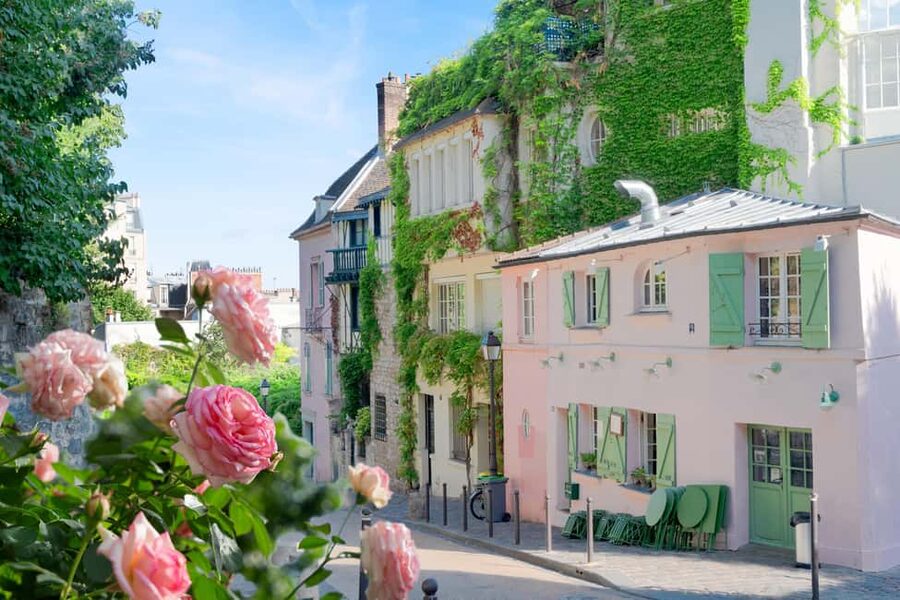
- La Maison Rose (a visual reset in a sea of stone and steps)
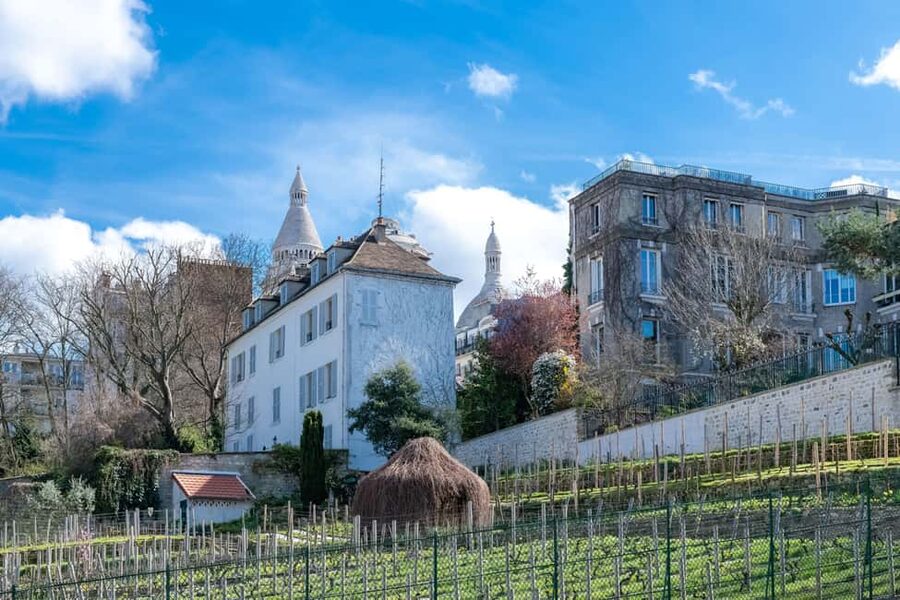
- Vigne du Clos Montmartre, Paris (a vineyard spot that adds unexpected texture to the hill’s story)
- Parc Marcel Bleustein Blanchet and Maison de Maurice Neumont (more of those “wait, I didn’t know this was here” stops)
A vineyard on a hillside crowded with art tourists sounds like a gimmick—until you see it as part of Montmartre’s real patchwork history. This is the kind of stop that makes the tour feel grounded rather than only performance-focused.
Worth weighing up next to this Paris pick




Place du Tertre: watching artists work in a historic square

Then you arrive at Place du Tertre, one of Montmartre’s best-known squares. What I like here is the guide framing: you’re not just looking at the square, you’re watching it in motion.
Artists set up here, and the tour helps you understand why this place became a magnet for painters—then and now. The effect is simple: you feel less like you’re in a theme park, because you can see the creative work happening in real time.
It can get busy here. That’s normal. If you want calmer photos, use your time in small moves: take one wide shot, then step to a less crowded corner for portraits or detail shots.
Saint-Pierre de Montmartre and the Sacré-Cœur finish
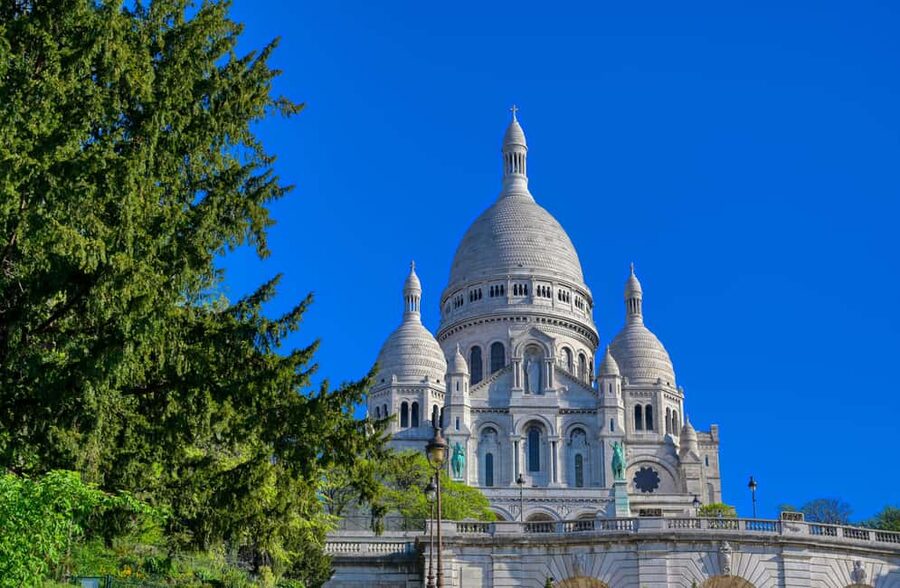
The final stretch includes Saint-Pierre de Montmartre before you end at Basilique du Sacré-Cœur de Montmartre.
Saint-Pierre helps close the loop by adding a religious landmark note that fits the hill’s overall identity. Then Sacré-Cœur is the big payoff. You’ll finish at the basilica with time to enjoy panoramic views of Paris from the terrace.
One practical thing: this area is a visual magnet. If you’re the type who wants to linger until the light feels perfect, build that into your pace. The tour is two hours, so you’ll want to capture what matters quickly and then enjoy the view without running back and forth.
Also, remember this detail: monument entrance fees aren’t included. The tour is mostly about exteriors and walking-focused sightseeing, so you’re paying for the route, the guide, and the local context rather than ticket time.
Price and value: is $23 worth it for 2 hours?
At $23 per person for a 2-hour walking tour, the value comes from four things: the guide, the route quality, the storytelling, and the practical photo pacing.
A self-guided walk can get you from big point A to big point B. But on Montmartre, the “how” is the whole deal. This tour is designed to help you find:
- secret staircases and calmer backstreets
- the artist-driven landmarks you might not connect on your own
- the modern pop-culture layer via Dalida stops
- the Montmartre windmill moment at Moulin de la Galette
In short: you’re paying to avoid the time you’d waste guessing where to go next, and to get explanations that make what you see start to mean something.
Who this tour suits best (and who should choose another option)
This is a great pick if you want art history mixed with street-level atmosphere, and you like a guided pace. It also fits solo travelers well because the format is group-based, with interactive prompts that keep you from feeling like you’re just tagging along.
It’s not suitable for people with mobility impairments or wheelchair users, mainly because the route includes a lot of stairs.
If you’re traveling with kids, it can still work if everyone can handle stairs and attention for stories. For older travelers, it depends on your tolerance for uphill walking and step-heavy paths.
Language, group style, and what the guide actually does
The tour is run in English, Russian, French, Italian, and Spanish, so you should be able to find your language. There’s also a private group option if you want a smaller setup.
The most praised part of this experience is the guide’s approach: stories that stick, plus humor and patience. One example from an English booking: the guide, Martin, made the walk fun, stayed patient through the stairs, and shared practical suggestions like restaurants, movies, and cheaper mulled wine. That kind of add-on is why a guided tour can feel more useful than a list of landmarks.
Quick “how to enjoy it more” checklist
This tour is simple, but you’ll have a better time if you prep a bit:
- Bring comfortable shoes with grip. You’re on a hill.
- Keep your camera ready, but don’t stop suddenly in crowded spots.
- If you care about photos at Sacré-Cœur, plan to move quickly once you arrive and then take your time on the terrace.
- Expect that the route might shift due to weather or access restrictions, because Montmartre is a real working neighborhood.
Should you book this Montmartre walking tour?
If you want Montmartre that feels like a story, not a checklist, book this. The price is reasonable for a guide-led route that includes hidden passages, artist connections (including Picasso and Van Gogh), and the built-in payoff at Sacré-Cœur.
Skip it if stairs are an issue for you, or if you only want quiet, unstructured wandering. For most people, though, this is exactly the kind of guided walk that helps you understand why Montmartre keeps pulling people back.
FAQ
Where does the tour meet?
You meet your guide in front of Abbesses metro station exit.
How long is the Montmartre walking tour?
The tour lasts 2 hours.
What is the price per person?
The price is $23 per person.
What languages is the live guide available in?
The tour is available in English, Russian, French, Italian, and Spanish.
Is this tour suitable for wheelchair users or mobility impairments?
No. It is not suitable for people with mobility impairments or for wheelchair users.
Are Sacré-Cœur entrance fees included?
No. Monument entrance fees are not included, and the tour focuses on exteriors only.
More Tours in Paris
- Paris: Louvre Guided Tour with Reserved Access & Boat Cruise
★ 4.3 · 16,353 reviews - Paris: Big Bus Hop-On Hop-Off Tour with Optional Cruise
★ 4.4 · 13,279 reviews - Louvre Museum Masterpieces Guided Tour with Access
★ 4.5 · 12,023 reviews - Versailles: Skip-the-Line Tour of Palace and Gardens Access
★ 4.7 · 10,429 reviews - Paris: Louvre Overview, Exploration tour and Reserved Entry
★ 4.1 · 10,145 reviews
More Tour Reviews in Paris
- Paris: 1-Hour Seine Cruise departing from the Eiffel Tower
★ 4.4 · 77,472 reviews - Paris: Louvre Museum Timed-Entrance Ticket
★ 4.6 · 71,977 reviews - Disneyland® Paris 1-Day Ticket
★ 4.6 · 49,412 reviews - Paris: Versailles Palace and Gardens Full Access Ticket
★ 4.6 · 41,579 reviews - Paris: Arc de Triomphe Rooftop Tickets
★ 4.6 · 34,264 reviews
More of the Montmartre Hill
- Montmartre Hidden Gems and Scenic Highlights Walking Tour
★ 5.0 · 2,684 reviews - Montmartre Hill French Gourmet Food and Wine Tasting Walking Tour
★ 5.0 · 2,588 reviews - Paris: Montmartre Highlights Walking Tour with a Local Guide
★ 4.9 · 2,318 reviews - Paris: Montmartre Cheese, Wine & Pastry Guided Walking Tour
★ 4.8 · 2,255 reviews - The Secrets of Montmartre Walking Tour
★ 4.8 · 1,258 reviews
Fresh off the review desk in Paris
- Secrets of Paris Bike Tour in English or Dutch★ 5.0 · 5 reviews
- Paris: Mont Saint-Michel Day Tour with Chinese Tour Guide★ 5.0 · 5 reviews
- Private Street Art 2-Hour Guided Tour in Paris★ 4.5 · 5 reviews
- Orsay Museum Tour: 2h Highlights (Private & Small Group)★ 5.0 · 5 reviews
- Discover Paris in electric golf carts★ 4.0 · 5 reviews
- Paris Private Boat Tour with your own Captain Guide★ 5.0 · 5 reviews
Montmartre Tours, compared.
 ★ 5.0Montmartre Hidden Gems and Scenic Highlights Walking TourFrom $382,684 reviews
 ★ 5.0Montmartre Hill French Gourmet Food and Wine Tasting Walking TourFrom $1452,588 reviews
 ★ 4.9Montmartre Highlights Walking Tour with a Local GuideFrom $232,318 reviews
 ★ 4.8Montmartre Cheese, Wine & Pastry Guided Walking TourFrom $1272,255 reviews
The Secrets of Montmartre Walking TourFrom $331,258 reviews
★ 4.8Montmartre Cheese, Wine & Pastry Guided Walking TourFrom $1272,255 reviews
The Secrets of Montmartre Walking TourFrom $331,258 reviews
 ★ 4.1Sacré-Coeur and Montmartre Tour with Expert GuideFrom $281,027 reviews
 ★ 5.0Private Montmartre Food Tour with Wine, Cheese & PastriesFrom $3021,027 reviews
 ★ 5.0Paris Montmartre Food Tour – A Full French Meal by Do Eat BetterFrom $95877 reviews
Browse the lists this tour appears in