
Reviewed · WALKING TOURS
Paris Jewish History 2-Hour Private Guided Walking Tour
Jewish Paris tells its story on foot. I love how this route puts you in the Pletzl with context, and then stops at the Rue Pavée synagogue to show you how Paris-style design and Jewish life intersect. One possible drawback: it is history-heavy, so if you’re hoping for lots of day-to-day Jewish life stories, you may want to ask your guide to lean that way.
A big part of the value is the pace and control. It’s a private group, and you get real time with a live guide in English, French, or Serbo-Croatian, with the focus kept tight to a 2-hour walk. The route also links major Paris touchpoints—Notre-Dame’s neighborhood impact, the Marais, and Place des Vosges—so the city feels connected, not random.
This is also a tour where respect matters. You’ll cover painful chapters like the Nazi occupation and the Vichy era, including a memorial stop, and you’ll hear how prejudice formed and spread over centuries. If you’re sensitive to that material, plan to bring a steady mindset and let the guide set the tone.
In This Review
- Key things you’ll love on this private Jewish history walk
- A 2-hour private walk where Paris history turns personal
- Starting at Shakespeare & Company: the meeting point that feels like Paris
- Notre-Dame area: how the walk connects Jewish threads to a famous neighborhood
- Le Marais and the Pletzl: reading the streets of the old Jewish quarter
- Rue Pavée synagogue: the Art Nouveau detail stop that changes how you look
- Place des Vosges: beauty on the route, not just a photo spot
- WWII, Vichy, and the memorial stop: honoring victims without losing the plot
- Price and what you’re really paying for at $176 per person
- Guides who make the story click: Hannah and Boris as proof points
- Who should book this tour, and who might prefer another option
- Should you book this Paris Jewish History 2-hour private guided walk?
- FAQ
- Where does the tour start?
- How long is the tour?
- Is this a private tour?
- What languages are available?
- What sites will we see?
- Is food included?
- Does it run in bad weather?
- Is the tour wheelchair accessible?
Key things you’ll love on this private Jewish history walk
- Pletzl (Le Marais): the historic center of the old Hebrew community area
- Rue Pavée synagogue: a 100-year-old Art Nouveau stop that’s easier to appreciate with a guide
- Notre-Dame connections: not just the cathedral itself, but Jewish aspects tied to the neighborhood and era
- Place des Vosges: one of Paris’s most beautiful squares, with history around it
- WWII and Vichy remembrance: a memorial moment built into the storyline
- Guide Q&A time: praised for weaving Europe and Paris together clearly, with time for questions
A 2-hour private walk where Paris history turns personal
Paris has a talent for making history feel close. You’ll see that here because the story isn’t stuck in a museum case. It moves street by street—old quarters, major landmarks, and remembrance points—so the past lands right where it happened.
Two things make this tour especially worth your time. First, the Pletzl area gives you the geographic backbone. It’s the old center of the Jewish community, and the guide helps you read the streets like clues. Second, the stop at the Rue Pavée synagogue makes architecture part of the lesson. It’s not only what you’re seeing, but why it mattered that Jews built community spaces in the style of the city around them.
The tradeoff is focus. This is a guided history walk with major events (medieval roots, royal raids, Dreyfus, WWII, Vichy). If you want a lighter, mostly cultural walking tour with casual snapshots and shopping streets, you might find this one heavier than you planned.
Worth weighing up next to this Paris pick
- Paris Top Sights Half Day Walking Tour with a Fun Guide
★ 5.0 · 2,893 reviews - Montmartre Hidden Gems and Scenic Highlights Walking Tour
★ 5.0 · 2,684 reviews - Montmartre Hill French Gourmet Food and Wine Tasting Walking Tour
★ 5.0 · 2,588 reviews - Paris: Montmartre Highlights Walking Tour with a Local Guide
★ 4.9 · 2,318 reviews
Starting at Shakespeare & Company: the meeting point that feels like Paris
You start right by Shakespeare and Company, in front of the bookstore, next to the green water fountain. It’s an easy meeting point if you know the Left Bank/Latin Quarter vibes, and it also helps you get oriented fast.
Your guide carries a red canvas tote bag, which is a small detail but helpful when you arrive early and want to find your group without fuss. If you’re coming from elsewhere in the city, give yourself a bit of extra buffer here—this is one of those tours where starting on time makes the rest of the pacing work.
Even before the walking begins, your guide’s first framing matters. The tour covers centuries of Jewish presence in Paris and Europe, moving through moments that shaped the community for better and worse. That means your guide will likely set expectations about tone early, especially around topics like anti-Semitism and persecution.
Tip: wear comfortable shoes. Two hours in central Paris can still mean a fair amount of walking, and you’ll want your feet to stay happy while you’re listening closely.
Notre-Dame area: how the walk connects Jewish threads to a famous neighborhood
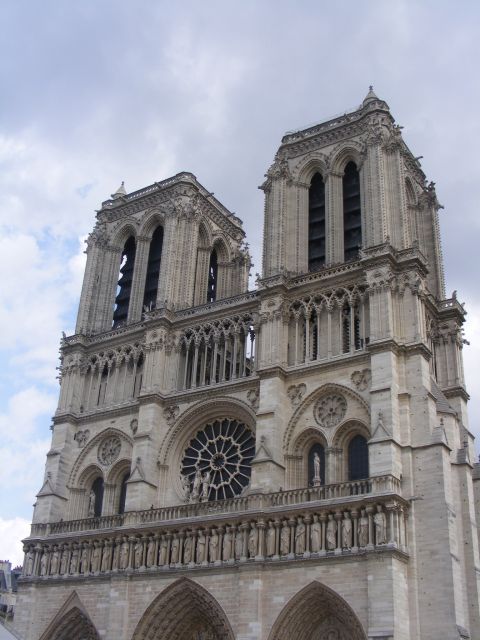
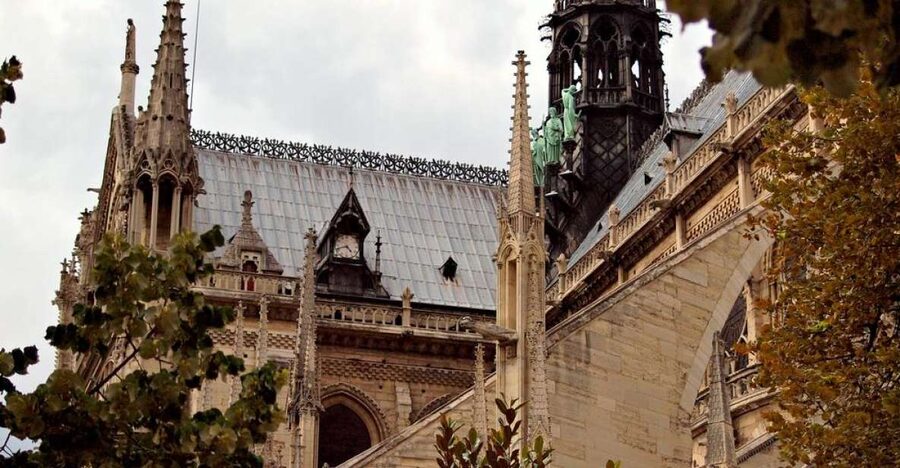
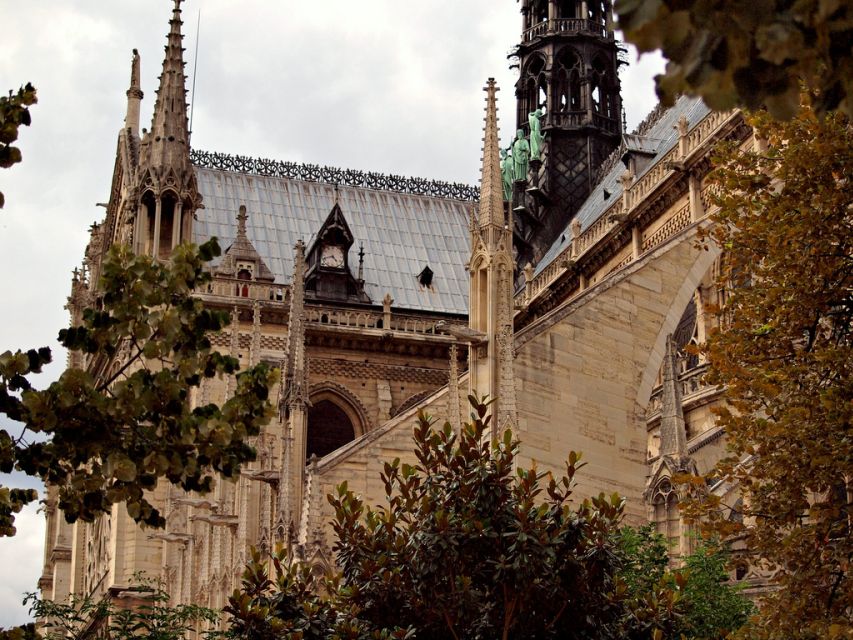
You’ll spend about 30 minutes at Notre-Dame Cathedral with guided time. This isn’t just a sightseeing stop. The tour connects Notre-Dame’s broader neighborhood story to Jewish aspects tied to the city’s history, helping you understand why this area shows up in the narrative at all.
Why that matters: when you look only at famous buildings, you miss how cities actually work. Neighborhoods pull communities into their orbit—economically, politically, and socially. Here, your guide uses Notre-Dame as a geographic anchor to talk about bigger themes, not just stonework.
You’ll also hear about medieval origins of prejudgments—how stereotypes didn’t appear out of nowhere, and how they were reinforced over generations. If you’ve ever wondered how anti-Semitism became so durable across Europe, the guide’s timeline approach is what makes it click.
There’s also a short additional guided segment (about 15 minutes) between major points before the tour settles deeper into the Marais. Think of it as a transition block: you’ll likely get a bit of storyline scaffolding to keep the later stops from feeling like separate attractions.
Le Marais and the Pletzl: reading the streets of the old Jewish quarter
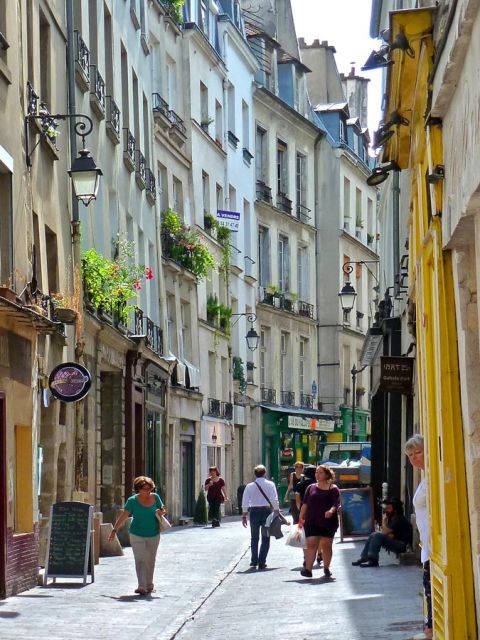
The walk’s heart is the Marais, and specifically the Pletzl area, the historical center of the Hebrew community. You’ll get roughly an hour of guided time in Le Marais, which is enough for more than just photos—if you pay attention, it becomes a guided wayfinding lesson through history.
This is where the tour feels most grounded. You’re not only learning names and dates; you’re linking them to places you can still recognize. Your guide points out the kinds of streets and locations where a community would have gathered, studied, traded, and organized—then ties that to major events that disrupted normal life.
Two themes stand out as practical takeaways:
- Where power showed up: raids by French kings are part of the story, and they explain why Jewish communities often lived under shifting rules.
- Why memory is visible: the guide ties later persecution into what you’re seeing now, so the city doesn’t feel like it forgot.
As you move through the area, you’ll also pass specific Jewish-related landmarks such as Rue des Écouffes and Goldenberg Deli. The deli is not there for a food break—this is a walking tour—but it’s a useful marker of how community identity can remain present in small, ongoing ways even as the surrounding city changes.
Rue Pavée synagogue: the Art Nouveau detail stop that changes how you look
One of the highlights is Rue Pavée synagogue, described as a 100-year-old architectural jewel of Art Nouveau. On your own, you might register it as a synagogue among buildings. With a guide, you’ll start noticing features and patterns that explain why it looks the way it does and what that says about the period.
This stop is valuable for two reasons. First, it connects Jewish community life to the larger visual language of Paris. Second, it teaches you a new habit: when you see a building like this, ask what the community needed at the time—space, visibility, identity—and how architecture helped meet that need.
If you care about design, take a slow look here. Notice the mix of sacred function with artistic form. If you don’t care about design much, still pause—because the guide’s explanation turns a quick glance into real understanding, and you’ll remember the place because it feels distinctive.
Place des Vosges: beauty on the route, not just a photo spot
You’ll also see Place des Vosges, widely considered one of the most beautiful squares in the world. This matters because it gives you a contrast. Even while the tour is covering tragedy and exclusion, the city’s urban charm still exists around those same streets.
How to use this moment: let it reset your brain without skipping the meaning. Your guide ties the square back into the bigger storyline, helping you see how communities lived alongside the grandeur of Parisian planning and how public space shaped daily movement, proximity, and visibility.
If your guide has time for questions here, ask one that personalizes your learning. For example, you can ask how the guide connects past community spaces to what you’re seeing today in the Marais. This is the kind of moment where the tour can become more than a lecture.
Worth weighing up next to this Paris pick




WWII, Vichy, and the memorial stop: honoring victims without losing the plot
A key part of the tour is covering the most painful chapters: Nazi occupation and the Vichy government. Your route includes a memorial to victims of the Vichy regime, which gives you a structured moment to slow down and absorb what the guide is describing.
This section is important for reasons that go beyond the emotional weight. It’s where the guide connects earlier patterns—royal raids, medieval prejudgments, and the Dreyfus affair—to what happened later under occupation. In other words, you’re not just learning isolated stories. You’re learning how discrimination can become policy, then violence.
How to get the most from the memorial stop: keep your attention on what the guide is placing in context. If the tour pace feels fast elsewhere, this is the part where you should take extra time to listen. The memorial moment is built into the walk for a reason, and it helps you understand the city as a living record rather than a backdrop.
Price and what you’re really paying for at $176 per person
At $176 per person for a 2-hour private guided walking tour, you’re paying for three things: expert interpretation, a tightly selected route, and private pacing.
Could you do parts of this on your own? Sure—you can walk the Marais, visit big landmarks, and read up on sites. But the value here is the way the guide stitches together multiple eras and locations into one story. The “why” behind each stop is the product.
Also, this tour is designed to be efficient. Two hours is short enough that you won’t feel stuck, but long enough that you’ll still get multiple landmark moments: Notre-Dame area time, the transition segment, and a full guided block in Le Marais. For many people, that’s the sweet spot for a first-time Jewish history walk in Paris.
What’s not included is also part of the math. You only get the guide; there are no food and beverage stops built in. That’s fine, but plan to grab something after, so you’re not mentally splitting your attention during the tour.
Guides who make the story click: Hannah and Boris as proof points
From the experience summaries, the strongest praise consistently centers on guides who connect the Jewish story in Paris to the broader European arc and keep the explanation clear. Names that come up include Hannah and Boris, both described as friendly, professional, and strong at answering questions.
If your goal is understanding how events like the Dreyfus affair and WWII shaped community life, that “weaving” skill matters. A great guide doesn’t just list facts. They show how one era sets up the next, and how prejudice evolves in real time.
One note to carry with you: there’s an expectation of history focus. If you want more storytelling about Jewish life in Paris beyond the big events, you’ll get the best results by speaking up early and telling your guide what you want to hear more about.
Who should book this tour, and who might prefer another option
This tour is a strong fit if:
- you want a Paris Jewish history walk with a clear timeline and major events
- you like walking routes that connect neighborhoods to monuments
- you care about architecture enough to appreciate why the Rue Pavée synagogue looks the way it does
- you’re comfortable with serious topics like persecution and remembrance
It might be less ideal if:
- you want a mostly casual, everyday-culture tour with light stories and minimal heavy historical content
- you’re expecting a long sit-down museum experience rather than an active street walk
- you’re mainly seeking food or shopping stops (this is not built around that)
If you’re doing this as your first Marais history outing, it’s a solid anchor. If you’re already deep into Paris history, it still works because it reframes familiar streets through a specific lens.
Should you book this Paris Jewish History 2-hour private guided walk?
Yes, if you want a focused, high-context introduction to Jewish Paris that goes beyond a quick checklist of landmarks. The combination of Pletzl, the Rue Pavée synagogue, Notre-Dame-area context, and a memorial stop makes this a route with meaning, not just movement.
Book it especially if you like guided interpretation and want help connecting events like the Dreyfus affair, WWII occupation, and the Vichy era to the geography you’re standing in. One of the best signs is how often the guide quality and question time are praised.
I’d skip it only if your top priority is lighter stories or lots of day-to-day Jewish life details without the heavy historical framework. In that case, you can still visit the sites, but you might prefer a different kind of walking tour.
FAQ
Where does the tour start?
The meeting point is in front of Shakespeare and Co bookstore, by the green water fountain. Your guide carries a red canvas tote bag.
How long is the tour?
The tour lasts 2 hours.
Is this a private tour?
Yes. It’s a private group.
What languages are available?
The live guide is available in English, French, and Serbo-Croatian.
What sites will we see?
You’ll see the Notre-Dame Cathedral area, Le Marais including the Pletzl, the Rue Pavée synagogue (Art Nouveau), Notre-Dame-related Jewish aspects, Place des Vosges, and sites such as Rue des Écouffes and Goldenberg Deli, plus a memorial to victims of the Vichy regime.
Is food included?
No. Food and beverages are not included.
Does it run in bad weather?
Tours operate rain or shine.
Is the tour wheelchair accessible?
Yes, it is listed as wheelchair accessible.
More Walking Tours in Paris
- Paris Top Sights Half Day Walking Tour with a Fun Guide
★ 5.0 · 2,893 reviews - Montmartre Hidden Gems and Scenic Highlights Walking Tour
★ 5.0 · 2,684 reviews - Montmartre Hill French Gourmet Food and Wine Tasting Walking Tour
★ 5.0 · 2,588 reviews - Paris: Montmartre Highlights Walking Tour with a Local Guide
★ 4.9 · 2,318 reviews - Paris Île de la Cité and Notre-Dame Walking Tour With Crypt
★ 5.0 · 2,272 reviews
More Tours in Paris
- Paris: Louvre Guided Tour with Reserved Access & Boat Cruise
★ 4.3 · 16,353 reviews - Paris: Big Bus Hop-On Hop-Off Tour with Optional Cruise
★ 4.4 · 13,279 reviews - Louvre Museum Masterpieces Guided Tour with Access
★ 4.5 · 12,023 reviews - Versailles: Skip-the-Line Tour of Palace and Gardens Access
★ 4.7 · 10,429 reviews - Paris: Louvre Overview, Exploration tour and Reserved Entry
★ 4.1 · 10,145 reviews
More Tour Reviews in Paris
- Paris: 1-Hour Seine Cruise departing from the Eiffel Tower
★ 4.4 · 77,472 reviews - Paris: Louvre Museum Timed-Entrance Ticket
★ 4.6 · 71,977 reviews - Disneyland® Paris 1-Day Ticket
★ 4.6 · 49,412 reviews - Paris: Versailles Palace and Gardens Full Access Ticket
★ 4.6 · 41,579 reviews - Paris: Arc de Triomphe Rooftop Tickets
★ 4.6 · 34,264 reviews
Fresh off the review desk in Paris
- Secrets of Paris Bike Tour in English or Dutch★ 5.0 · 5 reviews
- Paris: Mont Saint-Michel Day Tour with Chinese Tour Guide★ 5.0 · 5 reviews
- Private Street Art 2-Hour Guided Tour in Paris★ 4.5 · 5 reviews
- Orsay Museum Tour: 2h Highlights (Private & Small Group)★ 5.0 · 5 reviews
- Discover Paris in electric golf carts★ 4.0 · 5 reviews
- Paris Private Boat Tour with your own Captain Guide★ 5.0 · 5 reviews
Walking Tours, compared.
 ★ 5.0Paris Top Sights Half Day Walking Tour with a Fun GuideFrom $762,893 reviews
 ★ 5.0Montmartre Hidden Gems and Scenic Highlights Walking TourFrom $382,684 reviews
 ★ 5.0Montmartre Hill French Gourmet Food and Wine Tasting Walking TourFrom $1452,588 reviews
 ★ 4.9Montmartre Highlights Walking Tour with a Local GuideFrom $232,318 reviews
 ★ 5.0Paris Île de la Cité and Notre-Dame Walking Tour With CryptFrom $482,272 reviews
 ★ 4.8Montmartre Cheese, Wine & Pastry Guided Walking TourFrom $1272,255 reviews
 ★ 5.0Paris in a Day: Louvre or Orsay, Eiffel Tower, City Walk & CruiseFrom $1571,956 reviews
 ★ 5.0Paris City Center Free Walking Tour (Tip-Based)From $31,340 reviews
Browse the lists this tour appears in