
Reviewed · WALKING TOURS
Paris Marais Quarter 2-Hour Private Walking Tour
The Marais is Paris in fast-forward. In just 2 hours on a private walk, you’ll stitch together markets, Jewish Paris, royal squares, and a surprising connection to the modern Centre Pompidou.
I love how the route is built around stories you can actually see in the streets, not just facts on a screen. I also like that your guide keeps it practical for a small group, so you can ask questions and move at a human pace. One possible drawback: with only 2 hours, you won’t see everything in the Marais, so you’ll need to choose what you want to linger over after the tour.
If you want to understand Paris beyond the postcard, this is a great pick. You’ll follow the neighborhood’s big swings, starting from a swamp that became city land, then moving through the rise of the Jewish community and the later shifts from chic residences to darker times. The upside is you finish with a clear mental map. The main consideration is that it runs on foot, so comfortable walking shoes matter more than perfect outfits.
In This Review
- Key highlights you’ll feel on the walk
- Getting started at Metro Étienne Marcel (and why the details matter)
- The Marais backstory: a neighborhood that keeps changing its mind
- Les Halles and Fontaine des Innocents: markets, water, and noticing what’s in front of you
- Centre Pompidou’s connection to the Middle Ages (yes, it actually makes sense)
- Hôtel de Ville: opulence, power, and the city’s official face
- Hôtel de Sully and Place des Vosges: royal vibes without the museum fatigue
- Pletzl and Rue Pavée: the historic Jewish center you can walk through
- Place de la Bastille: ending with a city-wide link
- What makes this private format worth $176 per person
- How guides shape your experience (and why mixed ages work)
- What to expect on the ground: pacing, rain, and comfort
- Should you book the Paris Marais Quarter 2-Hour Private Walking Tour?
Key highlights you’ll feel on the walk
- Les Halles: former biggest open market energy, plus why its location mattered
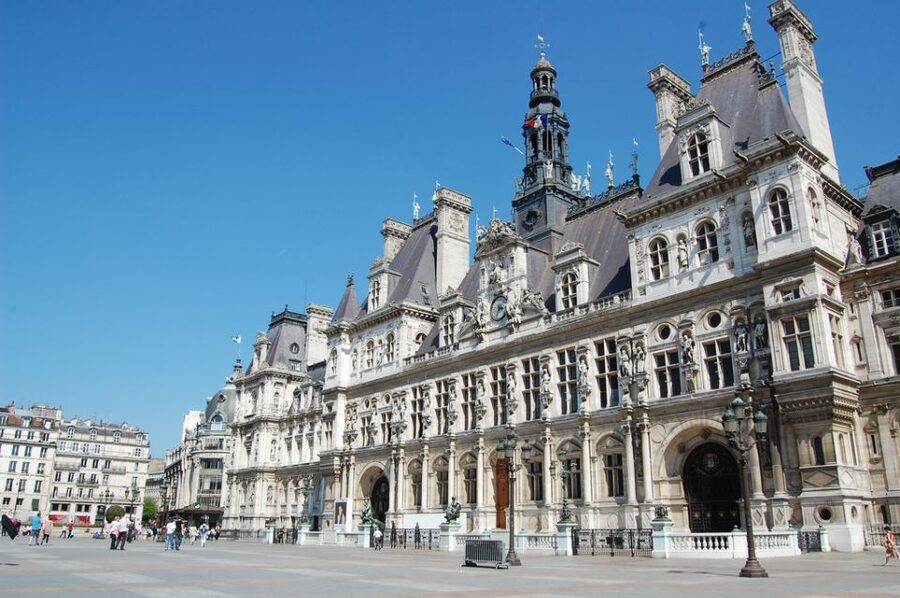
- Hôtel de Ville: Renaissance grandeur right in the middle of city life
- Pletzl and Rue Pavée synagogue area: Jewish Paris in the historic center
- Place des Vosges: one of the most beautiful squares you’ll see in Paris
- Fontaine des Innocents: a recognizable landmark that rewards looking closely
- Middle Ages to Pompidou: the guide shows how the old city connects to modern Paris
Getting started at Metro Étienne Marcel (and why the details matter)
Meeting at Metro Étienne Marcel is handy because it puts you close to the Marais action without the stress of crossing half the city. The guide carries a red canvas tote bag, which makes it easy to spot each other and start quickly.
Because this is a private walking tour, you’re not stuck in a big herd. That matters in Paris, where one slow group can ripple into wasted minutes. Here, you should be able to keep a steady rhythm and still stop when the story gets interesting.
Worth weighing up next to this Paris pick
- Paris Top Sights Half Day Walking Tour with a Fun Guide
★ 5.0 · 2,893 reviews - Montmartre Hidden Gems and Scenic Highlights Walking Tour
★ 5.0 · 2,684 reviews - Montmartre Hill French Gourmet Food and Wine Tasting Walking Tour
★ 5.0 · 2,588 reviews - Paris: Montmartre Highlights Walking Tour with a Local Guide
★ 4.9 · 2,318 reviews
The Marais backstory: a neighborhood that keeps changing its mind
The Marais didn’t start as the pretty, protected-feeling district you picture today. It was originally a swamp, drained so people could live there. Once it became habitable, settlers arrived, and it eventually grew into the center of the city’s Jewish community, a role that still echoes in what you’ll see.
Then the district had its ups and downs. It swung from an area associated with aristocrats and even a royal court, to a period where it was known as a place to avoid. That cycle is what makes the tour so satisfying: you’re not just learning history, you’re watching how the neighborhood’s “identity” shifts over time.
After that, the walk also lands in the present. The Marais is in what you could call a second renaissance, and the guide points you toward the best parts of this renewed chapter.
Les Halles and Fontaine des Innocents: markets, water, and noticing what’s in front of you
You’ll start by exploring Les Halles, once the biggest open market in Paris. Even if you don’t think of Les Halles as a history site, it’s exactly that: a place that explains how Paris fed itself, traded goods, and pulled people into the center of the city. The guide’s job here is to help you read today’s streets through yesterday’s marketplace logic.
Right nearby, you’ll encounter Fontaine des Innocents. This isn’t the kind of spot you just pass by. The fountain works better when you slow down and let your guide explain what you’re looking at. It’s one of those landmarks where details reward you, and the best part is you don’t need museum tickets to get the story.
Practical tip: expect a couple of short stops where you’ll want to stand still and look up. If you rush, you miss the point.
Centre Pompidou’s connection to the Middle Ages (yes, it actually makes sense)
One of the tour’s smartest moves is the promised link between the Middle Ages and the modern Centre Pompidou. At first, it sounds like a stretch. In practice, it helps you understand that modern Paris didn’t pop into existence from nowhere.
The guide uses the Marais as the bridge. You’ll connect older patterns—where people gathered, how power expressed itself in the city, and how new institutions reframe old urban space—to the shock of a building like Pompidou. The “modern” part isn’t just architecture. It’s the idea of Paris constantly reinventing what the center should be.
If you like tours that give you a mental model, this stop delivers. You’ll leave feeling like you can read the city as a timeline, not a pile of separate attractions.
Hôtel de Ville: opulence, power, and the city’s official face
Next comes the Hôtel de Ville, described as the opulent Renaissance city hall. This is where you see how Paris stages authority. The Marais may feel like a neighborhood of elegant streets and tucked-away corners, but the Hôtel de Ville shows you the city’s public power right up close.
Your guide ties it back to earlier themes: who had influence, how civic buildings shaped urban identity, and why certain kinds of architecture show up when cities want to project stability. It’s not just pretty stone. It’s a visual statement.
If you’re the type who likes photos, this is a good place to pause and frame a few shots. Just remember: the best reason to stop here is the story of how Paris organized itself.
Hôtel de Sully and Place des Vosges: royal vibes without the museum fatigue
The walk then turns toward the kind of atmosphere that makes the Marais famous: big open space, refined buildings, and a sense of being in one carefully kept pocket of the city.
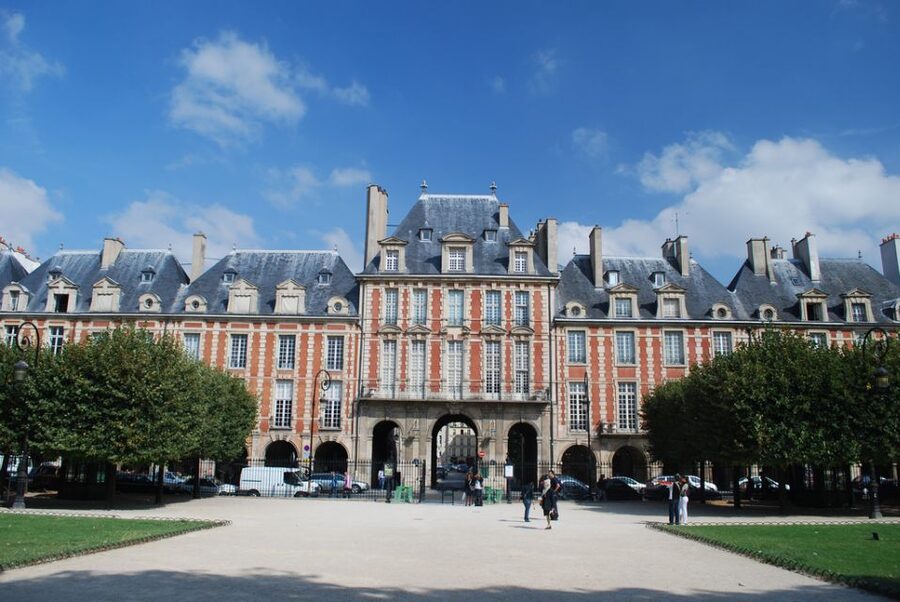
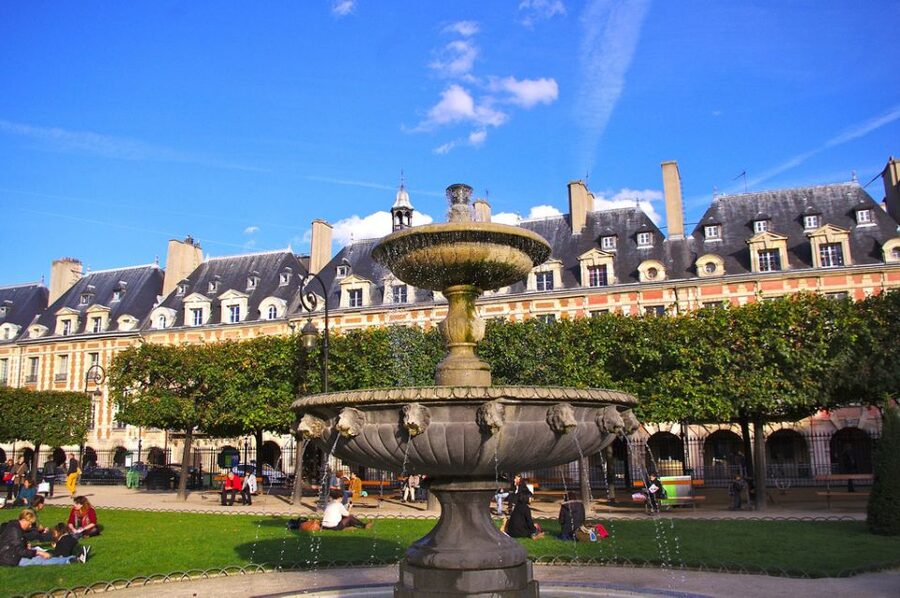
Place des Vosges is the star square. You’ll see why it’s often singled out as one of the most beautiful squares in the world. What makes it special on foot is the scale and the edges: you can appreciate the symmetry while also noticing the daily Parisian rhythm around you.
You’ll also stop at Hôtel de Sully. This helps anchor the square with a clear “who lived here and why” context. Instead of treating the area like a set piece, the guide places it back into the social world of the Marais—aristocratic and courtly ties come up naturally, without forcing it.
If you’re traveling with kids or people who hate long explanations, this is a great section. The buildings speak with their shapes, and your guide can keep it moving while still giving you the meaning.
Worth weighing up next to this Paris pick




Pletzl and Rue Pavée: the historic Jewish center you can walk through
The Pletzl area is one of the most important parts of this tour. It’s the historic center of Paris’s Jewish community, and the neighborhood clues are there if you know what to look for.
You’ll visit the synagogue area at Rue Pavée. This is the part of the walk where you’ll likely feel the difference between “architecture as decoration” and architecture as community memory. The guide connects the dots between the Marais’s rise as a Jewish center and the way history remains present in the streets.
I like how this portion isn’t framed as a distant lecture. It’s walked through, which means you experience the scale and street layout as part of the story. That makes it easier to remember.
One small consideration: if you prefer a lighter mood, this section might feel heavier than the square-and-fountain parts. It’s worth it, but it’s still real history.
Place de la Bastille: ending with a city-wide link
To close, you reach Place de la Bastille. Even though the Marais is the star of the route, ending here helps you feel how the Marais fits into the bigger Paris story.
Your guide ties the walk back to change over time. The city doesn’t just preserve; it transforms. Bastille is one of those locations where Paris history keeps moving, and the ending makes the whole route feel less like a contained neighborhood tour and more like a lens for the city.
If you still have energy, this is a good final stop because you’re well positioned to keep exploring on your own afterward.
What makes this private format worth $176 per person
Let’s talk value. At $176 per person for a 2-hour private tour, you’re paying for a few things at once: a guide who can tailor pacing, a route that hits major landmarks plus specific Marais anchors, and the storytelling structure that turns locations into meaning.
Compared with generic walking tours, the private element matters in Paris. You can ask follow-ups, get clarifications on what you’re seeing, and pause when you want a closer look—especially at spots like Hôtel de Ville or along the Pletzl streets.
Is it the cheapest option? No. But if you care about understanding the city, not just ticking off stops, the time and guide attention can feel like a fair trade.
Also, you’re not stuck guessing which order makes sense. This route is designed so each stop explains the next idea, including that Middle Ages to Pompidou thread.
How guides shape your experience (and why mixed ages work)
The reviews you provided highlight a consistent theme: the guides are passionate and adapt to different groups. I saw names like Alexander, Caroline, Boris, Fabienne, and Anja, plus Alexandre and Yvana in French-language feedback. The common thread is clear communication paired with real on-the-street knowledge.
One review specifically notes a guide who adjusted explanations for ages ranging from 6 to 75. That kind of adaptability is exactly what helps in a tour like this—where you’ll talk about both civic buildings and community history.
So if your group includes people with different comfort levels, you’re not likely to end up with a lecture that loses half the room.
What to expect on the ground: pacing, rain, and comfort
The tour runs rain or shine, so plan like Paris weather is in charge (because it is). Bring an umbrella or a light rain layer you’ll actually use. Shoes should be comfortable enough for a steady walk, since this is a neighborhood stroll connecting multiple landmarks.
Food isn’t included, and you’ll likely pass through areas where you can choose your own snack later. Since the tour is only 2 hours, it’s smart to eat before you meet so you can focus during the guided part.
Also, since it’s a private group, you should be able to get directions and suggestions that match your day’s plans—though the tour itself stays focused on the walking route and key stops listed.
Should you book the Paris Marais Quarter 2-Hour Private Walking Tour?
Book this tour if you want the Marais explained the way it feels on the street: as a place that keeps reinventing itself. You’ll get a strong mix of landmarks—Les Halles, Hôtel de Ville, Pletzl, Place des Vosges, and Place de la Bastille—and a memorable thread tying old Paris to the modern Centre Pompidou.
Skip it or consider a different option if you hate walking, if you’re seeking lots of ticketed indoor time, or if you only want light entertainment with zero serious historical context. This is a smart, story-driven route, and it earns its focus.
Given the 4.8 rating across 29 reviews, and the repeated praise for guides who clearly connect the dots, this is a good bet for couples, friends, or anyone who wants to leave the Marais feeling like they truly understand it.
More Walking Tours in Paris
- Paris Top Sights Half Day Walking Tour with a Fun Guide
★ 5.0 · 2,893 reviews - Montmartre Hidden Gems and Scenic Highlights Walking Tour
★ 5.0 · 2,684 reviews - Montmartre Hill French Gourmet Food and Wine Tasting Walking Tour
★ 5.0 · 2,588 reviews - Paris: Montmartre Highlights Walking Tour with a Local Guide
★ 4.9 · 2,318 reviews - Paris Île de la Cité and Notre-Dame Walking Tour With Crypt
★ 5.0 · 2,272 reviews
More Tours in Paris
- Paris: Louvre Guided Tour with Reserved Access & Boat Cruise
★ 4.3 · 16,353 reviews - Paris: Big Bus Hop-On Hop-Off Tour with Optional Cruise
★ 4.4 · 13,279 reviews - Louvre Museum Masterpieces Guided Tour with Access
★ 4.5 · 12,023 reviews - Versailles: Skip-the-Line Tour of Palace and Gardens Access
★ 4.7 · 10,429 reviews - Paris: Louvre Overview, Exploration tour and Reserved Entry
★ 4.1 · 10,145 reviews
More Tour Reviews in Paris
- Paris: 1-Hour Seine Cruise departing from the Eiffel Tower
★ 4.4 · 77,472 reviews - Paris: Louvre Museum Timed-Entrance Ticket
★ 4.6 · 71,977 reviews - Disneyland® Paris 1-Day Ticket
★ 4.6 · 49,412 reviews - Paris: Versailles Palace and Gardens Full Access Ticket
★ 4.6 · 41,579 reviews - Paris: Arc de Triomphe Rooftop Tickets
★ 4.6 · 34,264 reviews
Fresh off the review desk in Paris
- Secrets of Paris Bike Tour in English or Dutch★ 5.0 · 5 reviews
- Paris: Mont Saint-Michel Day Tour with Chinese Tour Guide★ 5.0 · 5 reviews
- Private Street Art 2-Hour Guided Tour in Paris★ 4.5 · 5 reviews
- Orsay Museum Tour: 2h Highlights (Private & Small Group)★ 5.0 · 5 reviews
- Discover Paris in electric golf carts★ 4.0 · 5 reviews
- Paris Private Boat Tour with your own Captain Guide★ 5.0 · 5 reviews
Walking Tours, compared.
 ★ 5.0Paris Top Sights Half Day Walking Tour with a Fun GuideFrom $762,893 reviews
 ★ 5.0Montmartre Hidden Gems and Scenic Highlights Walking TourFrom $382,684 reviews
 ★ 5.0Montmartre Hill French Gourmet Food and Wine Tasting Walking TourFrom $1452,588 reviews
 ★ 4.9Montmartre Highlights Walking Tour with a Local GuideFrom $232,318 reviews
 ★ 5.0Paris Île de la Cité and Notre-Dame Walking Tour With CryptFrom $482,272 reviews
 ★ 4.8Montmartre Cheese, Wine & Pastry Guided Walking TourFrom $1272,255 reviews
 ★ 5.0Paris in a Day: Louvre or Orsay, Eiffel Tower, City Walk & CruiseFrom $1571,956 reviews
 ★ 5.0Paris City Center Free Walking Tour (Tip-Based)From $31,340 reviews
Browse the lists this tour appears in