
Reviewed · MONTMARTRE TOURS
Paris Montmartre: 2-Hour City Tour in German
Montmartre is better when someone local talks. This 2-hour German-guided walk through Paris’ artists’ quarter brings the hill to life with stories, off-the-main-street corners, and time to look properly. The only real catch: it’s German only, so if you’re not comfortable with the language, you’ll feel rushed instead of informed.
I like that the tour focuses on the place, not a checklist. You’ll see the big names (hello Moulin Rouge and Sacré-Cœur) and also get the “why it’s here” details you normally miss when you’re just snapping photos. It’s a walking tour, and since food, drinks, and entrance fees aren’t included, you’ll want to plan a snack on your own.
In This Review
- Key moments you shouldn’t miss
- Why Montmartre works best with a German-speaking local
- Meeting at Blanche and setting the right 2-hour pace
- Moulin Rouge to Moulin de la Galette: the show-world meets the hillside
- Place du Tertre: what the artists’ square is really about
- Lapin Agile and the names you can connect to the streets
- Sacré-Cœur Basilica: the view, plus the details that matter
- Vigne du Clos Montmartre: a vineyard moment on a postcard hill
- Price and value: what $94 per person really buys
- Who this German Montmartre tour is best for
- Should you book this Montmartre walk?
- FAQ
- How long is the Paris Montmartre tour in German?
- Where is the meeting point?
- Where does the tour finish?
- Is the tour walking only?
- What language is the guide?
- Is this tour private?
- What is included in the price?
- What is not included?
- Can kids join for free?
- Is free cancellation available?
Key moments you shouldn’t miss
- German-only guide with a long-time local feel and lots of Q&A
- Moulin Rouge to Sacré-Cœur in a smooth walking loop that fits a short stay
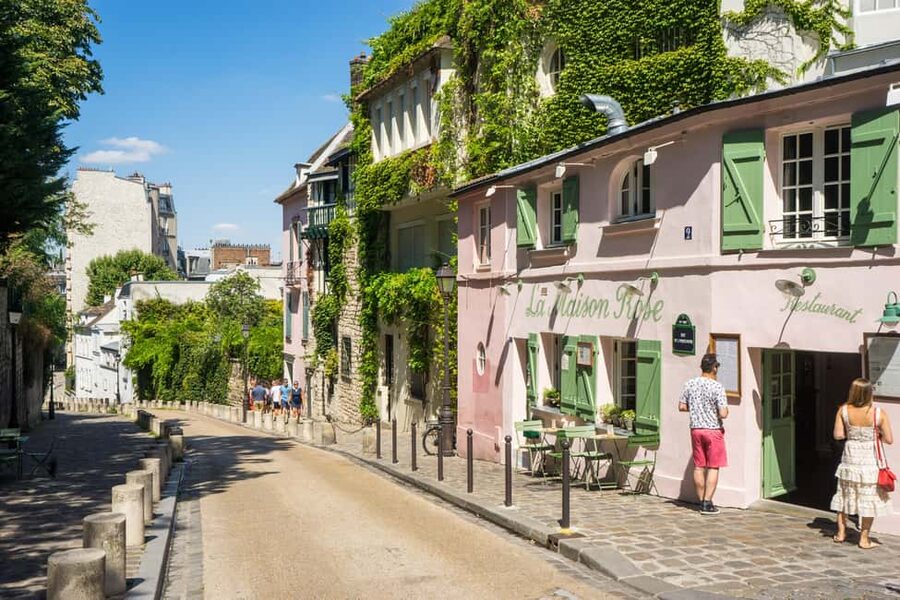
- Hidden corners off the busiest lanes, where Montmartre feels more like a neighborhood
- Place du Tertre explained so you know what you’re seeing (and why it matters)
- Lapin Agile and legendary artist links you can connect to the streets in front of you
- Vigne du Clos Montmartre adds a surprising stop that breaks up the postcard views
Why Montmartre works best with a German-speaking local
Montmartre can feel like a theme park if you only chase the famous skyline shots. What makes this tour worth it is the human scale: a local guide helps you read the neighborhood like a storybook, from cafés and studios to the “how did this become famous?” moments.
You’ll also get the advantage of a guide who can answer the questions people usually swallow. One group even noted how their guide handled heavy rain without losing the thread—so you’re not stuck “waiting until the weather improves,” you’re still getting value.
Finally, you’re dealing with an actual walking route that stays in the area. That matters here because Montmartre is all slopes, steps, and small turns. Having someone set the pace keeps your energy for the sights that really count.
Keep climbing: more of the Montmartre hill
- Montmartre Hidden Gems and Scenic Highlights Walking Tour
★ 5.0 · 2,684 reviews - Montmartre Hill French Gourmet Food and Wine Tasting Walking Tour
★ 5.0 · 2,588 reviews - Paris: Montmartre Highlights Walking Tour with a Local Guide
★ 4.9 · 2,318 reviews - Paris: Montmartre Cheese, Wine & Pastry Guided Walking Tour
★ 4.8 · 2,255 reviews
Meeting at Blanche and setting the right 2-hour pace
You start at 1 Pl. Blanche, at the Blanche metro station (M2). The meeting point is the small traffic island in front of the Moulin Rouge cabaret, and your guide carries a bag with a HelpTourists logo.
From the start, you’ll know this tour is built for clarity. Two hours is long enough to get meaning out of Montmartre, but short enough that you won’t end up exhausted on the wrong side of the hill. It’s also ideal if you want a first look—then you can come back later on your own with a better sense of where you want to linger.
One practical thought: since it’s a walking tour, wear shoes you trust on cobblestones and steps. Montmartre loves to remind you you’re in Paris, not on a flat map.
Moulin Rouge to Moulin de la Galette: the show-world meets the hillside
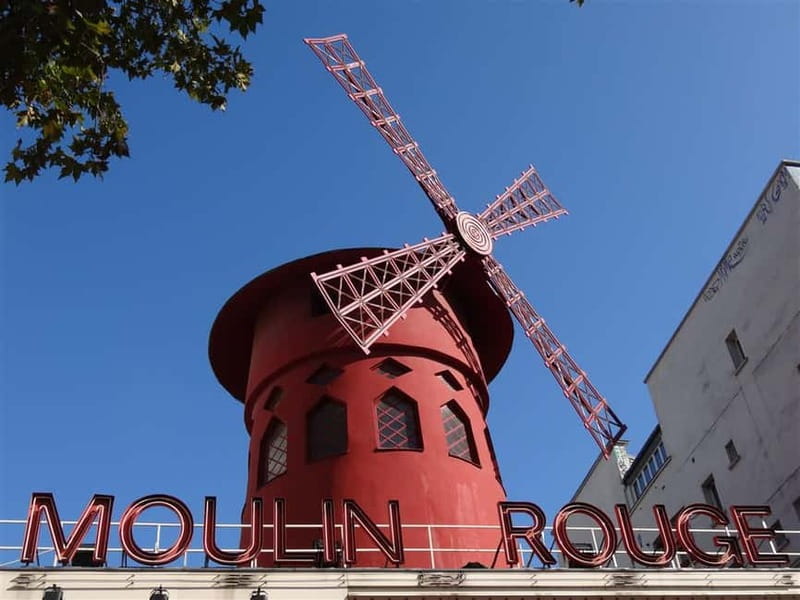
Your route kicks off with Moulin Rouge, one of those landmarks so loud it’s easy to forget it has layers. With a guide, you don’t just see the purple windmill—you learn how Montmartre’s nightlife image formed and how it overlaps with the artist quarter you’ll explore higher up.
Next comes Moulin de la Galette. This stop works well because it’s tied to the neighborhood identity: it’s not only a famous structure, it’s a symbol of how Montmartre became a magnet for creativity in the early 1900s. Even if you’ve seen it in photos, your guide helps you connect the dots to the hill’s reputation.
What to watch for on this stretch: don’t rush past viewpoints. Montmartre streets twist. When your guide calls your attention to a perspective, it’s usually because there’s a “look back” moment or a street alignment that explains how the area feels.
Place du Tertre: what the artists’ square is really about
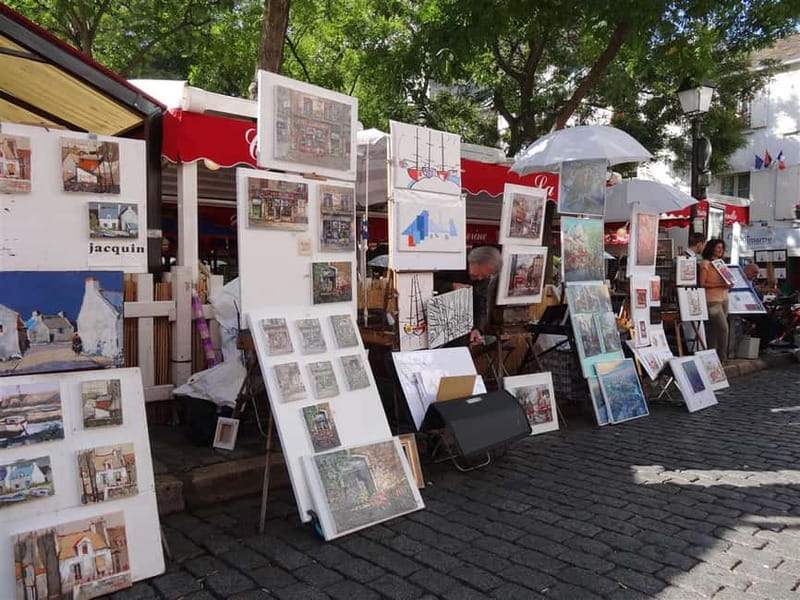
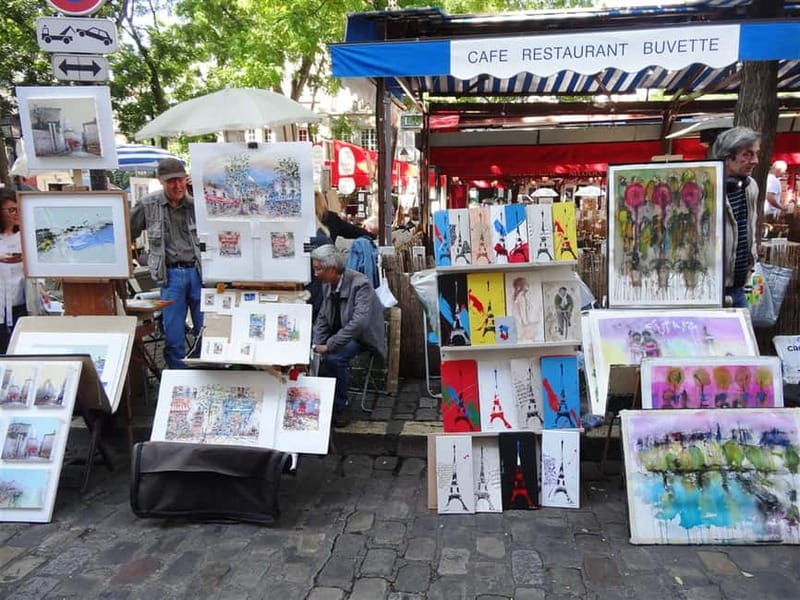
Then you reach Place du Tertre, the lively artists’ square where you’ll spot painters and the atmosphere that draws visitors in. The value here isn’t only the scene—it’s context. Your German-speaking guide can explain the role of the square and how this part of Montmartre became linked to art-making in the public imagination.
This is also a good place to slow down. If you want photos, do them, but also take a minute to listen and observe. The best Montmartre moments are often the small ones: how people move through the square, how conversations and street-life blend with the performances of it all.
A small reality check: Place du Tertre can get busy. The tour’s advantage is that you’re not stranded there with no plan. Your guide keeps things organized so you still feel like you experienced a neighborhood, not just a crowded stage.
Lapin Agile and the names you can connect to the streets
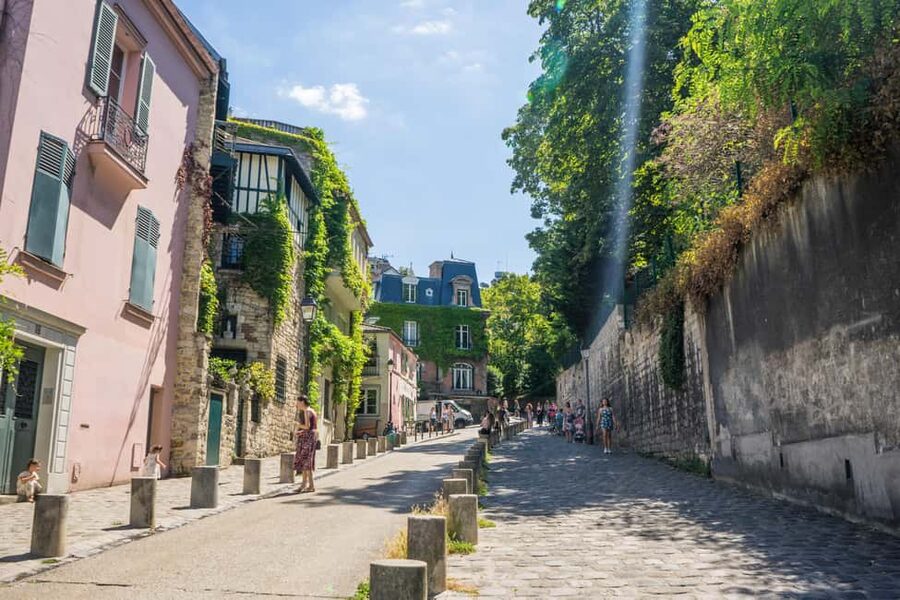
One of the most fun stops is Lapin Agile, a classic Montmartre cabaret name that helps you understand the area’s bohemian reputation. Cabarets like this didn’t just sell entertainment; they became part of the social engine that attracted artists, writers, and dreamers.
From there, the tour leans into the artist connections that still echo through Montmartre today—names like Picasso, Renoir, and Toulouse-Lautrec. You’re not studying a museum wall. Instead, you’re walking in the places where that creative energy became part of the local mythology.
If you’re the type who likes to ask “How did it start?” or “What’s the real story behind the reputation?”, this is where the guide time pays off. In one case, a guide named Lasse was praised for sharing both the origins and how people lived then versus now—exactly the kind of contrast that makes Montmartre feel less like trivia and more like culture.
Sacré-Cœur Basilica: the view, plus the details that matter
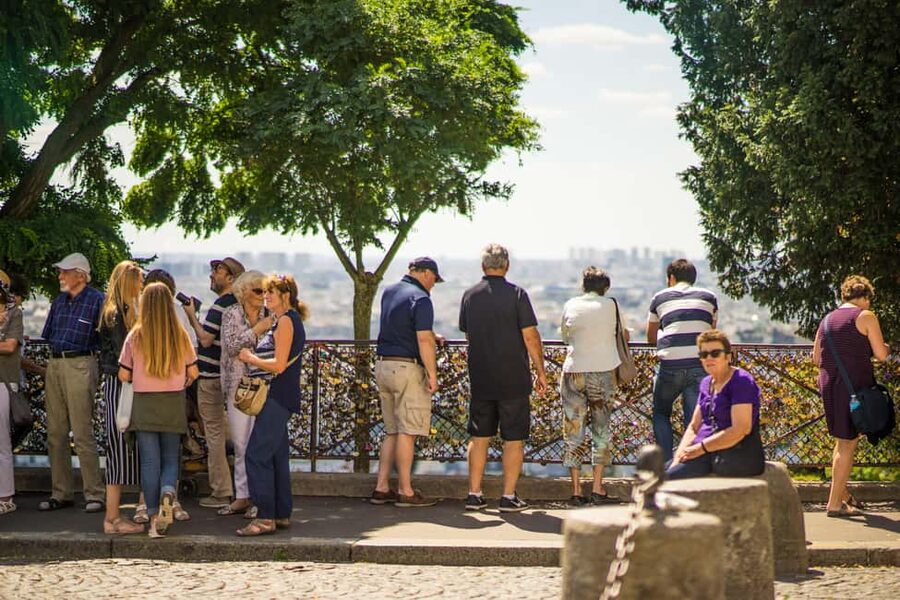
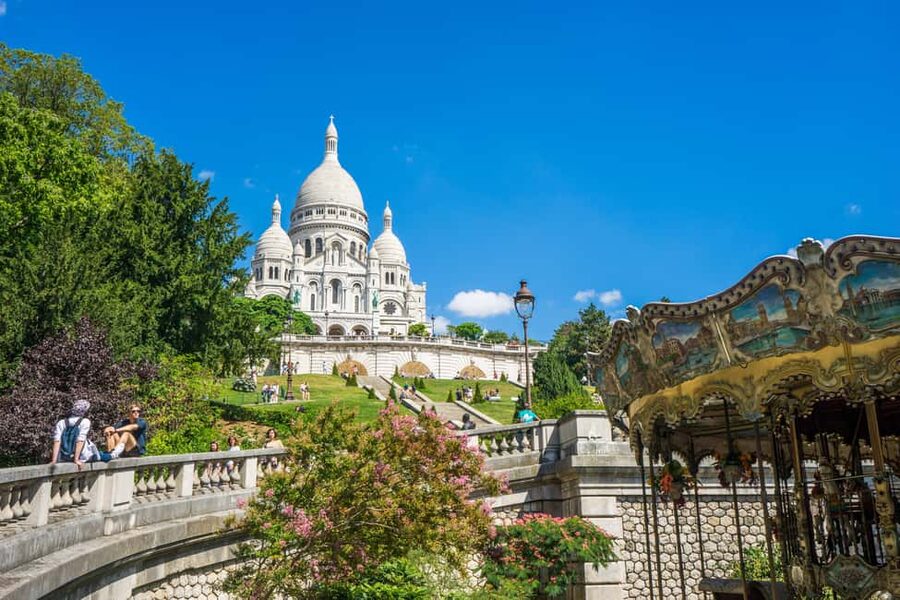
You end at Sacré-Cœur Basilica, the gleaming white landmark that sits high above the city. This is where you can finally breathe and look out over Paris.
But a good Montmartre guide doesn’t stop at postcard views. They help you notice things like the way Sacré-Cœur changes how the streets below feel, and why this site became so central to Montmartre’s identity. Even if you’ve seen it a hundred times online, being there with direction turns it from scenery into a moment with meaning.
Timing-wise, this stop also works well as a finish. You get your best city views when your legs can still handle a final push. Then you can decide what to do next: linger for photos, walk around the basilica area, or simply enjoy the quiet after two hours of motion.
Worth weighing up next to this Paris pick




Vigne du Clos Montmartre: a vineyard moment on a postcard hill
Near the end of the walk, you’ll visit Vigne du Clos Montmartre. It’s a refreshing shift from cafés, squares, and cabaret vibes. A vineyard stop adds variety, and it gives you another angle on how Montmartre isn’t only about art—it’s also about place and tradition in the middle of a dense city.
This stop also helps the route feel thoughtful. It breaks up the “always look up” rhythm of Montmartre with something different to observe, making the overall tour feel less repetitive.
If you like travel moments that surprise you—not just repeat what you already expected—this one is worth paying attention to rather than treating it as a quick photo stop.
Price and value: what $94 per person really buys
At $94 per person for a 2-hour walking tour, you’re paying for more than being led from A to B. You’re paying for a German-speaking guide who can translate Montmartre beyond the headlines, point out what you’d miss, and answer questions about how the area works.
Also, this isn’t a “transport included” experience. There’s no food, no drinks, and entrance fees aren’t included—so your costs stay predictable, and you keep flexibility on snacks or optional visits. The trade-off is clear: you’re buying guidance and time on foot, not comfort add-ons.
Is it a bargain? It’s not the cheapest way to Montmartre, but it is a smart value if you want stories, not just sights. In a short visit, two hours with the right language guide can prevent the classic mistake: spending extra time later trying to catch up on context.
Who this German Montmartre tour is best for
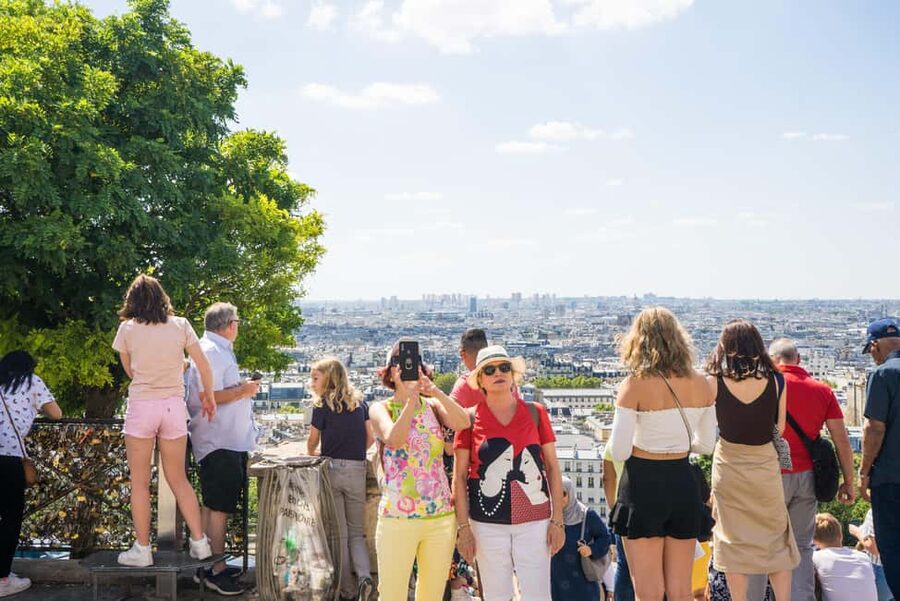
This tour is a strong match if you:
- want a guided walk with a logical route across Montmartre
- like asking questions and getting German answers, not reading everything yourself
- prefer fewer wasted minutes and more “I get it now” moments
- want a mix of famous spots (Moulin Rouge, Place du Tertre, Sacré-Cœur) and smaller stops (Lapin Agile, Clos Montmartre)
It may not be ideal if you don’t speak German, because the tour is only available in German. You’ll still see the places, of course, but the payoff comes from understanding the stories and details while you’re standing right there.
One more practical note: kids up to 8 years can participate for free, which makes it easier to bring younger travelers without ballooning the budget.
Should you book this Montmartre walk?
Book it if you want Montmartre with a brain attached. The combination of German-speaking guidance, an efficient route, and stops like Lapin Agile and Vigne du Clos Montmartre makes the hill feel more personal and less like a crowd line.
Skip it (or choose another language) if German isn’t workable for you. Because this tour leans on interpretation and conversation, not just sight-seeing, language comfort is the biggest deciding factor.
If you’re deciding now: pick this when you want a solid orientation in a limited time window—and when you’ll actually use the guide time to ask questions. That’s when the price starts to feel less like a cost and more like a shortcut to understanding.
FAQ
How long is the Paris Montmartre tour in German?
It’s a 2-hour walking tour.
Where is the meeting point?
You meet at Blanche metro station (M2), on the small traffic island in front of the Moulin Rouge cabaret.
Where does the tour finish?
The tour finishes at the Basilica of the Sacred Heart of Paris (Sacré-Cœur).
Is the tour walking only?
Yes, it’s a walking tour.
What language is the guide?
The tour is only available with a German-speaking guide.
Is this tour private?
Yes, it’s listed as a private group.
What is included in the price?
A walking tour and a tour guide are included.
What is not included?
Food, drinks, and entrance fees are not included.
Can kids join for free?
Children up to 8 years can participate for free.
Is free cancellation available?
Yes, you can cancel up to 24 hours in advance for a full refund.
More Tours in Paris
- Paris: Louvre Guided Tour with Reserved Access & Boat Cruise
★ 4.3 · 16,353 reviews - Paris: Big Bus Hop-On Hop-Off Tour with Optional Cruise
★ 4.4 · 13,279 reviews - Louvre Museum Masterpieces Guided Tour with Access
★ 4.5 · 12,023 reviews - Versailles: Skip-the-Line Tour of Palace and Gardens Access
★ 4.7 · 10,429 reviews - Paris: Louvre Overview, Exploration tour and Reserved Entry
★ 4.1 · 10,145 reviews
More Tour Reviews in Paris
- Paris: 1-Hour Seine Cruise departing from the Eiffel Tower
★ 4.4 · 77,472 reviews - Paris: Louvre Museum Timed-Entrance Ticket
★ 4.6 · 71,977 reviews - Disneyland® Paris 1-Day Ticket
★ 4.6 · 49,412 reviews - Paris: Versailles Palace and Gardens Full Access Ticket
★ 4.6 · 41,579 reviews - Paris: Arc de Triomphe Rooftop Tickets
★ 4.6 · 34,264 reviews
More of the Montmartre Hill
- Montmartre Hidden Gems and Scenic Highlights Walking Tour
★ 5.0 · 2,684 reviews - Montmartre Hill French Gourmet Food and Wine Tasting Walking Tour
★ 5.0 · 2,588 reviews - Paris: Montmartre Highlights Walking Tour with a Local Guide
★ 4.9 · 2,318 reviews - Paris: Montmartre Cheese, Wine & Pastry Guided Walking Tour
★ 4.8 · 2,255 reviews - The Secrets of Montmartre Walking Tour
★ 4.8 · 1,258 reviews
Fresh off the review desk in Paris
- Secrets of Paris Bike Tour in English or Dutch★ 5.0 · 5 reviews
- Paris: Mont Saint-Michel Day Tour with Chinese Tour Guide★ 5.0 · 5 reviews
- Private Street Art 2-Hour Guided Tour in Paris★ 4.5 · 5 reviews
- Orsay Museum Tour: 2h Highlights (Private & Small Group)★ 5.0 · 5 reviews
- Discover Paris in electric golf carts★ 4.0 · 5 reviews
- Paris Private Boat Tour with your own Captain Guide★ 5.0 · 5 reviews
Montmartre Tours, compared.
 ★ 5.0Montmartre Hidden Gems and Scenic Highlights Walking TourFrom $382,684 reviews
 ★ 5.0Montmartre Hill French Gourmet Food and Wine Tasting Walking TourFrom $1452,588 reviews
 ★ 4.9Montmartre Highlights Walking Tour with a Local GuideFrom $232,318 reviews
 ★ 4.8Montmartre Cheese, Wine & Pastry Guided Walking TourFrom $1272,255 reviews
The Secrets of Montmartre Walking TourFrom $331,258 reviews
★ 4.8Montmartre Cheese, Wine & Pastry Guided Walking TourFrom $1272,255 reviews
The Secrets of Montmartre Walking TourFrom $331,258 reviews
 ★ 4.1Sacré-Coeur and Montmartre Tour with Expert GuideFrom $281,027 reviews
 ★ 5.0Private Montmartre Food Tour with Wine, Cheese & PastriesFrom $3021,027 reviews
 ★ 5.0Paris Montmartre Food Tour – A Full French Meal by Do Eat BetterFrom $95877 reviews
Browse the lists this tour appears in