
Reviewed · MONTMARTRE TOURS
Paris: Montmartre Private Guided Walking Tour
Montmartre can feel like a postcard, but this walk is the stories part. In just 2 hours with a private guide, I love how you trace the district’s path from seedier side-streets to the stylish, bohemian center it became. Two moments I really liked were climbing Rue Lepic while hearing how art movements started there, and then ending with the kind of cabaret-and-artist chatter that makes places like Lapin Agile feel personal.
One thing to consider: you are walking uphill around Montmartre (including that Rue Lepic climb), so bring comfortable shoes and expect some effort even on a short tour.
In This Review
- Key things to look forward to
- Meeting at Metro Blanche and getting your bearings
- Rue Lepic to Sacré-Cœur: why this hill matters
- Metro Blanche to Moulin Rouge: cabaret history without the sugarcoat
- Place du Tertre: the village feeling inside a metropolis
- The vineyard stop: Vigne de Montmartre in the middle of sightseeing
- Lapin Agile: struggling artists, writers, and Picasso in the air
- Picasso’s drinking dens and Montmartre’s uneven edges
- Price and value for a private 2-hour Montmartre walk
- Who should book this tour (and who should skip it)
- Should you book this Montmartre private guided walking tour?
- FAQ
- How long is the Montmartre private guided walking tour?
- Where do we meet the guide?
- Is this tour private?
- What languages are available for the guide?
- Is food or drinks included?
- Does the tour run in bad weather?
Key things to look forward to
- Rue Lepic on foot: an ancient street tied to how Paris art ideas took shape
- Metro Blanche to famous show stops: landmarks like Moulin Rouge and Moulin de la Galette
- Place du Tertre village charm: street artists and that unmistakable Montmartre scene
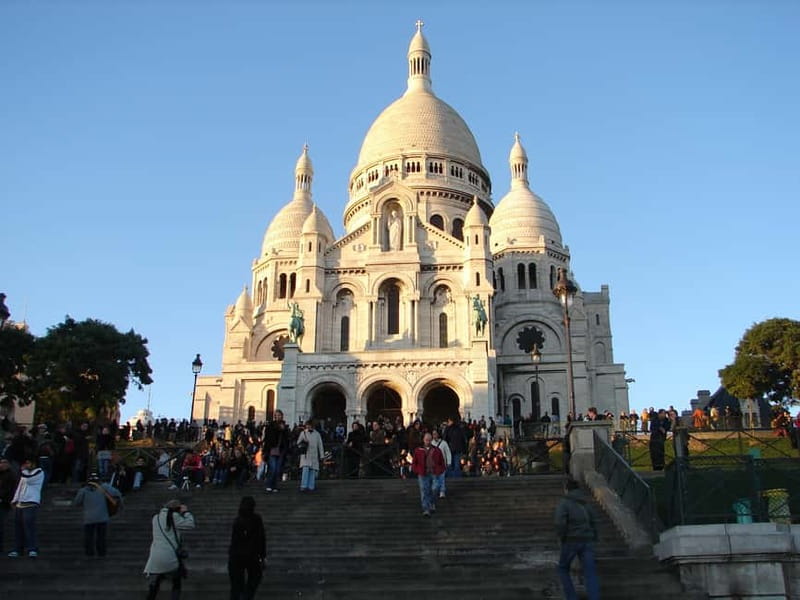
- Sacre-Cœur views on the way: the white façade is a key photo moment
- Vigne de Montmartre: a vineyard stop that adds a surprising twist to the neighborhood
- Lapin Agile cabaret with artist stories: a hangout linked to Picasso and Modigliani
Meeting at Metro Blanche and getting your bearings
The tour starts right by the exit of Metro Blanche. Your guide will be carrying a red canvas tote bag, which makes it easy to spot them quickly. This matters because Montmartre can be a bit of a maze when you’re on your own; starting near a clear landmark gives you a smooth first step.
Your guide is the main point here. The tour is private, and the format is a walking conversation: you move from place to place and the history clicks into place as you go. I also like that the guides are offered in multiple languages (English, French, and Serbo-Croatian), so you’re more likely to find one that matches your comfort level.
Based on the guide names that show up in the feedback—people like Isabella and Boris—the tone seems to land in the sweet spot: fun, informative, and not just a list of sights.
Keep climbing: more of the Montmartre hill
- Montmartre Hidden Gems and Scenic Highlights Walking Tour
★ 5.0 · 2,684 reviews - Montmartre Hill French Gourmet Food and Wine Tasting Walking Tour
★ 5.0 · 2,588 reviews - Paris: Montmartre Highlights Walking Tour with a Local Guide
★ 4.9 · 2,318 reviews - Paris: Montmartre Cheese, Wine & Pastry Guided Walking Tour
★ 4.8 · 2,255 reviews
Rue Lepic to Sacré-Cœur: why this hill matters
Montmartre’s big beauty is that you don’t just see it—you climb through it. The tour includes a climb along ancient Rue Lepic, and that street is more than a scenic lane. It’s presented as one of the places where Paris art ideas and movements began to take root, long before the area became a tourist stage.
As you walk, you’ll also get an eye for the neighborhood’s contrasts. The story you hear includes the idea of lavish houses sitting near run-down parts of town. That kind of detail changes how you look at the architecture: you start seeing the layers, not just the postcard façade.
Then comes the Sacré-Cœur moment. The plan includes the white façade of Sacre Coeur, and it’s built into the route enough that it feels earned, not random. Even if you’ve seen photos, standing near it after climbing and hearing the area’s transformation makes it hit differently.
Metro Blanche to Moulin Rouge: cabaret history without the sugarcoat
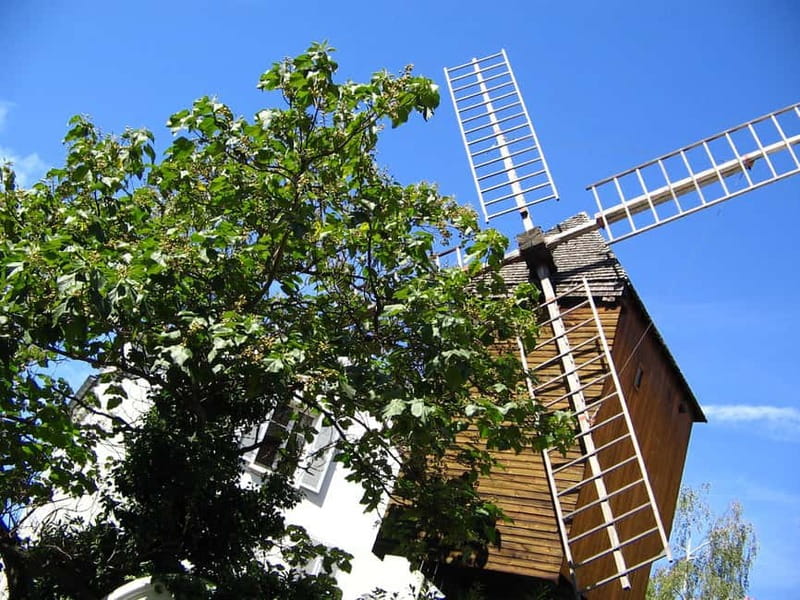
Montmartre is famous for showbiz, but the tour doesn’t treat it like pure glamour. You’ll walk past or stop for landmark monuments tied to the can-can era, including Metro Blanche (formerly Maison Blanche), Moulin Rouge, and Moulin de la Galette.
What I like about this part is the contrast in the stories. You’re not only hearing about famous venues; you’re also hearing about what was going on around them—things like illegal alcohol and the early, controversial world of dancers the city didn’t want to talk about. That angle helps you understand why these places gained their reputation in the first place.
Also, having a guide matters more than you’d think here. The streets look straightforward, but the meaning isn’t. With a local guide in front of you, you can connect the dots between the physical locations and the social history.
If you care about the evolution of Paris nightlife—how art, entertainment, and rules collided—this portion gives you that picture fast.
Place du Tertre: the village feeling inside a metropolis
At Place du Tertre, the tour shifts tone. This is where Montmartre feels like a village, even though you’re in the middle of a major city. The focus here is the square’s charm and the presence of street artists.
This is also a practical stop. It’s a good place to pause, look around, and get your bearings. When you’re coming down from hills and passing major landmarks, a square like this acts like a mental reset. You can take a breath, watch the art scene, and then keep moving with a clearer sense of where you are.
If you like the idea of seeing art made in real time (not just in museums), this stop is one of the more satisfying parts of a short walking tour. It’s also where the neighborhood’s personality feels most current.
The vineyard stop: Vigne de Montmartre in the middle of sightseeing
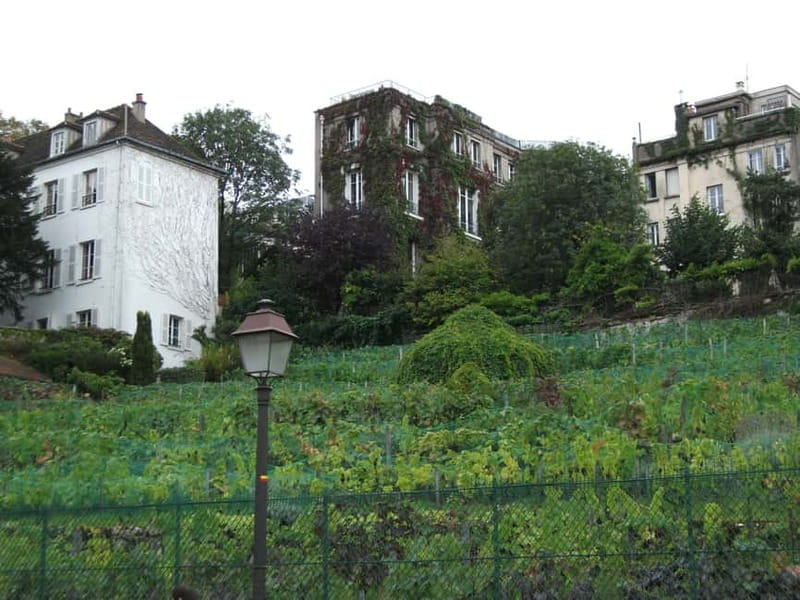
Montmartre has a side that surprises people: the vineyards, including a stop for Vigne de Montmartre. It’s easy to assume this area is only buildings and shows. A vineyard stop breaks that assumption in a good way.
Even without turning it into a wine lecture, the value is in the perspective. You start seeing Montmartre as more than entertainment and viewpoints. There’s a continuity here: a place that stayed connected to production and local life even as it became famous for art and nightlife.
This vineyard moment also balances the tour. After cabarets and stories that sound like they belong to old newspapers, the vineyard stop gives you something quieter to look at and a different kind of context for the district.
Lapin Agile: struggling artists, writers, and Picasso in the air
The tour includes a visit to Lapin Agile cabaret, and this is where the “why this place mattered” stories land hardest.
You’ll hear that it was a favored spot among struggling artists and writers, including Picasso and Modigliani. That list matters because it explains Montmartre’s pull: it wasn’t only for the already-famous. It helped make room for people who were still building their careers and reputations.
I like that the tour frames Lapin Agile as a meeting point for creative types, not just a photo stop. When you connect a location to the kind of people who spent time there, you walk around with a different mindset. It’s the difference between seeing a cabaret sign and understanding the scene behind it.
This is also one of the stops where a good guide makes the biggest difference. The reviews highlight guides who are both informative and fun—people like Isabella being called out for being just fabulous and easy to enjoy, and Boris being praised for cultural knowledge. That’s exactly the kind of energy that fits a place like Lapin Agile.
Worth weighing up next to this Paris pick




Picasso’s drinking dens and Montmartre’s uneven edges
One of the tour’s main themes is the district’s past reputation. You’ll hear about favorite drinking dens of Picasso and more, plus the darker or rougher edges that existed alongside the later charm.
I think this theme is valuable because it prevents Montmartre from turning into a single-note story. The area became fashionable, yes. But it also had a reputation for rule-breaking, loud nights, and people living close to the edge—at least in the early days people remember.
There’s also something reassuring about the route design. In a short, guided walk, you don’t have to do the sorting yourself. You get a planned sequence that moves from nightlife landmarks to squares and then into quieter corners like the vineyard and cabaret hangout. The result feels more like a guided understanding than a checklist.
Price and value for a private 2-hour Montmartre walk
The price is $176 per person for a 2-hour private guided walking tour, with the guide included and no food or drinks. On paper, that’s not the cheapest way to see Montmartre. But here’s where the value can click for you:
- Private time: you’re not stuck in a big group pace. You can absorb details at a comfortable speed.
- Guide-driven storytelling: the standout parts here are the explanations—Rue Lepic’s art roots, cabaret history, and why Lapin Agile mattered. A great guide turns streets into context.
- Tight route in a short window: two hours is ideal if you want key highlights (Rue Lepic, Sacré-Cœur area, Place du Tertre, Moulin Rouge area, cabarets) without spending half a day wandering.
If you’re comparing it to cheaper group tours, the key tradeoff is flexibility and attention. If you want lots of personal back-and-forth, and you’d rather have fewer stops explained well, this price can feel more fair.
The no-food detail is important too. Since drinks and snacks aren’t included, you’ll want to plan your timing. If you’re heat-sensitive or rain-sensitive, bring water and keep your comfort in mind.
Who should book this tour (and who should skip it)
I’d book this if:
- You want a guided Montmartre that explains how the neighborhood changed over time.
- You care about the art world links, especially the idea that Rue Lepic and places like Lapin Agile connect to famous names such as Picasso and Modigliani.
- You prefer walking with a guide rather than doing everything solo.
I’d think twice if:
- You don’t handle uphill walking well. The route includes a climb on Rue Lepic, and Montmartre hills are real.
- You’re hoping for a tour that includes a meal. This one doesn’t include food or drinks.
Should you book this Montmartre private guided walking tour?
If your goal is to make Montmartre feel coherent—history, art links, cabaret culture, and the village square energy—then yes, I think it’s a solid choice. The strongest selling point is the guided storytelling at multiple levels: the controversies around nightlife, the art movement connections on Rue Lepic, and the creative hangout vibe at Lapin Agile.
Just go in with the right expectations. It’s two hours on foot, rain or shine, with no food provided. Bring good shoes, plan for the hill, and come ready to listen. If you do that, you’ll leave with a Montmartre that feels like more than a view.
FAQ
How long is the Montmartre private guided walking tour?
The tour lasts 2 hours.
Where do we meet the guide?
Meet your guide by the exit of Metro Blanche. The guide will be carrying a red canvas tote bag.
Is this tour private?
Yes. It’s listed as a private group.
What languages are available for the guide?
The tour offers live guiding in English, French, and Serbo-Croatian.
Is food or drinks included?
No. Food and drinks are not included.
Does the tour run in bad weather?
The tour runs rain or shine. You also have free cancellation up to 24 hours in advance for a full refund, and you can use reserve now & pay later to keep plans flexible.
More Tours in Paris
- Paris: Louvre Guided Tour with Reserved Access & Boat Cruise
★ 4.3 · 16,353 reviews - Paris: Big Bus Hop-On Hop-Off Tour with Optional Cruise
★ 4.4 · 13,279 reviews - Louvre Museum Masterpieces Guided Tour with Access
★ 4.5 · 12,023 reviews - Versailles: Skip-the-Line Tour of Palace and Gardens Access
★ 4.7 · 10,429 reviews - Paris: Louvre Overview, Exploration tour and Reserved Entry
★ 4.1 · 10,145 reviews
More Tour Reviews in Paris
- Paris: 1-Hour Seine Cruise departing from the Eiffel Tower
★ 4.4 · 77,472 reviews - Paris: Louvre Museum Timed-Entrance Ticket
★ 4.6 · 71,977 reviews - Disneyland® Paris 1-Day Ticket
★ 4.6 · 49,412 reviews - Paris: Versailles Palace and Gardens Full Access Ticket
★ 4.6 · 41,579 reviews - Paris: Arc de Triomphe Rooftop Tickets
★ 4.6 · 34,264 reviews
More of the Montmartre Hill
- Montmartre Hidden Gems and Scenic Highlights Walking Tour
★ 5.0 · 2,684 reviews - Montmartre Hill French Gourmet Food and Wine Tasting Walking Tour
★ 5.0 · 2,588 reviews - Paris: Montmartre Highlights Walking Tour with a Local Guide
★ 4.9 · 2,318 reviews - Paris: Montmartre Cheese, Wine & Pastry Guided Walking Tour
★ 4.8 · 2,255 reviews - The Secrets of Montmartre Walking Tour
★ 4.8 · 1,258 reviews
Fresh off the review desk in Paris
- Secrets of Paris Bike Tour in English or Dutch★ 5.0 · 5 reviews
- Paris: Mont Saint-Michel Day Tour with Chinese Tour Guide★ 5.0 · 5 reviews
- Private Street Art 2-Hour Guided Tour in Paris★ 4.5 · 5 reviews
- Orsay Museum Tour: 2h Highlights (Private & Small Group)★ 5.0 · 5 reviews
- Discover Paris in electric golf carts★ 4.0 · 5 reviews
- Paris Private Boat Tour with your own Captain Guide★ 5.0 · 5 reviews
Montmartre Tours, compared.
 ★ 5.0Montmartre Hidden Gems and Scenic Highlights Walking TourFrom $382,684 reviews
 ★ 5.0Montmartre Hill French Gourmet Food and Wine Tasting Walking TourFrom $1452,588 reviews
 ★ 4.9Montmartre Highlights Walking Tour with a Local GuideFrom $232,318 reviews
 ★ 4.8Montmartre Cheese, Wine & Pastry Guided Walking TourFrom $1272,255 reviews
The Secrets of Montmartre Walking TourFrom $331,258 reviews
★ 4.8Montmartre Cheese, Wine & Pastry Guided Walking TourFrom $1272,255 reviews
The Secrets of Montmartre Walking TourFrom $331,258 reviews
 ★ 4.1Sacré-Coeur and Montmartre Tour with Expert GuideFrom $281,027 reviews
 ★ 5.0Private Montmartre Food Tour with Wine, Cheese & PastriesFrom $3021,027 reviews
 ★ 5.0Paris Montmartre Food Tour – A Full French Meal by Do Eat BetterFrom $95877 reviews
Browse the lists this tour appears in