
Reviewed · MONTMARTRE TOURS
Private Walking Tour of Montmartre and Sacré-Cœur Visit
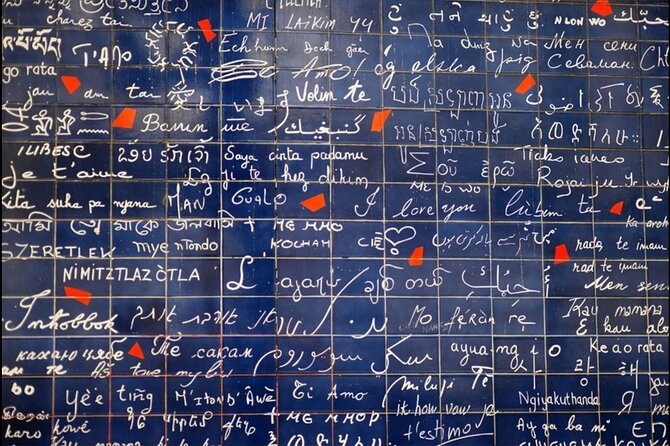
Montmartre rewards you fast, even before Sacré-Cœur. This private, English-guided walk strings together cabaret lore, real artist hangouts, and postcard streets, then finishes with a sweeping view from the basilica area. I especially love how the route makes art history feel tangible at stops like Le Bateau-Lavoir, not like a textbook. I also like the mix of big sights and small photo moments, including the artwork that spells I love you in 250 languages. One catch: you’ll be climbing for about 2 hours, and parts can feel steep, so wear grippy shoes.
If you’re the type who enjoys street-level details, this tour fits you. You’ll get chances to watch performers and portrait artists around the neighborhood’s main squares, plus built-in time for stops that are famous because people keep using them—not because they’re museum-quiet. Dome access at Sacré-Cœur costs extra (€7), so if you want the top views, budget for that.
In This Review
- Quick highlights you’ll actually care about
- Why this Montmartre + Sacré-Cœur walk makes sense in 2 hours
- Starting at 5 Pl. Blanche: the easiest way to get your bearings
- Moulin Rouge area to Van Gogh-linked streets: Belle Époque to real artists
- The Art Nouveau metro entrance and “working” Montmartre streets
- Le Bateau-Lavoir: where modern art starts feeling real
- Le Moulin de la Galette: the windmill legacy in walking distance
- Le Passe-Muraille and Place Dalida: oddball Paris, done right
- La Petite Maison Rose and Place du Tertre: the streets love a camera
- The Sacré-Cœur finish: basilica views, plus the dome option
- Price and value: what $118.63 gets you (and what it doesn’t)
- Tour pace and what to wear: the one drawback that matters
- Reliability note: one guide no-show case, plus how to protect yourself
- Should you book this Montmartre walk to Sacré-Cœur?
- FAQ
- How long is the Montmartre and Sacré-Cœur private walking tour?
- What language is the tour offered in?
- Is this tour really private?
- What’s included, and what costs extra?
- Do I need tickets for places like Le Bateau-Lavoir or Le Moulin de la Galette?
- How physically demanding is the walk?
Quick highlights you’ll actually care about
- A Sacré-Cœur finish with panoramic payoff: the walk ends right at the basilica so you can take your time
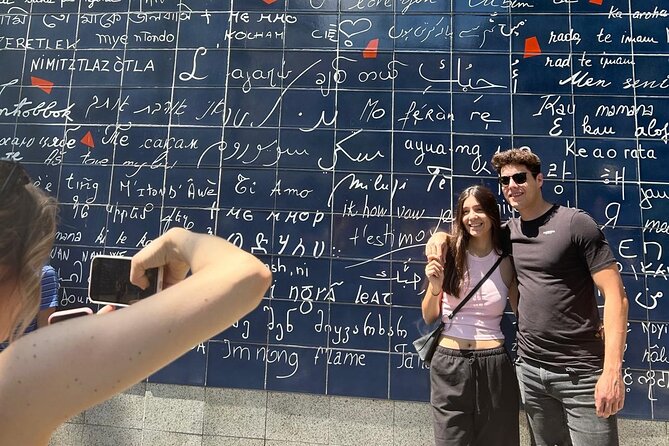
- The I love you wall in 250 languages: a fast, fun photo stop for couples and groups
- Artist sites tied to Picasso’s world: Le Bateau-Lavoir is a real name to remember
- Quirky Paris landmarks: optical illusion, Dalida’s square, and the pink Maison Rose
- Photo-friendly stops every few minutes: built for easy framing, not just moving on
- Optional wine tasting upgrade: if you want the evening to linger a bit longer
Why this Montmartre + Sacré-Cœur walk makes sense in 2 hours
Montmartre can feel like a maze if you show up with no plan. This tour gives you a clear route that climbs through the neighborhood’s most memorable corners without turning into a full-day endurance test. At about 2 hours, it’s long enough to feel like you covered the essentials, but short enough that you’re not exhausted before the payoff at Sacré-Cœur.
You also get more than “here’s a view” sightseeing. The stops are chosen to connect themes: Belle Époque nightlife, the street art and modern-art circles that grew up here, and the neighborhood’s ongoing tradition of artists working in public. That’s why it feels like you’re walking through layers of Paris rather than checking boxes.
Best of all, it’s private in the sense that only your group participates. That matters when you want questions answered, pace control, or time to take photos without feeling rushed by a big crowd.
Keep climbing: more of the Montmartre hill
- Montmartre Hidden Gems and Scenic Highlights Walking Tour
★ 5.0 · 2,684 reviews - Montmartre Hill French Gourmet Food and Wine Tasting Walking Tour
★ 5.0 · 2,588 reviews - Paris: Montmartre Highlights Walking Tour with a Local Guide
★ 4.9 · 2,318 reviews - Paris: Montmartre Cheese, Wine & Pastry Guided Walking Tour
★ 4.8 · 2,255 reviews
Starting at 5 Pl. Blanche: the easiest way to get your bearings
The meeting point is 5 Pl. Blanche, 75009 Paris. From there, you’ll walk into the Montmartre climb—so you’re not stuck trying to guess where to begin once you’re already uphill. Since the tour ends at Sacré-Cœur (35 Rue du Chevalier de la Barre, 75018 Paris), you get a natural downhill option for later exploration if you want it (depending on your next plans).
One small practical point: arrive a few minutes early because Montmartre streets can be busy and confusing. If you’re traveling with a smartphone-only setup, you’ll also appreciate the mobile ticket style approach described for this experience—less paper fuss, more time watching your feet as the terrain tilts upward.
Moulin Rouge area to Van Gogh-linked streets: Belle Époque to real artists
The early part of the walk focuses on Montmartre’s reputation as a place where Paris got playful and a little wild. You’ll pass the area associated with the world-famous cabaret that helped define the Belle Époque mood—extravagant shows, bohemian nights, and a long-running creative reputation.
Then the tour shifts to the neighborhood’s calmer, older street life. You’ll spend time on a charming winding street lined with cafés, bakeries, and shops, tied to Vincent Van Gogh’s time in the area. The value here isn’t just “Van Gogh lived here.” It’s the way the streets still feel like working neighborhoods where daily life continues around the artistic legacy.
If you love street texture, you’ll notice how Montmartre changes character street by street—more residential and local-feeling as you keep climbing, until the neighborhood’s theatrical side returns in squares and viewpoints.
The Art Nouveau metro entrance and “working” Montmartre streets
Montmartre has plenty of postcard streets, but not all of them feel used. This part of the walk aims for the streets that still function like Paris streets: boutiques, bistros, and that distinctive Art Nouveau metro entrance you’ll spot along the way.
This is one of those moments where a guide can save you time. Instead of you guessing which alley is the right one, you get a route that naturally threads past elements that are recognizable but easy to miss if you’re scanning too fast. You also get built-in pauses, which matters on uneven pavement—your photos turn out better when you’re not rushing and your footing is stable.
Le Bateau-Lavoir: where modern art starts feeling real
Stop: Le Bateau-Lavoir is one of the strongest stops on the route. The story centers on the artists’ residence where names like Picasso and Modigliani are associated with living and working. What makes this worth your time is that the building’s setting fits the creative chaos the neighborhood is famous for: modest spaces, big ideas.
You’ll also hear about a major milestone tied to the Picasso connection—his work on Les Demoiselles d’Avignon is linked to this artistic atmosphere. Even if you’re not a deep art person, the takeaway lands: Montmartre wasn’t just scenery. It was where artists tried new ways of seeing.
A practical note: admission isn’t included at this stop. So if you want to go inside, you’ll pay separately. If you’re mainly after the story and the location context, the stop still works well.
Le Moulin de la Galette: the windmill legacy in walking distance
Next up is Le Moulin de la Galette, another stop that connects art to place. This was once a popular gathering spot for both artists and locals, and it inspired an Impressionist painting—Bal du moulin de la Galette by Pierre-Auguste Renoir.
This is the kind of location where you can look around and see why painters loved it. The interest isn’t only in the windmill name; it’s in the mix of open-air atmosphere and everyday social life. It’s also a good chance to slow down and compare what you’re seeing with what you’ve heard in art class.
As with the Bateau-Lavoir, admission isn’t included here. If you’re short on energy later, you can still enjoy the area without buying tickets.
Worth weighing up next to this Paris pick




Le Passe-Muraille and Place Dalida: oddball Paris, done right
Montmartre has a sense of humor, and this portion shows it.
Le Passe-Muraille is an optical illusion sculpture tied to a story by Marcel Aymé—the whole point is how you position yourself to make the effect work. This is ideal for a quick break in the climb because it’s fun without requiring much physical effort beyond standing and taking a few photos.
Then you hit Place Dalida, a tucked-away square for the singer Dalida. There’s a statue, and the legend about touching her bronze bust for good luck adds a warm, human layer to a spot that could otherwise feel too formal. It’s also a rare moment of calm, which helps when you’ve been walking and turning corners for a while.
This stop’s also marked as free, so it’s straightforward.
La Petite Maison Rose and Place du Tertre: the streets love a camera
At La Petite Maison Rose de Montmartre (noted as since 1920), you’ll see the iconic pink building tied to artists such as Picasso and Modigliani. Even if you don’t stop for entry, the exterior impression is part of why it’s famous—this is a street-level Paris memory.
Admission isn’t included here either, so treat it as a look-and-photo stop unless you choose to pay extra.
Then comes Place du Tertre, Montmartre’s famous square where painters set up their easels daily. This is where you’ll feel the neighborhood’s ongoing artistic tradition: you can watch portrait artists, see street performers, and grab photos in the middle of the scene—not outside it. If you want something more authentic than a souvenir shop, this is usually where you’ll find it.
The Sacré-Cœur finish: basilica views, plus the dome option
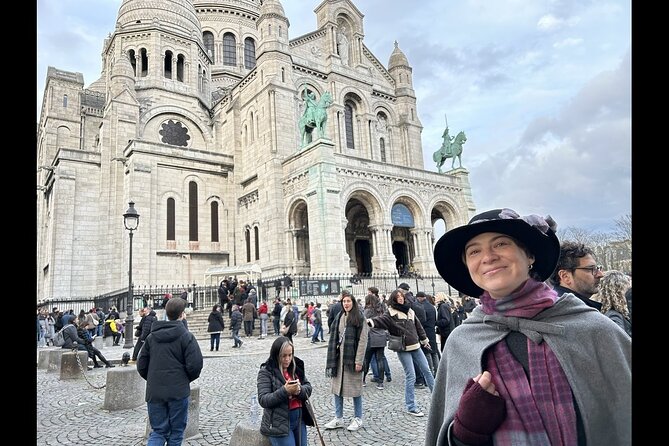
The grand finale is Basilique du Sacré-Cœur in Montmartre. The basilica itself is free to enter, so you can go inside and soak up the atmosphere. The big choice comes next: the dome access costs extra at €7.00 per person.
If you like heights and wide-angle views, the dome is the upgrade that makes sense. If you’re more interested in the interior and keeping the rest of your day relaxed, you can skip it and still leave happy. Either way, the tour ends in front of the basilica, so you’re not fighting time pressure while the view is calling your name.
One more practical thought: bring a layer. Sacré-Cœur sits high enough that breeze and cooler air can surprise you, even in mild weather.
Price and value: what $118.63 gets you (and what it doesn’t)
The tour is listed at $118.63 per person and runs about 2 hours. For Paris, that price makes more sense than it first appears because you’re not just buying “a walk.” You’re buying:
- a private group experience,
- an expert English guide who connects history to what you’re seeing,
- and a route built around major photo moments and multiple art-focused stops.
What’s not included is also clear. Tips are extra, and the €7 dome fee is extra if you want to reach the top. Also, admission tickets are marked as not included at several of the artist-related sites along the way. So your final cost depends on whether you choose those paid entries and the dome option.
As for timing, this tour is often booked ahead—on average about 37 days in advance. If you’re traveling in peak season or on a tight schedule, it’s worth securing your slot earlier rather than gambling.
Finally, there’s an optional wine tasting upgrade. If you’d like to turn the climb into something a bit more adult and slower-paced afterward, that’s likely your best add-on.
Tour pace and what to wear: the one drawback that matters
The description flags a moderate physical fitness level requirement. Translation: this is mostly an uphill hike, and parts can get steep. The good news is it’s paced as a series of short stops rather than a constant grind with no breaks.
Still, you should plan like it’s a hill walk:
- wear shoes with grip,
- keep water handy if it’s warm,
- and expect that stairs and slopes will slow you down more than you think.
If you’re sensitive to hills or have mobility concerns, this might be the wrong kind of Montmartre tour. If you’re comfortable walking through city streets and can handle uneven pavement, you’ll likely find the route very manageable.
Also, service animals are allowed, and the tour is near public transportation—so you’re not totally stuck if you want to reset your plans mid-day.
Reliability note: one guide no-show case, plus how to protect yourself
There’s one serious negative reported: a case where a guide reportedly didn’t show up, and the traveler had to improvise. That’s rare, but it’s the kind of failure that can ruin a day.
How you protect yourself is simple:
- keep your confirmation details handy,
- check the meeting point timing closely,
- and if you don’t see your guide within a reasonable window, contact the provider rather than waiting around.
Most of the feedback is strongly positive on guide quality and storytelling, including praise for guides like Ifi and Benedict for making Montmartre feel alive and answering questions patiently.
Should you book this Montmartre walk to Sacré-Cœur?
Book it if you want a focused Montmartre highlights route that mixes big landmarks with artist-world stops, without spending half a day commuting inside the neighborhood. The best fit is for first-timers who want structure, for couples who want easy photo moments (including the I love you wall), and for anyone who likes art history that stays connected to street life.
Skip or reconsider if you’re not comfortable with a steep uphill walk or if you know you don’t want any paid entries and the extra dome fee doesn’t appeal. In that case, you might be happier with a self-guided route—just be prepared to do more map work.
If you do book, choose good shoes, decide in advance whether you want the €7 Sacré-Cœur dome, and lean into the pauses. This tour works best when you treat it like a guided slow look at a neighborhood that’s been creating stories for generations.
FAQ
How long is the Montmartre and Sacré-Cœur private walking tour?
It runs about 2 hours (approx.).
What language is the tour offered in?
The tour is offered in English.
Is this tour really private?
Yes. It’s a private tour/activity, meaning only your group participates.
What’s included, and what costs extra?
Included are the walking tour of Montmartre, an expert guide, recommendations for local attractions and hidden gems, a visit to Sacré-Cœur Basilica, optional wine tasting, and plenty of photo opportunities. Not included are tips for the guide and the €7.00 per person fee to access the top/dome of Sacré-Cœur.
Do I need tickets for places like Le Bateau-Lavoir or Le Moulin de la Galette?
Admission tickets are marked as not included for several stops (including Le Bateau-Lavoir, Le Moulin de la Galette, and others listed with admission ticket not included). Place Dalida is listed as free.
How physically demanding is the walk?
The tour is noted for moderate physical fitness. Expect uphill walking and steeper sections.
More Tours in Paris
- Paris: Louvre Guided Tour with Reserved Access & Boat Cruise
★ 4.3 · 16,353 reviews - Paris: Big Bus Hop-On Hop-Off Tour with Optional Cruise
★ 4.4 · 13,279 reviews - Louvre Museum Masterpieces Guided Tour with Access
★ 4.5 · 12,023 reviews - Versailles: Skip-the-Line Tour of Palace and Gardens Access
★ 4.7 · 10,429 reviews - Paris: Louvre Overview, Exploration tour and Reserved Entry
★ 4.1 · 10,145 reviews
More Tour Reviews in Paris
- Paris: 1-Hour Seine Cruise departing from the Eiffel Tower
★ 4.4 · 77,472 reviews - Paris: Louvre Museum Timed-Entrance Ticket
★ 4.6 · 71,977 reviews - Disneyland® Paris 1-Day Ticket
★ 4.6 · 49,412 reviews - Paris: Versailles Palace and Gardens Full Access Ticket
★ 4.6 · 41,579 reviews - Paris: Arc de Triomphe Rooftop Tickets
★ 4.6 · 34,264 reviews
More of the Montmartre Hill
- Montmartre Hidden Gems and Scenic Highlights Walking Tour
★ 5.0 · 2,684 reviews - Montmartre Hill French Gourmet Food and Wine Tasting Walking Tour
★ 5.0 · 2,588 reviews - Paris: Montmartre Highlights Walking Tour with a Local Guide
★ 4.9 · 2,318 reviews - Paris: Montmartre Cheese, Wine & Pastry Guided Walking Tour
★ 4.8 · 2,255 reviews - The Secrets of Montmartre Walking Tour
★ 4.8 · 1,258 reviews
Fresh off the review desk in Paris
- Secrets of Paris Bike Tour in English or Dutch★ 5.0 · 5 reviews
- Paris: Mont Saint-Michel Day Tour with Chinese Tour Guide★ 5.0 · 5 reviews
- Private Street Art 2-Hour Guided Tour in Paris★ 4.5 · 5 reviews
- Orsay Museum Tour: 2h Highlights (Private & Small Group)★ 5.0 · 5 reviews
- Discover Paris in electric golf carts★ 4.0 · 5 reviews
- Paris Private Boat Tour with your own Captain Guide★ 5.0 · 5 reviews
Montmartre Tours, compared.
 ★ 5.0Montmartre Hidden Gems and Scenic Highlights Walking TourFrom $382,684 reviews
 ★ 5.0Montmartre Hill French Gourmet Food and Wine Tasting Walking TourFrom $1452,588 reviews
 ★ 4.9Montmartre Highlights Walking Tour with a Local GuideFrom $232,318 reviews
 ★ 4.8Montmartre Cheese, Wine & Pastry Guided Walking TourFrom $1272,255 reviews
The Secrets of Montmartre Walking TourFrom $331,258 reviews
★ 4.8Montmartre Cheese, Wine & Pastry Guided Walking TourFrom $1272,255 reviews
The Secrets of Montmartre Walking TourFrom $331,258 reviews
 ★ 4.1Sacré-Coeur and Montmartre Tour with Expert GuideFrom $281,027 reviews
 ★ 5.0Private Montmartre Food Tour with Wine, Cheese & PastriesFrom $3021,027 reviews
 ★ 5.0Paris Montmartre Food Tour – A Full French Meal by Do Eat BetterFrom $95877 reviews
Browse the lists this tour appears in