
Reviewed · MONTMARTRE TOURS
Small Group Walking Tour of Montmartre -10 people max
Paris runs on stories, and Montmartre is where they stack up. This walking tour threads art, religion, and neighborhood legends into a smooth 2.5-hour hill climb that feels like you’re walking with someone who actually lives here. With a max group size of 10, it’s built for questions, photos, and real conversation, not a rushed conveyor belt.
I especially like the way the route hits big-name sights without turning them into museum tours. You’ll pause for the church on stilts, the I love you wall, and the artist corners that connect to Picasso and later painters. It’s also nice that the pacing stays walkable, with lots of short stops instead of long dead stretches.
One thing to consider: it’s a moderate uphill walk, so comfortable shoes matter, especially if you’re not used to Paris hills.
In This Review
- Key highlights that make this tour work
- Montmartre starts at Place Pigalle (and why that matters)
- Pigalle history, then Eglise Saint-Jean on stilts
- Le Mur des Je t’aime: a small stop with big meaning
- Le Bateau-Lavoir: art history you can walk past
- Moulin de la Galette and the famous artists who showed up
- La petite maison rose (since 1920): photo stop with context
- Clos Montmartre vineyard: wine production in the middle of the city
- Au Lapin Agile: the legend stop you can actually picture
- Place du Tertre: where artists still gather
- Eglise Saint-Pierre de Montmartre: the Roman-era column
- Basilique du Sacre-Coeur: visit the inside, not only the outside
- What you’re really paying for: Sébastien’s approach
- Timing, pacing, and how to prepare for the hill
- Value check: is $60.34 a good deal?
- Who this tour fits best
- Should you book this Montmartre walking tour?
- FAQ
- Do I need to buy tickets for the stops?
- How long is the walk in total?
- What group size should I expect?
- What language is the tour offered in?
- Where does the tour start and end?
- Is the tour route suitable for everyone physically?
- Are service animals allowed?
- What if my plans change and I need to cancel?
Key highlights that make this tour work
- Sébastien leads the way: friendly, funny, and fluent in English, with stories that go beyond the stops.
- Small group size (10 max): easier questions, better photo moments, and a more personal feel.
- Stops packed with variety: Pigalle history, churches, art scenes, a working-style vineyard, and Sacré-Cœur inside.
- Lots of quick “pause and learn” moments: short time windows at each spot keep energy up.
- Local food help at the end: guide ideas for lunch, plus a recommendation that often saves time.
- Free admission listed for the tour stops: most sights you see are accessible without paying entry on the spot.
Montmartre starts at Place Pigalle (and why that matters)
You begin in the Pigalle (75018) area and the walk loops back to the same meeting point at the end. That matters because Montmartre is all about momentum: you want a route that gets you up the hill and brings you back without guesswork.
This tour runs about 2 hours 30 minutes, and it’s offered in English. You also get a mobile ticket, and the meeting point is near public transportation, which helps if you’re juggling metro lines and timing.
With up to 10 people, the guide can actually manage the group on narrow streets and stair steps. And based on the guide style (especially Sébastien), you’ll likely get time for photos and quick questions without feeling like you’re holding everyone up.
Keep climbing: more of the Montmartre hill
- Montmartre Hidden Gems and Scenic Highlights Walking Tour
★ 5.0 · 2,684 reviews - Montmartre Hill French Gourmet Food and Wine Tasting Walking Tour
★ 5.0 · 2,588 reviews - Paris: Montmartre Highlights Walking Tour with a Local Guide
★ 4.9 · 2,318 reviews - Paris: Montmartre Cheese, Wine & Pastry Guided Walking Tour
★ 4.8 · 2,255 reviews
Pigalle history, then Eglise Saint-Jean on stilts
First up is Place Pigalle, where you get context for what the area was like before and after Napoleon III. That kind of intro makes the rest of Montmartre click, because so much of the neighborhood’s look comes from layers of change over time.
Next comes Eglise de St Jean Montmartre, famous for being built on stilts. It’s the sort of detail you’d miss if you just walked past, and the tour keeps it short and focused—just enough time to look closely and understand what makes it unusual.
If you’re into architecture details, this is a strong start. If you just want big views fast, be aware the tour still spends real moments here—so you’re learning while you move, not only sightseeing from the street.
Le Mur des Je t’aime: a small stop with big meaning
Then you hit Le Mur des Je t’aime, the wall of “I love you” that was created in 2000 and written in many languages. It’s one of those spots that works even if you’re not a romantic-sentiment person, because the concept is simple and the execution is memorable.
This is also a good breathing point. You get a quick view, a quick story, and you’re back on the move—so you don’t feel like the tour is turning into stop-and-stand sightseeing.
Le Bateau-Lavoir: art history you can walk past
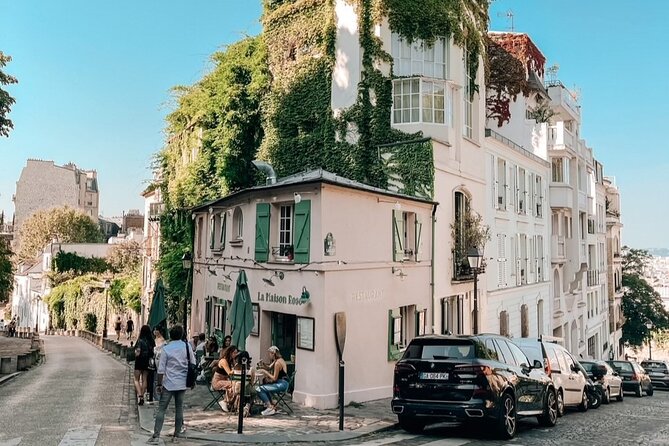
You pass Le Bateau-Lavoir, the artist studio where Picasso painted some of his most famous works. Even if you don’t know the dates or titles, the tour gives you enough framing to connect the neighborhood to the art scene that made Montmartre famous.
This stop is about the “in-between” feeling: not a formal gallery moment, but a streetscape where famous art history lives in the background. It’s a great way to make Montmartre feel less like a list of landmarks and more like a working creative district.
Moulin de la Galette and the famous artists who showed up
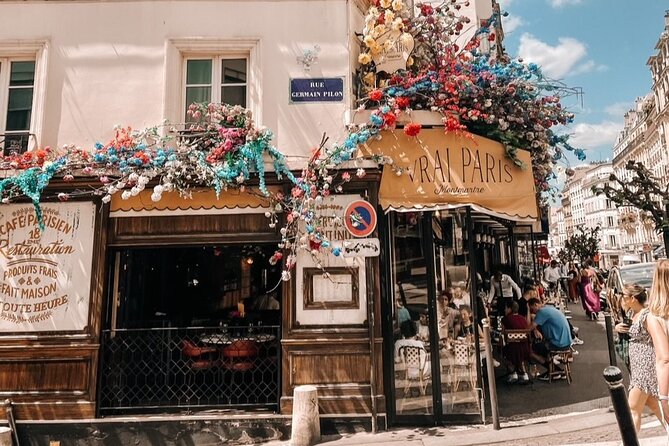
Next is Le Moulin de la Galette, where the tour sets the scene around the restaurant and the artists who frequented it. You’ll hear names like Renoir, Pissaro, and Van Gogh, and the connection to Renoir’s Bal du Moulin de la Galette makes it feel less abstract.
You won’t spend hours here, but you do get the story that turns a windmill image into something you can picture in your head. And because it’s a walk-through stop, it also works if you’re traveling with kids or anyone who gets antsy with long sightseeing sessions.
La petite maison rose (since 1920): photo stop with context
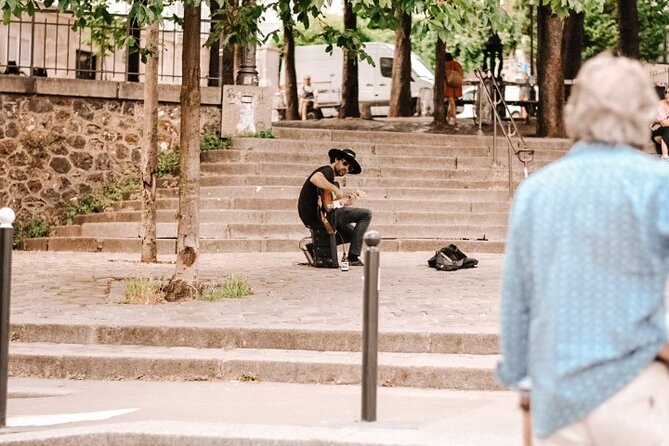
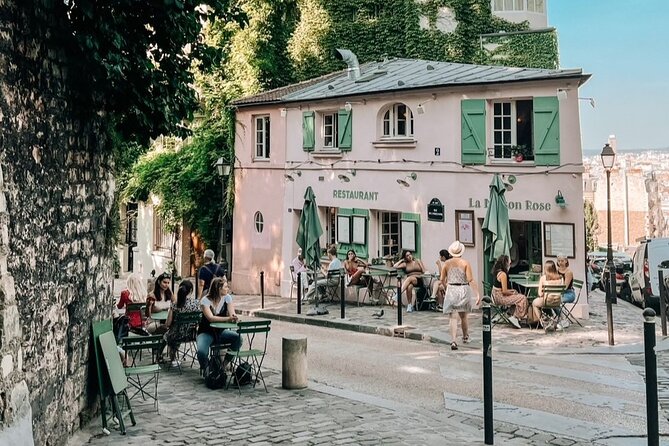
Then you see La Petite Maison Rose de Montmartre, a pink house that dates to since 1920. It’s a classic “stop and look” moment—easy to photograph, easy to remember—and the tour ties it to the neighborhood’s timeline.
If you love photos, plan to slow down here. The guide can help you find angles that make the house pop without blocking other people passing by. The best part is that it’s not only visual—there’s a short history piece that keeps it from feeling like a random selfie break.
Worth weighing up next to this Paris pick




Clos Montmartre vineyard: wine production in the middle of the city
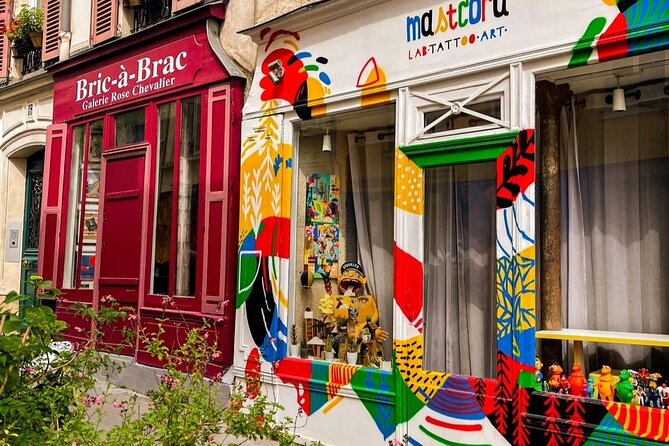
At the Vigne du Clos Montmartre, you’ll see a little vineyard where wine is still produced today. This is one of the more surprising stops in the route, because it puts something practical—growing grapes—into the middle of what many people think of as pure “viewpoints and artists.”
It’s also a good reminder that Montmartre is not just a postcard. You get a different angle on the area: creativity plus tradition plus production.
Au Lapin Agile: the legend stop you can actually picture
Then comes Au Lapin Agile, where you stop in front and hear an anecdote that involves a donkey. It’s quick, but it’s also the kind of story that makes places feel alive, because the detail is weird in the best way.
This is a great moment to lean into the guide’s style. The guide’s humor and local storytelling are part of what makes the tour feel special, especially if you like playful facts instead of only dates and names.
Place du Tertre: where artists still gather
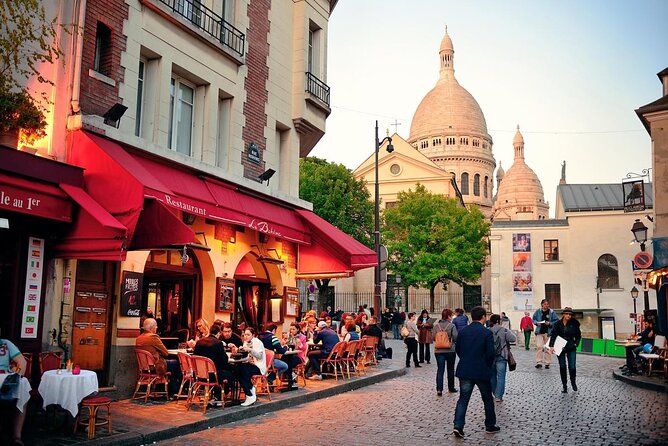
At Place du Tertre, you see the square where artists still gather today. It’s one of the spots where you can look around and feel the continuity—Montmartre didn’t just become famous and then stop.
This stop is useful if you want to understand what the area is now, not only what it was. Even if you skip any shopping, you’ll get a clearer sense of why people keep coming back here to draw, paint, and perform.
Eglise Saint-Pierre de Montmartre: the Roman-era column
Next is Eglise Saint-Pierre de Montmartre, where you see the oldest column in France, dating back to Roman times, and you’re also at the highest point of the city. That mix—ancient structure plus a big elevation payoff—is a strong combo.
It’s also a logical checkpoint before Sacré-Cœur. By the time you reach this stage, you’ve climbed enough that the views and the sense of place land harder. The tour uses the stop to connect eras: Roman roots, centuries of change, and then the famous Montmartre crown.
Basilique du Sacre-Coeur: visit the inside, not only the outside
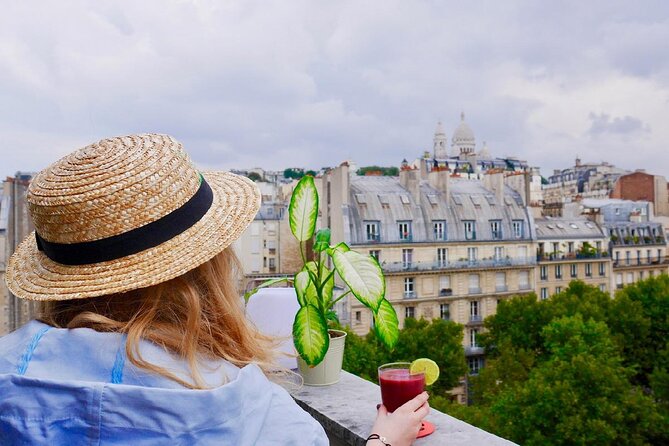
The highlight climb finishes at Basilique du Sacre-Coeur de Montmartre, where the tour includes a visit inside and a look at its history. This is important because Sacré-Cœur is often photographed from the outside, but the inside experience is what gives it depth.
Once you’re done, you return down the hill to Place Pigalle, and the guide helps with ideas for a typical French restaurant for lunch. This end-of-tour service is simple, but it saves you decision fatigue, especially when you’re hungry and the streets are busy.
What you’re really paying for: Sébastien’s approach
The tour’s five-star feel isn’t just about the sights—it’s about the guide. Many people highlight Sébastien specifically for being friendly, funny, and easy to follow in perfect English.
I like the balance of story types: you get neighborhood history at Pigalle, architecture details at the church on stilts, and artist connections around Picasso and the painter names linked to Moulin de la Galette. You also get anecdotes—like the Lapin Agile donkey—so the tour doesn’t feel like a textbook.
Another practical plus: Sébastien is described as being accommodating with photos and willing to answer questions beyond the planned script. That matters on Montmartre, where small choices—what corner you stop at, what angle you get—can make a big difference for pictures and comfort.
If you’re traveling with kids, this tour style can work well too. The pacing is made of short stops, not a long lecture, and the humor tends to keep attention from wandering.
Timing, pacing, and how to prepare for the hill
This isn’t a flat stroll. Even with short stops, you’ll be walking up and down Montmartre’s slopes, so moderate physical fitness is the right expectation. I’d treat this as a “comfortable shoes plus water” day, not a flip-flops and hope plan.
You also want to be ready for a mix of surfaces: cobbles, stairs, and narrow sidewalks. The upside is that the tour keeps moving in manageable chunks, so you’re not stuck waiting around for long.
Because many stops are outside and free to access, you’ll get lots of fresh-air sightseeing. And because there’s an inside visit at Sacré-Cœur, you’ll also want a quick moment for switching gears from outside light to indoor space.
Value check: is $60.34 a good deal?
At $60.34 per person for about 2.5 hours, this tour competes well with other Montmartre experiences because it’s not only “see the landmarks.” You pay for tight context—why these places matter—plus a small group that makes the walking easier to manage.
The stops are also varied enough that you don’t feel like you’re paying for repeats. You touch classic Montmartre icons (Sacré-Cœur, Place du Tertre) and also less obvious points (like the stilt church and the Roman-era column stop).
And because the guide gives lunch ideas and helps you land somewhere practical afterward, you get value beyond the exact route time.
Who this tour fits best
This tour fits best if you want Montmartre in a way that’s structured but not stiff. It’s ideal for:
- First-time visitors who want the area’s big beats plus a few “wait, that’s cool” details
- Couples and friends who like walking with a story guide
- Families, since the tour format uses short, engaging stops
- Anyone who enjoys art history but wants it tied to places you can stand in front of
If you dislike hills or need long seated breaks, you might find the pacing tough. The tour is designed for moderate walking, not for minimal walking days.
Should you book this Montmartre walking tour?
Yes—if you want a small-group Montmartre walk with a standout guide, this is an easy pick. The route hits recognizable sights while still adding detail at the lesser-known stops, and Sébastien’s humor and local flavor seem to be the main reason people recommend it so strongly.
If you only care about snapping a few landmark photos and moving on fast, you could do Montmartre on your own. But if you want the neighborhood to make sense—why it developed, what connects Picasso and later artists, and what makes the church and vineyard stops worth your time—this tour is a solid way to spend your half-day.
FAQ
Do I need to buy tickets for the stops?
The tour listing shows admission tickets are free for the stops included, and the tour also includes a visit inside Sacré-Cœur.
How long is the walk in total?
Plan on about 2 hours 30 minutes.
What group size should I expect?
This experience has a maximum of 10 travelers, so it stays small.
What language is the tour offered in?
The tour is offered in English.
Where does the tour start and end?
It starts at Place Pigalle (75018 Paris) and ends back at the same meeting point.
Is the tour route suitable for everyone physically?
It’s meant for travelers with moderate physical fitness since the route includes uphill walking.
Are service animals allowed?
Yes, service animals are allowed.
What if my plans change and I need to cancel?
You can cancel for a full refund if you cancel at least 24 hours before the experience starts. If you cancel less than 24 hours before, the amount paid is not refunded.
More Tours in Paris
- Paris: Louvre Guided Tour with Reserved Access & Boat Cruise
★ 4.3 · 16,353 reviews - Paris: Big Bus Hop-On Hop-Off Tour with Optional Cruise
★ 4.4 · 13,279 reviews - Louvre Museum Masterpieces Guided Tour with Access
★ 4.5 · 12,023 reviews - Versailles: Skip-the-Line Tour of Palace and Gardens Access
★ 4.7 · 10,429 reviews - Paris: Louvre Overview, Exploration tour and Reserved Entry
★ 4.1 · 10,145 reviews
More Tour Reviews in Paris
- Paris: 1-Hour Seine Cruise departing from the Eiffel Tower
★ 4.4 · 77,472 reviews - Paris: Louvre Museum Timed-Entrance Ticket
★ 4.6 · 71,977 reviews - Disneyland® Paris 1-Day Ticket
★ 4.6 · 49,412 reviews - Paris: Versailles Palace and Gardens Full Access Ticket
★ 4.6 · 41,579 reviews - Paris: Arc de Triomphe Rooftop Tickets
★ 4.6 · 34,264 reviews
More of the Montmartre Hill
- Montmartre Hidden Gems and Scenic Highlights Walking Tour
★ 5.0 · 2,684 reviews - Montmartre Hill French Gourmet Food and Wine Tasting Walking Tour
★ 5.0 · 2,588 reviews - Paris: Montmartre Highlights Walking Tour with a Local Guide
★ 4.9 · 2,318 reviews - Paris: Montmartre Cheese, Wine & Pastry Guided Walking Tour
★ 4.8 · 2,255 reviews - The Secrets of Montmartre Walking Tour
★ 4.8 · 1,258 reviews
Fresh off the review desk in Paris
- Secrets of Paris Bike Tour in English or Dutch★ 5.0 · 5 reviews
- Paris: Mont Saint-Michel Day Tour with Chinese Tour Guide★ 5.0 · 5 reviews
- Private Street Art 2-Hour Guided Tour in Paris★ 4.5 · 5 reviews
- Orsay Museum Tour: 2h Highlights (Private & Small Group)★ 5.0 · 5 reviews
- Discover Paris in electric golf carts★ 4.0 · 5 reviews
- Paris Private Boat Tour with your own Captain Guide★ 5.0 · 5 reviews
Montmartre Tours, compared.
 ★ 5.0Montmartre Hidden Gems and Scenic Highlights Walking TourFrom $382,684 reviews
 ★ 5.0Montmartre Hill French Gourmet Food and Wine Tasting Walking TourFrom $1452,588 reviews
 ★ 4.9Montmartre Highlights Walking Tour with a Local GuideFrom $232,318 reviews
 ★ 4.8Montmartre Cheese, Wine & Pastry Guided Walking TourFrom $1272,255 reviews
The Secrets of Montmartre Walking TourFrom $331,258 reviews
★ 4.8Montmartre Cheese, Wine & Pastry Guided Walking TourFrom $1272,255 reviews
The Secrets of Montmartre Walking TourFrom $331,258 reviews
 ★ 4.1Sacré-Coeur and Montmartre Tour with Expert GuideFrom $281,027 reviews
 ★ 5.0Private Montmartre Food Tour with Wine, Cheese & PastriesFrom $3021,027 reviews
 ★ 5.0Paris Montmartre Food Tour – A Full French Meal by Do Eat BetterFrom $95877 reviews
Browse the lists this tour appears in